We tend to reflect more at this time of year as we look back over the year and compare it with the previous one. We remember the highlights and low points of each year and think about the year ahead. If we made certain resolutions or plans but then got caught up in habits, living in the past, betting on potential, and essentially getting sidetracked, we can suddenly feel aware of where we’ve gone ‘off message’ and even lost ourselves along the way. We might feel annoyed that when we look back, how we see things and what we do now hasn’t changed that much.
We wish we’d done things differently. In fact, we might feel even more frustrated that we wished the same last year too but then got caught up in the insanity of pursuing a line of thinking and behaviour despite compelling reasons and previous outcomes that would suggest we let it go. Of course, we forget that this recognition is an opportunity to gain awareness of the contributing factors and pitfalls that distracted us. We can then draw some conclusions and resolve to do differently based on the knowledge we’ve gained after another year in the field.
It’s at this time of year that we can feel regretful and wish that we could turn back time so that we could have the same conditions but act differently.
Or we want to act differently to alter the conditions (because we think that how we act is the key to influencing everything, including the uncontrollable). Either way, we want a different outcome. And if we get stuck on this thinking and spend too much time living in the past, we end up with a Regret Hangover or even extending one by going on a Regret Binge.
We…
Compare and don’t realise we’re being highly self-critical as well as making judgements out of assumptions.
Compare against people who have their own regrets about things we can’t even begin to know the half of.
Ruminate on the past, raking over supposed mistakes and where we think that we could have influenced and controlled the uncontrollable ‘if only‘ we’d done XYZ.
Berate ourselves, possibly engage in name-calling. We might get so fired up with anger and the imagined scenarios that we decide to do something while on this binge that may leave us not only feeling even more regret when we wake up, but induce embarrassment or even humiliation, which can push us even further into the spiral.
May feel stuck and doomed. Or we might decide that we’ve started so we may as well continue because it’s better than admitting another ‘mistake’, even though that admission and finally learning from it would actually be a success.
Some of our regret stems from guilt, and a lot of the time, this is misplaced. We’re actually burning up our valuable resources feeling bad about a wrongdoing that’s not what we assume and imagine it to be. We often feel guilty about things that were outside of our control or feel guilty for being a different person and wanting different things. For instance, we regret that we didn’t share someone’s or that our boundaries were what they were. So we’re essentially feeling guilty and regretful that we are who we are, which just ends up being a source of unnecessary shame.
Regret, like worry, is something that will ‘eat’ whatever you feed it.
Regret has no sense of when it’s full or even when it’s being given the wrong ‘food’ (read: information). The more regret you have, the less perspective you have. Why? Too much regret means too little recognition of what you have done, what you have been, and ultimately what you can be and do going forward. We hang on to regret while forgetting that to do so means letting go of and turning away from the future.
You were here this year.
It wasn’t a perfect year (and there isn’t going to be one) but you were here. Whatever you regret isn’t the sum total of who you are, nor is it a statement of your future. Unless you’re truly going to stick with the same or similar thinking and behaviour, what you can apply what you learn now and going forward. Even if certain hopes and expectations weren’t met, what progress did you make along the way? Do these regrets warrant your writing off every day, week, and month in the year? Does it warrant your writing off all previous years?
I have some regrets from this year that, sure, if I had my time over, I’d do things differently. Instead, though, they’re a lesson, simply because I don’t get to ‘reshoot’. Some were a little expensive, and some hurt a bit.
I was telling somebody recently that nearly 18 months after we got married, it’s tumbleweeds with my father. It could be easy to regret that I let him walk me down the aisle with my stepfather, as if to suggest that if I’d known how it would all unfold that I would have done differently. I didn’t know how it would unfold, and I did the best that I could at the time. The hurt has faded over time, and I’m well past the grief hump that I had last year. If anything, the experience grew me up. It drew a line under a saga that had played out for thirty-five years.
This is a ‘one-take’ experience.
If I want things to play out differently, I’ve got to do it now and moving forward. I can harp on about the recording not having a rewind and rewrite function or keep playing scenes over in my mind. I can even try to recreate them so I can right the wrongs of the past. However, all focusing on a do-over does is add more scenes to the tape that I’m likely to feel regretful about.
Be careful of regret binging and the attendant regret hangover. Letting go is a decision. Each time you give more weight to regret, you’re saying, I’m not done. Feelings can and will pop up; it’s what they do. So you can feel regretful, but you don’t have to chase it and feed it. You can remind regret why you’re done and remind yourself of what you’ve learned. Be kind to yourself. You’re only human.
If only I could do what you say! A recent break-up with a man I was with for 12 years is now making me feel bad about my previous marriage before I even met this man. You’re right–to keep regretting keeps you from improving your life. Thanks a lot. Happy New Year–Ilene
Lorena
on 20/12/2013 at 11:15 pm
Thank you for the reminder Natalie. I started this year in a very serious depression, and very nearly wasn’t here this year. I’m feeling a bit sorry for myself today about all the things I don’t have and how the decisions I’ve made have led to that. Your post (as it often does – how do you do that? 😉 ) came along just at the right time, and you’re right.
Thank you.
Lilly
on 21/12/2013 at 1:26 am
Lorena,
I too started the year in a serious depression and ended up making decisions that led to disastrous consequences. I can relate to your feelings because there were times that I thought I wouldn’t or couldn’t make it. I wish you well in overcoming your depression. Hugs to you.
JustHer
on 27/12/2013 at 1:03 pm
Lorena and Lilly,
I have also had the same experience of crippling depression which started late December 2012 and I spent the majority of the year seriously depressed and on suicide watch.
I made choices which unravelled my life faster than he managed to do, but I am now looking forward to a new year and new chances.
I’m glad we all made it to another Christmas, through days where we were afraid of not making it to another dawn.
I hope the new year brings a fresh start for all of us and everyone else on BR. I have learnt that it is important to want to turn the page and have the determination to do so. And I respect you both for having had the strength to make it this far.
Here’s hoping for a better year than the last.
Love, JustHer x
Lilly
on 28/12/2013 at 12:34 am
JustHer,
It sounds as if we are on the same path to recovery and it’s so good to have the company. Coping with depression is unbelievably difficult so I admire you for coming through too. Let’s keep turning those pages. Love to you, JustHer and many good wishes for 2014.
NCincanada
on 21/12/2013 at 1:18 am
OK so I have this sorta of semi-ritualistic habit of checking the situation as i have come to think of him FB we were never Facebook friends so its easy to say its a way of seeing if he has moved on now as petty as it sounds, I do this and I know its no good because a boiling anger comes over everytime the profile pic changes. I just feel so #($*$…I havent fallen off NC its been nearly 4 months. I have thought about contacting him but each month it gets clearer why I shouldnt.So I need to make this conscious decision of not checking up on him via FB. My ego just cant handle that my devious reason for NC didnt result in the oh so romantic grovelling I expected ( Background: He is separated from the wife. The separation has nothing to do with me it happened a few months bfr I came on the scene and we started dating then depsite redflags I know can pinpoint we dated for 4 months then the timeout turned breakup and getting back together for a wk all initiated by him.
I made it clear that I wanted a relationship which he said he cant give me that but wanted to be friends I tried it for a wk and it felt like crap so I told him I cant deal with being friends and talking so maybe in the future but not now n asked him to stop calling cos we all know how Friends become FWB and then maybe 5yrs later someone gets shafted. He called 1ce from abroad after that and I used Nats technique n asked the reason for his call n it was Just to say Thank you for recommending spots to sightsee… the hell.. lol! This was 3.5months ago and there hasnt been a sign or word since. Naturally it hurts that people can treat and forget u like that and looking back I dont regret my actions on how I ended it I just feel used and this is something I must get over it happened and I dont want it to happen again ..Im seeing a relationship coach now .. If anyone knows of any techniques to stop this whole fb stalking thing .. Please do share .. HappyHolidays to all …
Lilly
on 21/12/2013 at 7:12 am
NCincanada,
I didn’t facebook stalk, but I did stalk his blog. It was self-torture and like you, all it did was hold me back. I eventually came to the conclusion that it was me or his blog! If I was tempted I’d get off the computer immediately, I’d make some tea, phone a friend, take my dog for a walk, have a shower or count to 100. Don’t push aside that wise little voice that tells you to stop peeking. That’s you trying to take care of you. It really is true the less you know about their lives the better. I’m not even tempted now and it feels like freedom. Who wants to keep getting hurt over and over again.
NCincanada
on 21/12/2013 at 9:00 am
Lily,
Thanks! you are right. It does no good and you know what since I know the effect this has on me it makes no sense to continue.I need to accept he has moved on and I should too . BE kind to myself
Furry White Dogs
on 21/12/2013 at 10:11 am
When I finally got to go NC on my lyging cheating ex arseface husband I did all I could to erase his presence from my life.
He had already unfriended me from FB when his future Mrs Arseface (co cheater) complained about my liking or posting on his timeline (What a nerve I had, posting on my own husband’s FB wall!) However, as you are doing, I could still see and check his FB and hers and members of his family. And he and Mrs Arseface could still see mine.
Then I discovered the power of the BLOCK! When you block, not unfriend, but BLOCK, the person blocked becomes invisible to you. You can’t see their page or profile pic at all. If you have common friends, as he and I did, any comments they make on the friend’s wall can’t be seen by you. And any you make can’t be seen by them. They can’t see your profile either.
I BLOCKED the Arseface, Mrs Arseface and most of his family and friends.
It was hands down one of the best things I did to help myself get focus on myself and heal and move on. Amazingly, even though I knew the password to his email account, when I blocked his FB I gained the willpower to stop checking his email as well.
So the technique is incredibly simple. JUST BLOCK ALREADY!
Tinkerbell
on 21/12/2013 at 2:46 pm
Hi FWD,
That was an excellent thing you did for yourself. Blocking is the best, because it works both ways. I wish so many more BR ladies who are TRYING to be NC would do it. The freedom from regret, worry, frustration and a gazillion other negative feelings are recede so quickly that it’s just amazing. You feel so much stronger and independent from them.
NCincanada
on 21/12/2013 at 3:13 pm
I would block but I dont even have him as a friend to begin with so I dont think it is possible but I am going to check and make sure. Thanks Ladies and Happy Holidays !
NCincanada
on 21/12/2013 at 3:32 pm
Oh I did it… Found a way to block even if we are not friends .. Wohoooooooo thanks for the great tip!
Furry White Dogs
on 21/12/2013 at 11:35 pm
You’re very welcome 🙂
Many people don’t seem to realise the difference between BLOCKING and unfriending. Or that yes you can block people who aren’t friends. Or that people who aren’t friends can actually still send you private messages, they just go to ‘other’ instead of your inbox.
Make the technology work for you!
My FB is actually public to almost the entire world. It was initially a response to all the secrecy and hiding that the cheaters around me were practicing and I’ve found it to be very positive.
But even though my FB is public the Arseface et al still cannot see it at all because he and his snooping screwed up sad latest victim are BLOCKED!
Archbold
on 22/12/2013 at 4:01 pm
I have read nearly every article written by Natalie and they all strike a cord with me…first time I have commented but I suspect I will now be a regular! I had to however comment on this “Arseface et al” I haven’t laughed so much in weeks…Thank you….
Furry White Dogs
on 23/12/2013 at 12:55 am
Welcome Archbold 🙂
I’m glad you got a chuckle. Gotta take the laughs where ever we can get ’em!
I don’t get to comment as much as I would like but read every day and usually find a nugget of wisdom from Nat or the BR commenters that strikes a chord and helps me in whatever I’m currently facing.
I too read voraciously when I first discovered this site and often copied and kept articles or comments that were particularly powerful or useful.
Here, along with my family and friends and counsellor and furry white dogs, has been the saving of me over the past year.
And Because of the good attitudes and skills I’ve learnt and am practicing the coming year is looking so much brighter and healthier 🙂
Mymble
on 22/12/2013 at 9:34 pm
FWD
Yep blocked the ex MM several months ago. Means I don’t give in to temptation to peep myself, and I can do/say what I want without wondering what he would make of it. Serenity.
runnergirl
on 25/12/2013 at 4:39 am
Hi Tink, remember me…runnergirl?
Tinkerbell
on 27/12/2013 at 4:30 pm
Hi Runnergirl! You bet I remember you. How have you been? So nice to have you back. Even sporadic posts from you are better than none at all. HAPPY NEW YEAR! (((Hugs))).
runnergirl
on 29/12/2013 at 3:46 am
Happy New Year to you too. It has been an amazing 2013. Every single thing Natalie has posted and you all have commented has come to fruition…big hugs. Wow were you all right!
JustHer
on 27/12/2013 at 1:09 pm
FWD,
You’re so right!
I knew the password to his Facebook and all his emails and used to spend HOURS checking them. I used to read all his messages and his replies and then cry myself to bed every night.
I continued this for 9 months after I started NC!
He changed his Facebook password and I even managed to guess the new one! It was me putting my desperation in front of my mental well-being.
But then when I started NC properly this October, I said NO MORE. I blocked him everywhere, changed my number and vowed not to check his email or Facebook. And I haven’t.
It is a refreshing feeling and I would definitely encourage everyone to do that. I consider THIS to be proper NC, not the wishy-washy game I was playing earlier.
I wasted 9 months of petty NC and delayed my recovery, I pray that no-one else does this and learns from my mistakes.
Tinkerbell
on 28/12/2013 at 7:49 pm
Just Her,
I am very glad that you finally wised up and blocked after 9 months of half-assed NC. GOOD FOR YOU!Better late than never, as the saying goes. Hope your new year will be much, much better better.
JustHer
on 29/12/2013 at 10:57 am
Tinkerbell,
Thank you so much – you’ve been an absolute star with your advice. Some tough love was needed.
Can’t believe it took me SO long, but I have finally done it. Including not contacting him AT ALL on his birthday, 3 days ago.
Sometimes I think we try NC too soon and we really have to hit rock bottom before we have the will and determination to see it through – it was so in my case, anyway.
Happy New Year to you too, Tink! I wish you all the best for a new beginning.
Banjo
on 29/12/2013 at 4:49 pm
Thank you so much for this comment! I am new to this website, and..Let’s just say I needed to hear this. This sounds awful, but basically I was in a relationship with a visiting exchange scholar, who had a girlfriend back home. We had a “great” time, and now he has left. I’m now realizing that if it was such a “great” time, he would still be in my life, and now with his girlfriend. It’s been a rough couple of days..
The good news is that I blocked out his stuff, but then I found myself seeking out information on her. After reading your post, I literally blocked her, and it’s as if a weight has been lifted. I knew what I was doing was wrong, but I just couldn’t stop.
Thank you again!
Tinkerbell
on 21/12/2013 at 4:42 pm
NCincananda,
There is no magic formula to prevent you from checking him out on FB. You just STOP. You find other things to distract you from the urge. Why is it sooo important for you to keep tabs on him? Why are you NC? It should be because it is the end for YOU, and not for some ulterior motive like trying to stimulate his interest and intention and possibly get him back. You have to KNOW that no matter what, you will NEVER want him back. If you cannot get to that point, then you might as well be with him. It is very hard to be friends and not a fallback girl with someone you’re in love with. But you have to make a decision. I know. Good luck.
NCincanada
on 21/12/2013 at 7:07 pm
Be with HIM… OH Heck No! the habit started when we were on the timeout and I was curious to find out what triggered it.. Lol .. We broke up and I continued but I have done the block.. I am not as active as I have been in the past couple of yrs on FB. These days I dont want to be on too long so trust me the fact that I have to do anything makes me feel too lazy..2014 its a complete blackout, I will be forgetting him but NOT the lesson learnt :-)!
LovefromNel
on 22/12/2013 at 10:49 am
NCincanada, I can relate to this. In fact, I’m guilty of it at the moment. It comes down to willpower and I don’t feel I have much. Good on you for blocking him! Grizelda on an old post (I think it related to shame) had a wonderful analogy that really helped. See if you can find that on here? It is about throwing an arseclown figurine into a fire. Each time you pop your hand in, you get burnt. It’s beautifully written and incredibly helpful. Let’s both not FB/Instagram check on the EUM from this point forward! An early NY resolution ok? Hugs to you! Nel xo
NCincanada
on 23/12/2013 at 2:55 am
Nel.. Im putting one foot in front of the other and will keep walking..YESSSSSIREEEEEEE!!! Thanks for the support.
JustHer
on 27/12/2013 at 1:15 pm
NCincanada,
(I love your name)
I see you found the power of blocking below, but I just wanted to let you know that I have been there (see post to FWD). I did it every day for HOURS. I would skive of work and then spend my time stalking him. I never had FB on my phone before, but then I downloaded it just so I could stalk him on the go! (pretty sure, that is why Mark Zuckerberg released a mobile app!)
But honey, it made it so much harder to believe in my recovery.
As Tink says, there is no slow and steady approach to stopping. You just stop. I just decided one day that it was detrimental to my health and did. I still have bad days when I slink into suicidal depression mode, but they are a lot less frequent and normally because of external forces which have nothing to do with him.
You sound so strong that I know you can do it.
Take the leap and free-fall into an amazing new year, new beginning.
LovefromNel
on 28/12/2013 at 10:09 am
JustHer, you’ve inspired me! I too have suffered crippling depression, and the fact that I’ve got a dog to look after and walk was the only reason I got out of bed. I too am guilty of FB/Instagram stalking. I know I just have to stop, and I will. From now. No more. Thank you for your wisdom, and for being quite an inspiration. I just have to remember you girls when I am tempted to take a peek at his page/s. Besides, there’s nothing on them. I’m just making up stories in my head if there’s something new. And that’s just not good, is it? Thanks again. Hugs to you and best wishes for your mental health in 2014. I think we can both stay strong on here. Nel xo
JustHer
on 29/12/2013 at 11:04 am
Nel,
It’s lovely to hear about your own fight and successful epiphany.
I have been thinking about getting a dog too, for their unconditional love (currently reading a book called Lost Dogs and Lonely Hearts which I recommend as bed time reading!).
I think we have a strong desire to connect with some part of the ACs even after we have given up on the physical connection and that is what the stalking provides. It lets us comfort ourselves that they are still very much ‘there’, even if they never were.
The worst part is filling-in-the-blanks of what social media cannot tell you! Somehow we reach the worst possible conclusions because of this.
I’m glad you have made the decision to stop – there is nothing that will help you more! Your life is much to important to let it be all about someone else’s, honey.
There’s a new beginning for all of us in 2014. Love, JustHer
LovefromNel
on 30/12/2013 at 12:50 am
JustHer, you are are too kind! You are so right when you said my life is too important to be worried about someone else’s (and, at that, a cowardly nasty one!). I have turned another corner today – thanks to you. I can’t thank you enough. Also, I can’t recommend getting a dog enough either. I think Nel (that’s my dog’s name haha!) has honestly saved my life this year. When I am not at work, Nel is never far from my side (sometimes frustratingly so) but I love her to bits. Hugs to you, JustHer, and here’s to 2014 eh! No more stalking from this Nel either. Time is far too precious. Love from Nel xo
noquay
on 21/12/2013 at 1:26 am
Yep, I do this all the time. First guilt over the end of my 12 year marriage, that I did not continue my research there forgetting that Iccouldn’t have continued the work, the university pretty much un- funded me, starved me out. That and the minor inconvenience of having my car tampered with, being followed at night, and more direct threats. Now my guilt is over not being beautiful enough, legs too short and heavy looking, my big Indian nose, lack of the proper Indian high cheekbones, crappy eyesight so I squint all the time, and so on. After having to see latest conquest on campus AND hoofing down our main street today dammit, I get into thinking about how much prettier than I she is and start hating on me all over again. Had to see AC at a public event on campus a few days ago, I was dressed well, wore some serious turquoise. He glared at me, avoided me (goody!) most of a time like I was dog crap on the floor. A woman I know from the community came up to me and said “you are so beautiful”, gave her a huge hug. Some of the conquests were much more beautiful than I, some less so. I am probably the only one who called him out on his behavior. That’s the real issue. Do I regret it? No, I had to do so. He wanted to know why I was so angry with him (as though showing up with another woman hours after inviting me to spend a weekend with him wasn’t enough?!) ; I took time to think, cool off, then wrote him a well crafted letter, one stating facts without being accusatory, written in such a way that if it were shown to anyone, it would make him look like a complete ass. Grad school is good for something, eh? Yep, I regret the loss of my marriage, almost daily. Had I not left, I would be spending the holidays delivering meals to the elderly in our area, listening while my ex spoke Finnish to the old people, we’d be holding hands, discussing social justice issues, decrying the consumerism of the holiday season. We’d be holding hands while watching the sun set over the big lake on Solstice. Normal. That’s not what’s gonna happen this year, maybe never again. That level of connection is rare, I feel that my interaction with men ever since is sooo much “less than”. Thats why AC could weasel his way into my life, he was the only man since my ex that I felt I could freely talk to, plus he is damned good looking. The only thing I regret about the AC is being stupid enough to first, respind to his advances in the first place then later think he would at least apologize. Dumb!
Lilly
on 21/12/2013 at 7:25 am
Noquay,
Dumb you are most definitely not! I’m so glad you called that woman using, hideous excuse for a human out on his behaviour. You should feel proud. Sometimes I regret not letting the AC have it. Can I ask what has happened to your ex husband? Is there any chance that you two could get back together? I feel sad that you are stuck in that place having to endure seeing that man. I’ve never seen what you look like noquay, but you sound beautiful to me, inside and out.
Tinkerbell
on 21/12/2013 at 3:06 pm
Noquay,
First of all, I’m sure your looks are a lot better than you describe. Turquoise matches your Native American skin tone perfectly so I know you looked amazing on that day. Furthermore, it’s whats in your head that is important and you’re nobody’s dummy. I know you feel you lose out frequently in the social realm, but that THEIR problem, not yours. I’m sure you cause many folks around you to feel some insecurity. Again, their problem.
I’m really hoping that your reminisicing ( I hate spell check sometimes) about your marriage is really pointless because it would be very sad if you unconsciously felt that maybe you left a bit hastily? Is there really NO CHANCE at all of a reunion? Would you want that?
I’m feeling very much alone, frustrated and angry . I’ll be glad when the holidays are over. My family is very tiny and very fragmented. I’m tired of reaching out and feeling dependent on them to make my holidays happy. Petie is still recovering from his surgery and I’m feeling a bit abandoned. He calls every day, faithfully and we talk for long periods but we have no holiday plans. He can’t even wear a suit, yet. I can’t help but wonder if I’m being too patient and understanding for my own good. I feel as though I will NEVER get off this seesaw with him. And, I’m on it alone. He’s stable. I’m the one who keeps fluctuating between trying to be less passionate and then having these overwhelming feelings of love. I sent him a Christmas card that is kind mushy, but that’s how I was feeling. Now, I’m wondering if I should have a more casual one. I certainly hope I overcome this horrid mood soon. I’m not feeling very joyful.
Pauline
on 21/12/2013 at 11:17 pm
Hi Tink,
I’m confused about you and Petie. He’s still recovering from his surgery, can’t even wear a suit yet and he calls you faithfully everyday to see how you are and have a nice long chat?
Why do you think he’s actually calling you and still being there for you even though it’s not physically possible for him to be with you?
It seems to me that he still likes you very much and for a man in his position (post surgery and recovering) he’s doing the best he can in a bad situation. As long as you realise that his condition isn’t going to improve in the future, and do you think he’s trying to let you down gently because he knows how you feel about him? Is this what is making you frustrated and somewhat angry because it’s Christmas and you want a whole lot more from him?
Would he be open to having you visit him for a day or two just as friends only as he’s probably not able to handle your emotions as well as recovering from surgery and coming to terms with his own condition.
I think you need to back off and stop pressuring yourself to get an outcome either way from a guy who’s not capable right now.
Abraham Lincoln said something to the effect that people are as happy as they let themselves be (apologies to Mr Lincoln for my misquote) and it’s actually quite true.
So stop beating yourself up Tink, if something’s meant to be, it will be and if it’s not …. That’s God or your guardian angel looking out for you and telling you it isn’t right.
Hugs xx
Tinkerbell
on 23/12/2013 at 6:20 am
Pauline,
Thank you for you concern and your post. You get the picture of us very well. I had a long talk with my sister and she knows all there is to know. Her take is that, all factors considered, he makes a better friend than a boyfriend because he seems to have some problem with commitment. The three marriages says a lot and do know that I prefer to not live with him because both of us are too set in our ways. But I am going to visit with him for a few days, soon. He seems to be looking forward to it but no date yet. You hit the nail on the head when you said I feel angry because its Christmas and I want a whole lot more from him. Pauline, you have no idea how much I keep telling myself to back off. I DID actually redirect my mindset when I TRIED to be NC, but eventually at the slightest effort from him, I’ve been sucked back in all over again. And yet, it’s because HE is so right for ME and I know he feels the same. He’s not trying to let me down gently. It’s the whole ED issue that really fecks things up so much. He was pulling away until recently, but now he’s encouraging much more attention from me as we’ve talked about the reunion. I’m afraid to behave in a needy manner (physically) because I don’t want him to feel that I have expectations he won’t be able to meet. I actually told him this, and he said I was giving up hope and to “bring in on”, as if my flirting and sexy talk is going to give him an erection. I KNOW WE ARE BOTH ENGAGED IN A GAME. A FANTASY. And because we enjoy each other so much and it’s so late in our lives we feel like “What the hell, why not enjoy the good time where you can get it.” Neither one of us are leaving the relationship, so I at least have the assurance that he’s not going after another woman. I AM THE WOMAN for him. He has shown me that. It’s just this intractable situation that causes an invisible barrier between us.
Thanks, Pauline. I won’t say anymore. I’ve exhausted the subject too many times and I don’t think Natalie appreciates it at this point when it’s not on topic.
I’ll give an update after we’ve been together.
MERRY XMAS!
Revolution
on 21/12/2013 at 3:55 pm
Noquay,
With the mix of toughness and vulnerability you share with us, I already know I’d find you very attractive (platonically). Add to that dark skin, light eyes, and turquoise! Not to mention passionate feelings about the earth and other people, and I’m sure you stand out in a great way. That’s why the AC is probably threatened by you. If someone that stands out like that calls you out, you start sweating. And you want to put them in their place. And maybe, just maybe, you’re also a tad jealous and a little bit turned on as well, at the same time. But you (the AC) would never let on to that. Because, after all, why would a woman like Noquay give you the time of day again, when it was probably a fluke before? After all, you know that you’re not man enough for her, if you’re even willing to admit that to yourself.
That’s what I see going on here, from my perch. For whatever it’s worth.
Stuck
on 21/12/2013 at 6:18 pm
Feelings don’t have intelligence; they just are what they are, but sometimes they lie and we don’t have to act on them.
I think you are attracted to this guy. Yep, this pig turns you on, but clearly you don’t share the same values and…, but there he is every day, and wouldn’t it be nice if he was a ‘better’ person?
To me, you don’t have a right to tell this guy about himself. This guy and anybody else who walks the earth can be and do whatever the eff they want,(Fortunately, society jacks their asses for things like theft, assault…we lock some of the degenerates up, while others stay in our mist…. And, I think YOU need to accept that, and move on with your life. You talk about this guy and his morals and his choices way to much!!!
You live your life the way you want, and let other people do the same. End of. You do have choices Noquay, you just don’t like the ones that you have. So, you aren’t making any.
You have been through hell, but guess what, other people still live there.
Put an end to the self-pity, you have been given so much. You’re effing brilliant, and I’m damn self-fish right now; I just want you to show us all how to let go and move on….
xx
simple pleasures
on 21/12/2013 at 10:08 pm
We celebrate success stories. Those are the people who have moved on from BR. They have read all the articles and responses, have taken the advice and finally get it. Presenting the painful experience which caused someone to google a phrase to find this website, and then present their experience for emotional support is truly amazing.
When I first landed here I thought, eventually I hope I will be able to help others. And for about 2 years I have followed those willing to be vulnerable and put their stories before the entire globe..And I have thought, no more from runnergirl, she has moved on. No more from Tired she is really a success story. Not much from Grace lately, must be ok, not needing support. I followed Lilly closely with her heart wrenching story and yoghurt, who seems to have moved on too. Today is my one year anniversary NC with someone I really was in love with. I see him every week. Answers: resolve your parental/family issues. If you don’t
you may find yourself an old lady revisiting childhood issues.
Times are very different now with casual sex and the internet way of meeting people. And the lack of morals and care for one another. We live in a world of self gratification at other people’s expense. Shame on us.
My regret in life is that I did not keep NC forever from mathman, as when I found him again after 30 years I broke contact. I thought we could be loving adults after so many years. If a person is selfcentered, that’s it. Move on. You may be attractive and fun and smart and educated with a gazillion interests and a great career,but maybe there is someone out there who is not, but is a kind, loving, person who would like a committed relationship to someone who may not be young, or pretty or super duper educated. On some level we need each other. And Natalie, we respect you, because you are a success story.
runnergirl
on 25/12/2013 at 4:55 am
Oh…runnergirl is still here. I’m running a campaign and I’m having the time of my life. I have a little regret. The exMM has been very helpful but he doesn’t get to see me in real life. I’ve finally gotten out of my rut. As a candidate, I have to meet people in real life. I am so far out of my comfort zone, I don’t even remember what it was. I have to walk into a room of strangers and make friends. I’ve made some incredible friends. Dear lord in heaven, I have to ask for money! I’ve raised 20K. Of course I have to raise another 100K by June so there’s a lot of work ahead Everything I’m doing I learned from BR. You all are amazing. My biggest regret: Not doing this sooner. My focus is now me and my campaign. Guys…they can donate or get lost. I have ran into several god fearing married men who are totally supportive. Then when push boils down to shove, they just want to get laid. I’m not interested in that. Period. So yes…I’m still here.
runnergirl
on 25/12/2013 at 5:00 am
And Simple Pleasures, you reminded me, my two (or is it three) anniversary from the big break up with the exMM that brought me to BR was December 19th…don’t remember the year! That is success.
Tinkerbell
on 27/12/2013 at 4:46 pm
S.P.
I don’t know ig it’s because I wish I was there, but I don’t think we can assume that those who’ve stopped posting on BR have worked out their lives to a tee and don’t need any support. There can be many, many reasons why certain individuals appear to have dropped off the radar. I’m sure other issues have taken precedent for the time being. They come and they go, or they go for good. I don’t think a permanent departure from BR necessarily means they’ve got their sh*t together. Life constantly presents challenges and if you’ve EVER been here and actively posting,in the first place, most likely you’re facing OTHER challenges and have not suddenly become so perfectly strong that you can kick BR to the curb. I don’t see BR as a relationship or lovelorn blog. I see it as dealing with life, in general. We never really GET THERE. We’re continually evolving.
HAPPY NEW YEAR!
Poppy
on 27/12/2013 at 10:50 pm
I’m a prime example of that. Rarely post, reader for years. Sporadic as you say but read all the time even if I’m feeling OK. Sort of got my shit together but my emotions are so varied that there would just be no consistency so for that reason I would rather stay in the background. I hope that’s not too selfish of me. Half the time, what goes through my head is so dramatic and dynasty style that I can’t keep up myself. It’s coming together. Slowly.
I will add, I am very grateful to you all and the gem posts are what have got me through.
Pauline
on 22/12/2013 at 12:23 am
Noquay,
A married friend went on holiday to a tropical resort and while his wife was shopping he spotted this absolutely beautiful woman sitting by the pool. Body like a goddess, legs about 5 miles long, blonde and tanned in the regulation skimpy bikini. Being a not bad looking dude himself, he sucked in his gut, threw out his chest and sidled over to have an up close look (typical male). He escaped about 10 minutes later because this gorgeous girl had no conversation, no brains, no real personality, she was just a product and didn’t have to be or do anything else. He was laughing telling us this but it just goes to prove that looks will get you in superficially but you need to have an awful lot more going for you.
I always remember this when I start being too critical of myself physically.
That AC lost out big time with you and he knows it, you’re so far ahead of him the only thing he can do is try to drag you back down to his level which isn’t possible.
He hasn’t evolved past being a pretty face and sucking in as many women as his ego needs to keep himself validated, it’s probably the only way he can feel real.
Assclown’s on some level seem to know this which is why they get nasty when you call them out for their behaviour and then they have to move on so they don’t have to look at themselves or what they do too closely, it would be nightmare territory for them.
Be grateful that you’ve got a good education and a good mind to back up everything else that you are. Fuck the rest of them!
oregongirl
on 21/12/2013 at 1:28 am
I regret that after 18 days of NC I “blew it” by jumping on a little excuse (I got one of his bills in the mail) to call him. We emailed back and forth a little bit, and it stressed me out to no end. I have re-blocked him and am resuming NC. I regret that I didn’t have the guts to keep going forward. Lesson learned: he’s never ever going to change, so don’t ever ever contact him again. That way, madness lies.
LovefromNel
on 22/12/2013 at 11:05 am
Oregongirl – those 18 days NC are still 18 hard-fought days of NC and you are still a stronger person for them. You certainly didn’t blow it! Don’t be too hard on yourself. There was a valid reason for contact (the bill) – it wasn’t a “let’s catch up” or “I miss you” form of contact. Don’t be too hard on yourself! Hugs and merry Christmas. Nel xo
Lilly
on 21/12/2013 at 1:29 am
Oh the dreaded could have’s, should have’s and might have’s. Contemplating the ‘what if’s” is a road to nowhere. Many times I’ve beaten myself up for not doing things differently, but how could I have done things differently before I’d learned how to do them differently? Does that make any sense? I’ve learned now, I won’t repeat the same behavior, so it’s time to stop punishing myself and be a bit kinder. I’m heading into a new year with a feeling of optimism for the future. There’s some residual stuff left, but I’m coping with it. It’s a good feeling and for those BR readers currently experiencing emotional pain please have faith that you will get through it. Keep reading BR;I’ve gone from the pit of despair to acceptance and hope for the future and so can you.
Allison
on 21/12/2013 at 7:38 am
Lilly,
You’ve done an amazing job! Give yourself the credit you deserve!!!
Merry Christmas!!!
Tinkerbell
on 21/12/2013 at 3:12 pm
Lilly,
This Christmas for you will be better than last year, and will continue to be better from now on.
Lilly
on 22/12/2013 at 1:56 pm
Tink,
I do feel better this Christmas despite a brief fall from the horse (drunken reading of reference, but I’m back on and am looking forwards.
I’m sad that you are awash with uncertainty though. As you know I’m no relationship expert(!)but it sounds as if some important needs are not being met in your relationship. Having to try to be less passionate must be frustrating and it’s no wonder you’re feeling lonely and uncertain. I know you’ve discussed this with Petie before, but if an unsettled feeling hits home maybe it’s time to air those uncertainties again. Petie will give you truthful answers and the solution will come I’m sure. That’s it I’ll shut up now!
Wishing you a return of your joy this Christmas, xx
Tinkerbell
on 23/12/2013 at 6:32 am
lOVE YOU LILLY,
After church service this morning I felt as if the pastor soothes my soul and said so many things that I needed to hear. I have sooooo much to be thankful for a helluva lot more than a gazillion people and I AM LOVED by many.
Lilly
on 22/12/2013 at 1:58 pm
Allison,
Wishing you a very Merry Christmas too, and thanks for all the wake up calls, xxx.
Jamie
on 21/12/2013 at 1:40 am
Ah those regrets are full-force kicking me in the arse. I regret taking him back time and time again, I regret accepting his crumbs, I regret being a booty call. Most of all I regret not taking better care of me!!
He’s been baiting me most of the week…..messages meant to make crazy drama and get me to engage in yet another worthless conversation. I’ve not nibbled once!! I am feeling incredibly empowered….which I don’t regret one bit!!
xoxo
Jamie
NCincanada
on 21/12/2013 at 9:05 am
@ Jamie … YOU GO GIRL ! I think I should count myself fortunate he didnt bait me after I told him to take a hike and I wish he would .. As if grovelling would validate me (OMG) I just realized after typing that is what it really boils down to.. Writing is cathartic .. lol..don’t fall of the wagon and Happy Holidays
Jamie
on 21/12/2013 at 5:34 pm
Hi NCincanada,
Yea, my AC likes to pull me back in……I mean who can blame him though since it’s worked every other time. He is soooo good at it too!! He is a sales manager so is really skillful at overcoming my objections. Even though I’m looking him in the face telling him that I’m not happy. He actually said to me “well that’s not how I feel”. The world revolves around him….well minus me now. Please be happy that your guy didn’t lure you back in or keep contacting you. Clean break is like pulling the band-aid off quickly.
And you bring up a good point……writing it all out has allowed me to see a few things that were simply falling through the cracks.
xo
Jamie
Revolution
on 21/12/2013 at 2:37 am
This is an interesting post for me, Natalie, so thank you for that. I’ve had a very tumultuous end of the year, what with quitting my job and redefining myself in every way. Though, in my case, I can’t say that I have regretted any of my decisions in this regard. It’s interesting, because although I’ve made some very defined lines in the sand (lines that go against the grain of what’s “normal” and “expected” in society, a.k.a. quitting my job in a bad economy, choosing to stay single–at least for the time being–due to not finding a man with which I can form a mutually respectful relationship), I find that the irony of this is that I am actually living completely without regrets. That has always been my endgame, traditional life be damned. And I have to say that I sleep very deeply at night.
Lilly
on 21/12/2013 at 7:35 am
Rev,
Those sound like good choices and I’m happy for you. Keep sleeping deeply and thank you for being there for me.
Lilly
on 21/12/2013 at 7:43 am
oops, pressed the post key too quickly!
Many hugs and kisses to you too Rev and also thanks for making me laugh so many times.
runnergirl
on 25/12/2013 at 5:22 am
Hey Rev…it is good to find you in such a good space. Just keep it up and keep moving forward. Trust me, I’m not living the traditional life or what would be expected either. Maybe that is why there are no regrets. There is no guy that could even begin to keep up with me and I guess the same for you. I do have to admit that all my exes have been major contributors to my campaign. I’m not even the least bit remotely interested in a guy or “finding one”. I’m having the time of my life finally being me! There is so much to me. And I bet there is a ton to being you…all of you.
Revolution
on 27/12/2013 at 12:06 am
Runnergirl!!! Great to hear from you, girl. Glad to hear you are so busy making it big that you don’t have time for the drama of any ACs out there. 😉
I too have been sporadic at best here on BR, I suppose since I have things pretty much under control with regards ACs and boundaries. It took a while to get here, and a lot of stupidity and growing pains. And I’m not saying I might not have relapses, but it feels damn good to be living in “the arena” as Brené Brown says. So glad to hear from you, runner. I’ve thought of you lately, so I’m glad to hear your success story. And you’re right, there is SO MUCH more to ALL of us ladies and gents here! 🙂
runnergirl
on 29/12/2013 at 3:59 am
Hey there Rev, it’s great to hear that you have things pretty much under control on the AC front and you are living in “the arena”. I’ve been hit on by at least 3 AC’s on the campaign trail and they got flushed so fast. I remained “friends” without any benefits whatsoever. If they want to donate to my campaign…go for it. Little did they know, I’m a proud BR lady! One had three kids under the age of 10 and a wife and was a man of the lord. Ohhh, just ick. AC’s are just out there everywhere. After BR, there is just nothing but ick when I meet them.
Allison
on 21/12/2013 at 7:34 am
Jaime,
Good for you!!!! It is empowering, isn’t it.
Why not give yourself another gift: BLOCK!
Here’s to 2014!!!!
Tinkerbell
on 21/12/2013 at 3:15 pm
Jaime,
Yes! Block! You’re beginning to make progress. Blocking him would help you so much more.
Jamie
on 21/12/2013 at 5:43 pm
Hi Tinkerbell!
He has been carrying on these one sided conversations via text. So wierd!! He is saying things like “well I guess your dating someone else” & “can I assume that we wont be spending christmas together”. Haven’t answered any of it. Hoping he will get the hint and just stop.
I went on my state court case website and put in his name. He has had a few protective orders filed against him. Yikes!!
xo
Jamie
Wiser
on 21/12/2013 at 7:00 pm
Block, block, block. BLOCK! Why are you reading his stupid, worthless text messages???
Tinkerbell
on 21/12/2013 at 7:20 pm
Hi Jamie,
I think you may be giving him too much credit for persuasiveness. I say that because 1) you’re too naive, 2) you have not been ready for him to be out of your life permanently. It’s great that you are not responding but I don’t like the method you’re using to block him. If you live in the US, why can’t you go to your provider and have them do it for you so that you won’t even know when he calls, nor will you be able to call him. You’re relying too much on your will power which is risky. I fear you may break down and start checking what he has said and then eventually you’ll be talking again.
Jamie
on 21/12/2013 at 10:00 pm
Hi Tinkerbell,
I use a prepay cell service called Straight Talk. Unfortunately with this carrier I don’t have the option to call them and block a number. My best option was to download an app on my smart phone…..which will block him BUT it saves text content on the app site. I can go to the app and read his text messages at any time.
Yes, I admit I have been reading the messages BUT I’m not responding. Don’t plan on ever responding again. I gotta say that my willpower this week has been a huge factor in my empowerment. For every message I don’t respond to it’s almost as though my self-esteem meter is rising. And I like it!! 🙂
xoxo
Jamie
Tinkerbell
on 23/12/2013 at 6:37 am
Ok, Jamie. Glad you told me about Straight Talk, as I’m just about to change to that plan and did not know about the lack of blocking. I won’t be having to block anyone. I understand, now. Good luck maintaining your will power.
Jamie
on 23/12/2013 at 4:08 pm
Hi Tinkerbell,
Straight Talk leases networks from the other carriers so doesn’t have the traditional customer service department. I had to download an app to have blocking capabilities. I will add though that I do really like Straight Talk….saves me a TON of money!! I pay $45 a month for unlimited talk, text & data.
Thanks for your support!!
xo
Jamie
Jamie
on 21/12/2013 at 5:39 pm
Hi Allison!
Yes, I do need to block him again. Although my blocker app on my phone will notify me when a blocked text or call comes in…..and since he’s the only one I have blocked I know it’s him. I know I will get to the point where I don’t even care to read what he’s writing…..the big thing for me is that I’m not responding. HUGE step for me!!
xo
Jamie
Selkie
on 21/12/2013 at 9:18 pm
Jamie,
Difference is, now you are rubbing the drug of choice on your gums instead of smoking it. You are still engaging in him every time you read his text, you are investing time in him, and you are still getting validation and a ‘high’ each time he texts and you ignore. It’s an improvement from in person interaction with him, but you are still involved. Cold turkey works best Honey, because what’s coming down the pipe at you when he does stop texting, if you are validated by him pseudo wanting you….that feeling of empowerment and self control will crash down and you will withdraw and feel like your back in the shit pit all over again. I know because I did it, been there and let this kind of half measure to myself drag on until I had enough pain. Letting go means NO MORE CONTACT. It means discomfort at first and yes, it’s really hard, but if you are serious about moving on and having a better life, he needs to be out and not on the periphery. The attention from him is validating, don’t kid yourself. This keeps you invested on some level.
Wiser
on 22/12/2013 at 12:27 am
Exactly.
Lilly
on 22/12/2013 at 2:01 pm
Listen to Selkie, Jamie,
This happened to me too and you’ll be back in that pit before you know it. I know it’s hard to let go but you can do it, xxx.
Jamie
on 23/12/2013 at 4:10 pm
Thanks Lilly!!
So sorry you’ve been though this.
xo
Jamie
Jamie
on 23/12/2013 at 4:13 pm
Hi Selkie,
I hadn’t even considered any of this. Yikes!! I must say that I’m feeling incredibly naive right about now. 🙂
Thank you for taking the time and having concern for my situation. I remain nc on my end and am certainly eager to keep it that way. This morning will be spent finding a better blocker app to put on my phone.
xo
Jamie
Selkie
on 23/12/2013 at 11:55 pm
Jamie, Don’t feel naive. I hate to say I’m seasoned at this because having been through this enough times is really not something I’m proud of, but that said….it took me a while to finally get myself to a point that I could see what was hurting me and what was helping, and what I had control over. The relief I felt when I finally blocked my ex was tremendous. It put me in the driving seat, and kicked him right out of the car. Before I blocked, I felt like I had the wheel but he was the back seat driver nagging and clouding me. My heart no longer jumped when the phone rang and I didn’t sit on pins and needles when one hour had passed, two, three, then one day, two days, and so on waiting for that next text or call. Looking back, it was the pivotal moment I knew I had my own back. Now THAT was empowering. Hang in there and keep doing the best you can. If you falter, there’s always a fresh start at it tomorrow.
runnergirl
on 25/12/2013 at 5:32 am
Hi Selkie…runnergirl here. You are so right. And I’ll take it a step further. I don’t wait for an text or an email anymore. And then when he does, it is simply an annoyance because he thinks I’ll drop everything to respond. But…Guess what…I’m TOO BUSY! Perhaps he is the one with regrets?
Selkie
on 26/12/2013 at 7:12 am
Runnergirl! I’ve often wondered how you’re doing. It sounds like you’re doing fabulous. High Five Girl! Best of luck to you while you take life by the tail. Regrets have no room when we are full of hope.
Elgie R.
on 22/12/2013 at 7:40 pm
Selkie, Wiser, I have been wanting to express those same thoughts for days. We (others here, too) can all see Jamie is not letting go. She’s getting her fix by his ‘chasing’ texts. (I feel like saying “Class, pay attention. Textbook case here.”) The walls will start caving in at about day 3 of NC from him. If he goes 5 days NC, she’ll be full of pain, recrimination, anxiety, anger. Certainly won’t be feeling empowered. Ignoring AC lazy contact attempts is empowering and ego-stroking for us, and Jamie is on a lazy-contact pipeline right now.
Now, Jamie. I don’t fault you for enjoying his chase. Love is a game. I know some will disagree, but, there is a push-pull/lead-follow dance that happens between lovers. Songs have been written about it. The classic song standard ‘It’s All In The Game’ has lyrics that spell it out “Once in a while he won’t call, but it’s all, in the game; “You have words with him, and the future’s looking dim. But these things Your hearts can rise above”.
Jamie, sometimes NC is used to get AC to toe-the-line. We all make course correction in our own time.
Jamie
on 23/12/2013 at 4:32 pm
Hi Elgie,
So what your saying is that I’m not a “one-of-a-kind” example of how this really should go?? I’m not special?? It’s not different for me??
LMAO!! Sorry, wanted to have a little giggle at my expense. Everything you wrote does make perfect sense……mostly because you all have been through it. And I’m certainly not above using the experience of others to better my situation.
In reading his text messages over the past week I have come to see the person who he really is. I am feeling shut down about him. Although, given what you wrote, that could change once he stops texting me. So for now I will close and search for a better blocker app.
Thanks for writing what you did…..it does mean so very much!!
xo
Jamie
Lorraine
on 21/12/2013 at 7:41 am
I try not to beat myself up over choices I’ve made. You can’t move forward if your stuck regretting decisions that you made in the past.
I love this quote I recently read on pinterest, ” I’ll never regret the things I did wrong, I’ll only regret the good things I did for the wrong people”.
I’m the classic giver/fixer/Florence nightingale and I do wish I didn’t give so much to this AC, especially emotionally, but I don’t regret him and I won’t allow me to beat myself up over giving so much to someone who is incapable of giving back.
He beat me up enough emotionally. I just want to learn from this and move on. As hard as that is…
Tinkerbell
on 21/12/2013 at 3:18 pm
Lorraine,
You have the right idea. Why help him beat you up more? He’s already done a very good job of it on his own. No help needed from you. It’s great that you’ve reached this point. Goody.
LovefromNel
on 22/12/2013 at 11:13 am
Lorraine – this is me exactly. I have learnt this year that it’s not my job to fix everyone and make them happy and be nice all the time! I have also learnt that many people don’t deserve our kindness either. Hugs! Nel xo
Spinster
on 21/12/2013 at 8:32 am
Been on a Regret Binge for a while (not about romantic relationships, thank goodness, so that’s a plus). Thanks for this food for thought.
Little Star
on 21/12/2013 at 8:50 am
Thank you Natalie for the great post, the most what is “killing” me – one question: “WHAT I ACHIEVED THIS YEAR?” And the answer is: “NOTHING”…Maybe couple of things: I rid of two ACs and the “bestfriend” who called me a c@@@! That’s all really…I hope the next year will be different, and I will finally change my job and adopt a child;)
Tinkerbell
on 21/12/2013 at 3:20 pm
Little Star,
Actually, hon, that’s a lot! You’ve unloaded quite a bit of baggage. Great!
Augi
on 21/12/2013 at 2:07 pm
Thank you Natalie I needed this because I am extremely regretful and it’s sucking me dry. I am reading NC after being a fall back girl for almost 13 years. I was never able to move on and meet someone else because I hope he would change one day. After being a fall back girl through his 2 marriages and 1engagement I finally had to implementing the NC rule. Why do I still want answers to my thousands of questions knowing the answers are all going to be lies. Why can I let him go. The dream he sold me is very expensive because deep down I am still thinking he will change knowing that he will never change. I just want to wake up and forget the last 13 years of knowing and being with this man. I struggle everyday with it. I check daily FB, what’s app, just to name a few trying to find his movements and his wife to see if he really did leave her. The wife which was once a girlfriend he cheated on with me. Yes he married her and not me. My story is twisted and would have people telling me that I made myself blind to the truth. Which is true. So yes regret is currently my middle name. It’s only been a week implementing the NC and I hope I am doing it for the right reasons. I really appreciate you guys sharing because it helps. Thanks, happy holidays and a great new year!
noquay
on 21/12/2013 at 3:53 pm
Lilly
Girl, you made me cry this morning. Good tears. Remember, we made the decisions we made because we were operating with the information we had at the time. When that info comes from dishonest/using folk, no wonder we find ourselves in an emotional @#$%storm. Kinda like buying a used car and it seems to run great. The salesperson assures you that its in tip top shape. You drive away into the sunset and the damned engine blows up, leaving you marooned in a snowstorm. Being a smart, savvy chick, you take out your emergency survival kit, make a shelter, stay warm, but you will be marooned for a long, long time. This is what ACs do; are dishonest, and hand us often many years of having to heal and be alone. Thanks. Had AC told me (or others had told me; apparently his shenanigans were common knowledge to many) that he was involved with someone else from out of town, I’d have distanced myself post haste. We’re often also operating from a place of trauma, of great loneliness, of vulnerability. That’s where I was when AC began to pursue me, you too were probably vulnerable in some way.
Often too, we the wronged parties, are the ones that take it in the shorts financially, either having to pull up stakes to move, having to spend lots to try and move on. Part of the reason I cannot afford to go home is that I have spent thousands on on line sites, better clothes, tons of gas, even had to replace my car in order to try and get “out there” meet new people. What I met was my version of Tinkerbells Petey, a nice person who can never have a true relationship and a terrific, warm, damn good looking guy here for the races that neglected to mention his girlfriend. Not much return on investment there. Should’ve been working on my farm, getting more training in. Probably should give up for the next 6 1/2 years and just concentrate on getting work done, raising the value of this place for when I sell it.
Nope, I cannot go back to my ex; he is happily living with another woman in his home state. Older, educated men get to move on, and quickly because they are rare, in demand, the female counterpart does not unless you want to “settle”, a strategy that does not work well. Too much incompatability. (A friend of mine, an administrator, was just fired because her uneducated, socially unskilled husband lost it and said inappropriate things at a high level, very public event. She has two kids to support).
I don’t consider myself externally beautiful, more exotic really. Smallish wiry body, intense blue eyes in a dark face, extremely long black hair, a very sharp wit, irreverent as hell but polite and caring, very skilled. My ex saw these things and loved them, I think AC saw these things but they were repellant and/or a threat.
Lilly, I want to say how proud I am of you, you had a s@#$load of bad thrown at you and you are coming out the other side. Happy Solstice girl.
Lilly
on 22/12/2013 at 2:30 pm
Noquay,
Just as I said absolutely beautiful! Don’t give up anything could happen in 6 ½ years. Online dating seems the way to go for you. It works for some people and intelligent, environmentally aware, kind, decent men are out there; you just haven’t found them yet, but you will and when you do he will be a very lucky man. Happy Solstice noquay.
grace
on 24/12/2013 at 11:47 am
Noquay, Lilly
Or it can change in a day, here’s some ABBA for you, yay!
Thank you for the wonderful gift and thank you for helping me along the way, xxx
lalamwah
on 21/12/2013 at 6:24 pm
Am trying nc again! It’s been 7 days on my part, 5 on his. In the past three years, he’s never gone more than 5 days nc with me. Have updated my iPhone so I am able to block him, but haven’t done so yet. Still feeling really sad, and not a great time of year.. I don’t want things to be over but I know out of respect for myself it has to be. Roll on January!
Wiser
on 21/12/2013 at 6:48 pm
I’ve been doing some reflecting myself and trying to nip the regret monster in the bud. The relationship with the ex is long over, but I still have some down days about it, especially when I remember how it felt to be dumped by someone who had three days prior stood in my kitchen and said “This is real, you can trust me.” And then when I called him on it during the humiliating breakup conversation, he said so casually “Well, I meant it at the time. Gotta go now. See ya!” He patted me on the knee and out the door he went, never to look back. A professional man of 60, if you can believe it! I remember feeling so powerless, like I had actually shrunk in size or reverted back to being a small, bewildered child.
But I’ve learned since then something I want to share with all of you who have been rejected, humiliated, tossed aside, dismissed, disrespected, cheated upon or had any number of other painful experiences heaped upon you. Please remember that YOU have not been diminished by this awful treatment. They have. THEY HAVE! They have diminished themselves by their own crappy behavior. This is a reflection on them, totally. No matter how effortlessly they seem to be bouncing through life, please remember this. I have a good friend who had this observation about the ex: “Wiser, this is a ‘small’ man.” And that’s right. These are small, diminished human beings. Small of heart. Small of spirit. Deficient in self-respect. Shrunken internally. Honestly, they should be pitied more than anything.
So my greatest Christmas wish for all you wonderful BR ladies (who I love like I do my closest friends) is that you stand tall as this year ends and say to yourself, “By God, I’m a strong woman!” Claim your full height and queen-ship, and don’t let any ‘shrunken’ people try to bring you down. Blessings and love to all.
micheyl
on 21/12/2013 at 9:01 pm
Love your words, Wiser. You are right. They are the small ones – too afraid to really love the way a full spirit can love. And we end up feeling small.
Stand tall! I will, I promise. I will stand tall with you and all the ladies on BR. Together we have so much love – let it shine inwards <3
Poppy
on 21/12/2013 at 9:36 pm
That is the most empowering message I have read in a long time. Amazing post and a very important message to us all. Seems like your pseudonym is the correct one for you.
Merry Christmas to you all.
Sanntay
on 22/12/2013 at 4:14 am
Absolutely awe inspiring! Love your words, Wiser. Thank you so much for strength and encouragement. Happy Holidays!
Rosie
on 22/12/2013 at 5:43 am
Wiser- Thank you. I needed this tonight.
LovefromNel
on 22/12/2013 at 11:20 am
Wiser what wonderful words of wisdom (you are certainly your pseudonym). I loved them so much that I have saved them to my phone to read again and again. Can’t thank you enough! Nel xo
Lilly
on 22/12/2013 at 1:54 pm
Wiser,
I felt EMPOWERED by your post.
Lilia
on 24/12/2013 at 4:11 pm
Wiser
Thank you for your words! And I´m thinking I could use them for all kinds of relationships, not just romantic ones.
Able
on 21/12/2013 at 7:36 pm
I’ve been away from BR for a few months and now I’m back in worse shape than before. Long story short, we got back together, kind if, and lo and behold she’s been seeing at least one other (older) guy. She didn’t tell me though, I found out. Now I’m literally minutes from a check-up to see if I have any stds. Not feeling regret as much as anger that I went back to the sh*tty quasi-relationsh*t, wasted so much time and energy on it, and might get to deal with an std. Eff. I blocked get phone #, fbicked and gave every gift token or anything that reminded me of her back to her. No more.
Tinkerbell
on 22/12/2013 at 11:46 am
I’m sorry. I hope you will not be tempted any more. We must always remember — there were reasons we left in the first place.
Tinkerbell
on 22/12/2013 at 11:52 am
Hope you get treated, if necessary and will be well soon.
micheyl
on 21/12/2013 at 8:55 pm
Ahhh regret… The bitch that keeps us from being in the moment.
There are so many things that I have regretted – so many mistakes I have made. This new year, 2014, I am going to focus on acceptance and forgiveness – especially of myself. I have a chance to work with a lot of young families in my line of work (preschool) where they are all in the beginnings of growing their families. The dads are very involved and it is a daily reminder of what I don’t have. I feel guilt on a daily basis – gosh it’s Christmas and I don’t have any family traditions really for my children. I work 2 jobs and go to school and it is a huge deal if I make dinner, let alone do anything extra. I beat myself up with guilt and it always leads to thoughts of regret (why did I have children with a man who obviously was not good dad material… etc.) Well today I stopped myself from going down that road. I have to think of what IS, not what I think it SHOULD be. No, my kids don’t sit down to a hot meal every night, but I do other things that maybe is more important to them than that. I support their passions. Maybe what is the “ideal” family in my mind is overrated, unrealistic. I need to focus on what is good and what is loving, not what is lacking.
That is true of my love life too. Yes, mr. uk did some crappy shit AC stuff, but why regret it? I can’t regret my actions because they happened. It has led me to a place of growth. I am still in the process, but it is happening. If things hadn’t turned out the way they had, then I’d be in a relationship but not my true self, like in every other relationship I’ve had. Trying to morph into what I think they want so I don’t “lose” them, but instead I lose myself. So no regrets. I don’t regret my ex husband because I have my beautiful girls.
Acceptance and forgiveness.
Merry Christmas BR Girls. Love to you all <3
JustHer
on 22/12/2013 at 12:23 am
Such a horrible time of the year to be depressed and regretful. I have been deep in the mode of regret, but have also been rocking back and forth between trying-not-to-regret and letting-it-all-out. Things I regret are:
1. Ever meeting the arsehole
2. Given up everything in my life, friends, family, hobbies, work, interests, all for him
3. Losing my self-esteem to him
4. Breaking up with him and them repeatedly running back to him
5. Letting him physically and emotionally abuse me
6. Not walking away the second I heard that he was cheating on me
7. Giving him too many chances
8. Forgetting who I was
9. Trusting the wrong people with my feelings and secrets
10. All the secrets he knows about me, which I am worried he will eventually use against me
11. Not being strong enough to look after myself
12. Wishing he has changed, and even now (a tiiiiiiiny bit) hoping that he will come back for me (a year later)
13. Ever breaking NC
14. Pushing away every nice guy who I dated following said arsehole
15. Not pursuing a guy I dated (only 2 dates) who I feel like I could have had something with
But given all these regrets, I somehow still feel that 2013 wasn’t just a wasted year after all. I have recovered from the trauma and now it is just about recovering from the hurt. The most important part of the recovery is over, I think. I can now go weeks before breaking down and crying my eyes out.
I feel like I have changed completely from who I was before, and have often questioned whether I will be happy again, but I am now starting to believe in myself more. I am slowly working my way out of poverty (VERY slowly) and looking forward to eventually starting that new job.
I didn’t think a time would come when I could say this, but I am looking forward to moving on. Moving on to a new year, moving on to a new relationship and moving on to a whole new life! I’ve still got a few years in me yet, I think!
I’m no longer afraid to fall in love. I’m afraid of completely trusting others, but I trust myself more now. Who knew a year could make such a difference? The “proper” NC I started in October has been the biggest help of all.
I can’t say it’s all in the past, but there is definitely less in the future.
Peanut
on 22/12/2013 at 4:14 am
I made a mistake.
I have still been chatting via Facebook with that quick-witted man who reminded me of my ex. This has gone on a few weeks. I thought a friendship was growing. He lives in a different city and has a cat (I am seriously allergic to cats), so I reasoned nothing would happen romantically. Justifying much?
Anyway, he could be real nice and funny; my defenses started to drop. Then he’d cut right back in with the wit and self-deprication. And sometimes he’d take such a snarky, superior attitude toward me. Trust me, though, I bit right back. (Something I never did with my ex. I wouldn’t have dared.) Usually, this guy retreats (disappears) when I stand up for myself.
Sometimes the chatting was real good, so I thought it was worth all this. Then I reconnected with an old friend (an acquaintance of the ex actually) and she has been really warm and supportive in general. She treats me well and with respect. Sometimes my crass behavior stands out like a red thumb and I feel a bit uncomfortable.
After spending time with someone nice and warm, I messaged with Snark Guy and he ended up being so disrespectful during our last chat, I couldn’t ignore it. He angered me irreparably; I did not respond to him and have not since, which was last night.
Over the past week, I have encountered a few people who have treated me very well (I’m not used to this) and it feels amazing.
BTW, blocking the ex on Facebook is what saved me through No Contact. I would have gone bananas had I not.
I was outright kind and warm to this latest fella at times, and he was a dick. Not my fault. I can’t help that some people are too stuck on themselves too accept warmth. I owe him nothing. NO CONTACT all over again here I come. This one should be easy, as I’m not losing; I am winning by no contacting this foo.
Peanut
on 22/12/2013 at 4:15 am
BTW, that picture is me except with real booze; I’ve gotta watch that, too.
Peanut
on 22/12/2013 at 4:20 am
NO CONTACT with booze! YES. That might work, as well…
Perhaps the two are intertwined: BAD HABITS AND BAD MEN. I think so.
I didn’t drink for near two years after the ex and I split. Then I’ve gotten sauced at home by myself a couple of times (I’m well above age btw) and cried about stuff, such as the ex, money probs, etc. I hear that’s scary territory to drink alone to replace actual problem solving. Another mistake! I am learning.
Jaycee
on 22/12/2013 at 10:29 am
Timely article thanks again Natalie. I’d be grateful for some advice from any readers. PLEASE! I dated an AC for a matter of months, this was 2 years ago. Clearly im here because i have load of issues not because this guy is a jerk, i realise that, 2 years is a long time and I am wasting my time on earth.
I was keen that we stayed on good terms as i knew i would have to see him again. He knew i was upset when he called things off but wasnt particularly compassionate about it. He would ignore me, then get angry when I sent him a frustrated message, that ironed itself out, he made advances when I was drunk – back to square one, more ignoring, more anxiety for me, I told him about himself – was so sick of the control he had over me, then apologised. We went on a group ski holiday he ignored me the entire week, I was so full of anxiety and was pretty distraught. Mutual friends don’t get involved, ‘it’s just his way’ they say. We spoke after that he shouted at me. I said some unkind things. I apologised and explained what had upset me but nothing. He sees my friends and asks after me but when I contact him he ignores me. I havnt seen him in almost a year now and sent a big apology msg but he has ignored that. Why does he hate me so much!?
The problem is even if I don’t see him I hear about him all the time and it just provokes massive amounts of anxiety and self hatred, I hate the negativity of it all hence trying to turn it around. It also hurts knowing the other couples in the group (all quite new) are all working out and the guy I fell for hates me.
I thought by this time I would be over it all but I’ve had more disappointments this year with men, showing lots of interest and then ditching me on Facebook or text with no decent explanation, and then ignoring me. Why do men do that or is it something about me? Do I deserve this? I am 30 and have pretty much been single for 4 years. It really hurts. I have lots of friends but I spend so much time alone and I miss physical affection. I sometimes wonder what is the point of it all.
Rebuilding in Brooklyn
on 23/12/2013 at 6:00 pm
Jaycee,
I am sorry that you are having such a hard time. I picked up a few things from your post. You are still vested in the opinion of this ex about you. It’s important to explore why this is so important to you. Why is/was it so important to you remain friends with him? There also seems to be the issue of having the same social circle as him, which seems to add to your distress. Can you take a break from this group or be selective about being with people who won’t add to your distress?
I would also want to ask how much time you spent focusing on your emotional health in this break from this particular ex? Based on what you wrote, it sounds like you jumped back into dating without doing the work on yourself.
I would encourage you to read the articles on this blog and to seek a therapist if you have not already to explore some of these issues.
I think perhaps re-reading this post on regret (as well as the many others Natalie has written) and journaling your thoughts about your past behavior. That may help you gain some insight. Then you have to decide whether or not you want to let go and move on from your past behavior. Consider taking a few of the courses on Natalie’s site or read the books if you have not. And definitely seek counseling with a good therapist.
Rebuilding in Brooklyn
on 23/12/2013 at 8:30 pm
And for goodness sake, limit your contact with these guys on Facebook. Then go read what Natalie has written on this site about Facebook particularly taking a break from it and breaking up on it.
grace
on 23/12/2013 at 11:34 pm
Jaycee
You may be setting yourself up to fail by caring so much about men who seem little more than strangers. Your ex has moved on. I doubt he hates you.
Tinkerbell
on 22/12/2013 at 11:58 am
Peanut,
Don’t feel bad. I think many of us BR people may not be using the best judgement these days. It’s just Christmas a heavily poignant, emotional time. Why not add the cutting back on alcohol to your new year’s resolutions?
Lorraine
on 22/12/2013 at 1:45 pm
Having a tough weekend. Been swinging between anger and sadness. I keep crying this morning. I thought about it and yes, I do have regrets.
Ever getting involved with an EUM AC is a given, but the last two months have been so difficult for me. I REGRET ALLOWING HIM TO GET AWAY WITH TREATING ME LIKE THAT! He got off the hook after five years without so much as an explanation.
And how he contacts me every week or two with the I love you and miss you texts. Messing with my head. I regret being nice to him last week when he came to where I run and acting as if he did nothing wrong. Slowly trying to work his way back into my life? I guess to continue being his fallback girl.
Why are they allowed to get away with this behavior? I know I’m not supposed to send him an email telling him what I really think but sometimes I get so angry that he has gotten away with treating me like this I just want him to know that what he did is not okay.
I’m just having a bad day and needed to vent. Maybe the anger will give me strength.
Thanks for listening ladies.
Pauline
on 22/12/2013 at 7:33 pm
Lorraine,
The only reason they get away with this behaviour is because WE let them.
I know you are angry at the crappy way you have been treated and I understand, most of us ladies here have felt the same after realising what a fool we have been over a man who wasn’t worth a rat’s backside and the impulse to rip into the creep can be overwhelming.
Its just not worth it in the long run. All it will do is give him an excuse to keep contacting you, get abusive and argumentative or whatever else his MO is and you will get stuck in that lather, rinse and repeat downward cycle all over again.
NC is the best way, it will give you the distance you need to get your head back together and realise that nothing you can do or say will fix this guy or your non existant relationship.
You’re certainly not powerless here, he’s not your boss and YOU get to call all your own shots NOT him.
There are two magic little words that work and they go something like this … Piss off! Get lost! Feck off! or any other combination you choose. Another is, don’t go away mad, just go away!
Hang in there girl xx
Tinkerbell
on 23/12/2013 at 2:23 pm
Lorraine,
What would be the point? Has he actually texted you since you ran into him on your run? I hesitated to say anything because you felt good about it and gave good reason , but I would not have chosen to run there again when the likelihood of seeing him was so high. It has thrown you back into a funk and you may have misjudged your readiness to be tested in such a manner. I know the area is lovely by the lake. I just don’t know if it’s the best decision for you right now. Granted you can run into him anywhere and you don’t want to allow him to set limits to your your freedom of choice. But, eff him! Who cares what he thinks?! He knows how you like it there so he’s going to be showing up at random.
Tinkerbell
on 23/12/2013 at 2:25 pm
Lorraine,
Maybe take a page from Noquay’s book?
Elgie R.
on 23/12/2013 at 5:35 pm
The AC in my life once said that “all my ex’s hate me”. He said it with pride.
I think a major reason he tries to get a foot back into my life is that I left him without displaying an ounce of anger. He did not get the satisfaction of leaving me angry at him – it’s twisted, but I really believe he wants me to be hurt AND angry over him.
So, showing anger is an ego-boost to many ACs. Don’t do it, Lorraine.
Lorraine
on 24/12/2013 at 7:56 am
I think you are absolutely correct. It would be an ego boost. I am getting closer to blocking him, maybe my gift to myself for the new year.
I will not give up running by the water. I ran there before I met him, he’s not taking that from me. I will get stronger, I will run past him.
I feel like I’ve just become so weary of this situation. I’m ready to move past it. He’s so beneath me. I’m finally starting to see him for what he truly is.
Merry Christmas!
Heartbroken
on 22/12/2013 at 3:22 pm
I am living in a pool of regret. I told my tale of a long distance breakup out of the blue that happened two weeks ago when I got home from vacation. Now I am full of regret and humiliation about the breakup it self.
I can’t find anything during the relationship that I regret. I showed up in warmth, playfulness and joy the whole time we dated. Then I get fearful that I overlooked something. I was too nurturing, or he didn’t have fun with me, or he just was not attracted to me anymore.
I feel I ran him away during our breakup. When I got home from my two week vacation, he was supposed to have bought tickets to see me over Xmas. He had said several times (I only reminded him 2ce in a 6 week period) he would do it. He never did, and when asked about it, then he started with the “I need to talk to about this stuff”.
The regret comes from thinking he was on the fence, I pushed him off it to breaking up. Now all I wish I had done during those 3 conversations over that fateful day was to ask questions and agree with his fears. Instead, I said I thought we should keep trying, that we would regret cutting it off now, that I was falling for him, and could see him as my husband (not now, but at some time), I offered longer visits, I offered more frequent visits. Then I gave up, and wished him the best. At the time, I felt so confused by his change of heart, and blindsided. I felt I was looking for solutions to the proximity and getting to know me that he presented as the issue. Maybe he just wanted to date others…. Or stopped liking me,
I am so embarrassed that he thought I was begging. I have been in NC since, and he sent me a goodbye letter. I never responded, as I had said everything, and he as saying goodbye.
But I regret that day so much as if I scared him away. Please help me, I feel overwhelmed with sadness.
grace
on 22/12/2013 at 6:41 pm
Heartb
You did the best you could. If you hadn’t tried to dissuade him, you’d be kicking yourself for giving up too easily.
We look for factors that we could control as it gives us the comfort that we have sovereignty over our lives. We don’t. We don’t get to decide when we are born, when we die, how we will die. If we can’t control these major events that deeply, deeply concern us, how are we to control other people?
That’s not to say we just give up entirely on making decisions but sometimes you have to recognise the limits of your power.
You didn’t scare him away. It is a myth that you can scare someone off so easily. He was already spooked by the idea of a long term commitment most likely. Maybe that’s why he got into a low-hope long-distance relationship in the first place. Maybe that’s why you did? It’s appropriate to have a period of reflection but a refusal to move on would indicate you’re not really up for the risk of a relationship.
It’s perfectly understandable to retreat from the field and many have reached that conclusion, nothing wrong with it. But if you want another relationship, you have to lose the notion that he is the last man alive.
Mymble
on 22/12/2013 at 9:18 pm
HB
I find it helps to think about times when I have broken up with someone. I had always made up my mind before the convo – there was nothing that could have changed my mind. Once or twice I have allowed myself to be talked round, for a while, but it all came to the same in the end. I found that comforting in an odd way when I found myself experiencing rejection from the EUM/MM. There’s nothing I could have done, said. Give up, accept it.
Next time don’t set yourself up to fail; choose someone close to home. There may be some success stories but these are the exception that proves the rule. (as in my case, choosing a MM – apart from moral issues it just isn’t very likely to work out).
grace
on 23/12/2013 at 11:37 pm
Mymble
True that, the decision is made before the break up convo. It’s not a negotiation. Like being made redundant, or fired, they’re not going to change their mind no matter how compelling your argument or even how awesome you are.
noquay
on 22/12/2013 at 3:41 pm
Stuck
You are right, I have zero right to tell AC about himself. The only time I came even close was sending him that letter after HE asked me why I was upset. I described the situation from my eyes, that is all. My only blaming was stating that if he is not interested in someone, he ought not to act as though he is. He also needs to stop doing the “poor me, Noquay hates my guts” to other female employees. Not ok under any circumstances. I have no illusions about his being a better person. The status quo works for him. I rant about his behavior because it is not simply me that is affected. Workplace morale has been destroyed because he was allowed to get away with not doing his job and the rest of us were clamped down on as a result of his lack of accountability. Thats not my issue to fix yet I have to deal with it. I know and socialize with two of his past conquests, I see their pain, hear their anger. Should I dump these women, who are friends?
Nope, I don’t like my options. Do I give my house back to the bank, loose most of my retirement, have my animals put to sleep (most of my critters I took in are unadoptable, with special needs, many are blind or partially so, many literally left to die, no one else will want them), abandon supporting my dad, and work somewhere else teaching subjects I no longer care to teach. My other option is to endure for 6 1/2 more years, hope the house sells for enough, go back home, where I can live much more cheaply and sustainably than here. I will be 60 then and fully understand that if I am seen as having little value now, I will be even less valued then and may completely remove myself completely from society at that point. My kind of “gifts”, a certain intelligence and stregnth are not really valued by society. Much easier when one is retired and has access to a much more fertile natural environment. Since the AC, I have taught myself home repair, some construction, started teaching in a new area, outside my degrees that more fits my values, trying hard to get a multimillion dollar center going that would benefit the community, campus, and get me away from AC and meeting new folks at conferences, give lots of time and money to help less fortunate folks here. I am spending the holidays because I spent tons of money on on line sites, driving hundreds of miles in order to”get out there”, find someone who works for me. That’s not staying stuck, doing nothing. I am a very alive, vital, woman. Just like any other such woman, I want to be loved, held, respected, have a sex life again, that’s normal. A loving supportive family never was nor is an option. Yep, I hate my feelings of sadness, self pity. I punish myself hard for these feelings, working to exhaustion, running hard, to exhaustion, drinking more than I ought (for me, once a week), going deep into the woods when I cannot sleep, giving my pain to the wind. Stuck, tell me how to die emotionally, to no longer need the company of a lover, to no longer want to be touched, to no longer want to make love, to no longer be attracted to anyone ever again. I am doing all I can to get there. Yep, many have their own personal hells and live with them. This is mine, many have it much worse, I understand that. BR is a forum, where we can speak our truth, describe our reality, get usefyl advice from others who see things from a different perspective. I live in a small town, am well known, prominent in this community because I do a lot for it. Though many colleagues, friends know something is very wrong, I cannot speak my truth publically or often even privately. I am sorry if you find my situation self pitying or offensive, but telling it to BR has been a lifeline.
grace
on 22/12/2013 at 6:58 pm
Noquay
I hope you turn the corner soon. I am turning it now, I can’t say I did anything particularly impressive. I trusted God.
Nothing has changed really, makes me think the hopelessness and self persecution is in our own hearts and minds and spirits. The rest of the world chugs on. I sincerely doubt anyone around you views you negatively, not even AC (not that we care). They may be threatened but, mostly, people don’t really care – I mean that in the best possible way!
I don’t have much optimism either but I feel that’s a character trait within me, rather than the truth. So that’s a step forward.
I am comfortable with knowing that suffering is part of life in this world rather than something to be surprised by. That’s a huge part of the christian msg which doesn’t get enough airtime.
Enjoy your animals and your friendships.
Lilia
on 23/12/2013 at 3:41 am
Grace,
What you say is so wise. I´m trying to accept that suffering is part of life as well. And strangely, it gives me a certain sense of peace. Like it´s okay not to be happy and successful and it isn´t my fault if things don´t turn out the way I´d like them to.
It must be part of growing up, shedding the ilusions. It is quite painful, though.
Magnolia
on 25/12/2013 at 5:14 am
Grace, Noquay: I love you both! I am walking a very solitary path but it often means a lot to me to know that, ironically, I am not the only smart, caring, woman of character to be walking such a path. Knowing that I may well be alone *because* of my good character and high standards, rather than because of some failing, helps – and when I find it hard to believe that of myself, I can be sure to know it in each of your examples. Thank you for sharing your lives here on BR. Thinking about you both – mentally putting down tobacco for you? – as Christmas Eve comes to a close here in Ontario.
Tinkerbell
on 23/12/2013 at 5:15 pm
Noquay,
My deepest need is exactly what you listed. Like you, I have everything else (FOR MY OWN PERSONAL CONTNENTMENT) a lovely comfortable home, plenty of food, good friends to spend time with, beautiful wardrobe, keeping myself looking my best, read voraciously, keep up with current events and always seeking to learn something new. I had a fairly lucrative, successful career and able to enjoy a very comfortable retirement. I like my life. But, I want to be madly LOVED by a man, to be kissed and held tightly and told I’m the greatest thing since sliced bread. Is this so unreasonable to want? Is it so unattainable? Apparently so. I need to fill up MYSELF. Not look for anyone else to give me what I need to give myself. Petie is the closest, I’m ever going to come to fulfilling those cogent desires. That’s why it’s damned near impossible to let go. Even though he’s not enough sexually, he’s sweet and as attentive as he is able to be which is still much more than I’d have without him. And he does love me. I believe it mentally but my heart says otherwise. I have a problem mentally BELIEVING in that love, not only with him but with my friends and family also. Other people loving me will never be enough because I DON’T FEEL I AM ENOUGH. I guess that’s why I’m still here on BR, sad to say.
s
Espresso
on 22/12/2013 at 6:05 pm
I have no problems with any kind of regret for the decision I made to end my long term marriage although I am angry that he bsed me for so long about changing and I bought it. My problem is how to handle my feelings towards him at Xmas when he will come to my daughter’s house for a few days at Christmas. I arrived here a week ago to help out. I am exhausted from finishing up two major work assignments, developing a research proposal and getting a visa for a language study in France, putting together the separation agreement, calling the realtors and thinking ahead in terms of how he is going to sabotage things. His official position is that he is so busy and exhausted -while he doesn
t even know what needs to be done, doesn’t plan ahead but always makes it so that he is a poor victim. I am so ENRAGED by him now that I see how entitled he is…how he always blames me either subtly or not, how he second guesses me and even in terms of the simplest of work requests he makes it so complicated and ambiguous it is impossible to understand.Thus causing me more and more stress. I am getting upset about how I will protect myself in this environment for the next couple of days (thank god he is staying elsewhere) His smiling face, pretending everything is the same – I feel as totally manipulative butwhat do I do with my own feelings? Drinking early and often is not an option.
What I have found out this year is that as the veil drops, then the awareness becomes more acute and that is what has happened to me. I am a different person that I was a year ago…and I thank BR and all of you wise people for that. In mid January I leave my home and what was my city for the last time. There is a lot of grief involved with that. And it is ME too…the fear I have of not being seen to be nice in front of everyone. Ugh
Wiser you are so right…remember that when these guys do these things this is all about them and their characters….they are weak, which is why they act as they do.
Mymble
on 22/12/2013 at 8:02 pm
Espresso
I feel for you. I too am going to have to spend Christmas day with the Ex (for the kids) and cook him a big fancy dinner. He’ll be all seasonal and jolly too, urgh. I’ll be the grumpy one if I’m not careful. Usually I would have gone to my mothers but she lives 100 miles away, so he’d either be excluded or have to stay under the same roof and travel together. And I will never get in a car driven by him again for as long as I live, after last time when he had all of us in tears with his violent driving and refusing to explain or answer questions about where he was taking us. I was on the point of calling the police on my mobile phone.
Furry White Dogs
on 23/12/2013 at 12:27 am
Hi Mymble,
I don’t know what the circumstances are that you feel you should spend Christmas Day with your ex for the kids but I’d like to offer an alternate view.
Kids don’t mind having two Christmas’s and the things they remember are the unique traditions and rituals that we create for them and ourselves.
My daughter was very young when her Dad and I divorced and because of a messy custody fight her Christmas Eve, Day, Boxing day and school holidays were split between her parents. Each year she would go from one parent to the other mid Christmas morning and then reverse the next year. My parents lived about two hours away in a country setting so it meant that my daughter and I would always have a two hour drive on Christmas day. This actually became a lovely Christmas tradition. There’d be hardly any other cars on the road. We’d have the radio on and listen to carols and sing along. We’d have yummy snacks and stop at a service station and choose whatever ice cream what we wanted. We would talk and talk and talk. And there was the anticipation of seeing one family or another at the other end of the journey. It only happened for a few years before her father moved away and she is all grown up now but we still remember those few Christmas’s very fondly.
Recently a couple who are old friends separated and despite the rotten circumstances (him cheating and leaving her) they have managed to deal well with each other regarding their two sons. When it came to sorting out Christmas they agreed that the kids could stay with their Mum for the whole of Christmas Day. On Boxing Day they go to their Dad’s for X-Boxing Day. They go to the movies for the Boxing day release kids movie and at home hang out and play whatever the latest greatest X-Box game is. The kids love both the traditions and I know will have fond memories of their unique Christmas’s.
Surely if you and your ex can spend Christmas day with each other for the kids you can come to some arrangement that better reflects the reality of your relationship than some fantasy that I guarantee the kids will see through.
*hugs*
Mymble
on 23/12/2013 at 5:31 pm
Thanks FWD, I don’t see myself doing this every Xmas for rest of my life. Part of the problem is that my ex has no friends or family (for various reasons) so the kids feel sorry for him and worry about him, and I suppose I do too. I honestly think I’d rather help out at a homeless shelter or something and next year I may well do that.
DiscardedFriend
on 22/12/2013 at 10:03 pm
I am trying to hold on to an epiphany I had about a week and a half ago. Actually was advice from ExFriend, in a professional capacity. He said, “You don’t create enough consequences for people. I mean, you don’t play into their stuff, so it isn’t working, but it isn’t NOT working, either, you know? Because there are no real consequences for them.” It struck me as hilarious, the irony of getting that advice from someone I was best friend, emotional caretaker, weird pseudo mom-girlfriend hybrid to for years, who then dropped me the minute I got difficult by having cancer and needing friends to be friends. He then confided that he is starting up romantically with female best friend (the one before me), out of whose life he bolted when she lost her job and moved an hour away. (She has a new job and moved back, and is the best, most convenient deal now.) He continues to socialize with his ex, who works with us both, blames me for breaking them up, though I had stopped speaking to him for his behavior prior to that, and is still harboring feelings for him and trying to get back with him. He asked what I thought and I told him I thought it was a bad idea and unkind to continue giving ex hope where none exists, and disrespectful of old friend/new love. He scoffed, and told me I can think what I want, but he will continue being playful and enjoying life.
And, suddenly, in that profoundly weird conversation, all that horrific pain of the past year became just so FUNNY.
I don’t have to take care of people. I DON’T HAVE TO TAKE CARE OF PEOPLE! It’s frigging exhilarating!
But the most exhilarating thing is knowing, really KNOWING, that his terrible behavior has had precious little to do with me. He is selfish and does not consider the effect his actions will have on others; an asshole.
Seeing the cycle of how he treats people in several stages at once gave me clarity.
-He told old friend he wanted a FWB, since they are neither dating anyone else. He offered me that deal years ago, with the added ‘since the hot chick won’t have me’, and I gave him hell for it.
– He told ex that “he enjoyed their time together” in his Christmas card to her. He told me that as well when he was ‘confused’ as to why I was upset at having my friendship dropped after he made himself an integral part of every element of my life and left at exactly the moment I needed him. I should be happy, right? For a while, I gave him joy.
– He got angry and stomped away when I introduced him at a chance meeting at a store as “my colleague, EF” when he was the one who insisted that ours was merely a collegial relationship, and all the shared holidays with families, etc. were four years of delusion on my part.
I do have regrets, though. I regret how long it took me to figure this out, and how foolish I made myself trying to prevent him from leaving my life when he had already gone. And I am plain mad at myself for being upset that our Christmas and New Years traditions are gone. That’s what I have to deal with in the upcoming season.
Kadija
on 23/12/2013 at 1:32 am
Its one of those dull days for me, met my bf at our local town yesterday, we live about a mile apart in a small village. he wanted to talk about the break up, soon as we start talking, man did the guy shift all the blame on me, I was shocked how much he turned the table on me..
everything was my fault.
I need some answers please please….
Is it wrong if I want my bf to share his plans, hopes and dreams with me?
Is it wrong for me to want to know how much my bf earns at work? Im open about my earning with him.
I can barely communicate with my bf for fear of another confrontation, as he gives me the silent treatment if I talk to him about something that worries me.
I do accept I can be moody and nag him about things he doesn’t do to help me.
past few months he has started to do a bit more, like taking me out for a meal or drink, gives me money to do my hair. those are stuff he never use to do before.
Its just that we cannot communicate or find solutions to our problems, families and friends are involved because we live on a small tropical island and people in our area knows what is happening. sometimes we are fine, but most times we are in conflicts. He seems to think I have to do everything for him, like a mum, yesterday he argues that before we broke up I kind of refuse to wash his clothes, saying hes looked for a woman to look after the house, when I say I provide a roof for him when we were living together he got angry, he doesn’t like to face the truth, he is a very stubborn man, we argue he will go for months without calling or contact, I have to be the one to make the first move all the time. Yesterday before the argument he ask me to go out with him , I said no cause I was drained.
he was asking me also what I wanted to do for new years eve?, I didn’t reply…I got resentful cause we can never talk as adults, we are always arguing, it looks like we enjoy punishing each other instead of being happy. we will meet up and he will seat there saying nothing, yet he will be eager to see me.
Its always been like this with him. its like im the one making efforts for the relationship, he does the minimum of effort.
yesterday after so much arguments and no resolution he says he wants to move on because he didn’t want to face the truth of what we were talking about, he was accusing me of everything that went wrong in the relationship…Its like everytime we argue he wants to break up, yet he seems to think he loves me… its created a fear in me that every time we argue he is going to leave the relationship, and he blames me for that too…
After some weeks or months if we meet up he will say how much hes missed me yet he would never call or text unless I make the first move or we meet in the street then he will talk to me and be hugging me. I try talking to him about my feelings, he always shifts the blame on me, even his family thinks im the problem and I should get professional help. because he tells them his version of the story, hes got it in his head that im stubborn, dramatic, controlling, etc…
I don’t know how to deal with all this, its also the time of year when u want things to be right with the one you care about, I feel terribly sad. Last year we had broken up over the holidays and this year same thing.
any support will be much appreciated.
I have some parties to attend this week, I was hoping that we could have gone as a couple, but looks like I will have to bring a friend with me.
I have some bitterness in me as well because of so many years of arguing, some days when we use to be ok, he will text or call and I would not reply, just felt bitter wit him. we slept in same bed but turn my back on him, he do the same. its feels like he hurts me and I hurt him back. every communications end in big argument.
Lilly
on 23/12/2013 at 1:47 am
To everyone battling with regret and replaying the “should-haves” and “could-haves” here’s a poem “Antilamentation” by Dorianne Laux. I hope it helps, xx.
Regret nothing. Not the cruel novels you read
to the end just to find out who killed the cook.
Not the insipid movies that made you cry in the dark,in spite of your intelligence, your sophistication.
Not the lover you left quivering in a hotel parking lot,the one you beat to the punchline, the door, or the one who left you in your red dress and shoes, the ones that crimped your toes, don’t regret those.
Not the nights you called god names and cursed
your mother, sunk like a dog in the livingroom couch,chewing your nails and crushed by loneliness.
You were meant to inhale those smoky nights
over a bottle of flat beer, to sweep stuck onion rings across the dirty restaurant floor, to wear the frayed coat with its loose buttons, its pockets full of struck matches.
You’ve walked those streets a thousand times and still you end up here. Regret none of it, not one
of the wasted days you wanted to know nothing,
when the lights from the carnival rides were the only stars you believed in, loving them for their uselessness, not wanting to be saved.
You’ve traveled this far on the back of every mistake,ridden in dark-eyed and morose but calm as a house after the TV set has been pitched out the upstairs window. Harmless as a broken ax. Emptied
of expectation. Relax. Don’t bother remembering
any of it. Let’s stop here, under the lit sign
on the corner, and watch all the people walk by.
SITBP
on 23/12/2013 at 1:16 pm
That poem is amazing. Thanks for sharing it.
Rosie
on 25/12/2013 at 6:26 pm
Lilly- Thank you. The poem is a perfect fit.
Lilia
on 23/12/2013 at 4:06 am
Well this post is really timely for me. I´ve probably been doing the stupidest thing I could´ve been doing in the last few days, and torturing myself for it (in my case, torturing comes as a vague feeling of sadness, low self esteem and overall being unlovable).
The thing is, my ex husband asked me to take care of his cat while he had to go out of town for a couple of days for his work. Nobody else could do it for him, and apparently his new partner (the one he left me for) is abroad for 4 months orso. I had never been to his home and didn´t intend to. But then, this is a pet my children love and yes, I have a soft spot for cats.
So there goes Lilia to feed the cat, most times with my daughter, one time alone. There are almost no signs of my ex´s new woman in the house, which is a good thing. But there are lots of things that seem familiar, and some photos of our kids when we were still together. Oh yes and his bed used to be the one we had when we first moved in together. I don´t know why, but when I went alone to feed the cat – a young kitten, obviously not used to being alone much – I took him in my arms and laid down on the bed with him. After a lot of purring from him we both dozed off. I think I wanted to make a point, something like “he is with someone else now but I can still take a nap in their bed, and if she only knew, haha”.
But then of course, in the back of my mind, I remembered the life we had together and had the whole regret overdose. Which is pointless because I can´t picture myself with him anymore, things went sour a long time before we split. I just wish I could get back to the point I was in before I ever set foot in his house. Jeez, he even gave me a key. This isn´t good. I feel the past creeping in on me and am convinced, somewhere inside of me, that there is no way someone will ever love me again.
grace
on 23/12/2013 at 9:51 am
Lilia
It’s all right to feel nostalgia, you’re not made of stone. I don’t think the plan is to feel nothing and move on like a robot. I would have taken care of the cat too, especially if there was no danger of running into anyone.
Lots of things can bring it back – a friend get engaged, a friend breaks up, someone dies, your family says something tactless etc. Other than avoiding all input for the rest of your life, you have to roll with it and not persecute yourself for having normal reactions.
Maybe that’s why the victorians went into mourning for months, wearing black and not going out much. So that people would know not to ask them to look after cats or to help them plan a 50-year wedding anniversary surprise party!
Lilia
on 24/12/2013 at 4:41 am
Thanks Grace, that makes a lot of sense. I think I have a tendency to judge my own emotions, always have. That´s something I need to work on, it´s like I don´t give myself permission to really feel and let the emotions run their course. It´s probably at the root of my history of troublesome relationships.
I wish you a very merry Christmas and all the best for the new year.
SITBP
on 23/12/2013 at 1:25 pm
Don’t regret. Do the work to heal your heart instead.
I lay in bed this morning thanking the lord above that I am happy and free of the misery of the heart break I felt this time last year. Last year I was sick mentally, physically and emotionally from the affair with the at work AC, and the process of bringing it to its due end and starting NC. SICK SICK SICK and I prayed every day that I could live through it and make my life whole and peaceful again. I DID IT! I wanted to let you all know that it is possible so that regretting the mistakes we make is pointless. Save the energy on changing bad AC love habits and you will change your future and your broken heart will mend and you will be happy and content again. I promise. I did it and I still have to see and talk to the at work AC everyday.
Happy Holidays to all of you and Nat who helped me get to this point by sharing your stories and advice.
HappyAgain
on 24/12/2013 at 2:26 am
What you said is encouraging. Ive been saying I want to be back happy and peaceful like I used to be. Its a process and the changes ive been making and things ive been confronting in myself have been hard and hurtful but im doing it because I want to get better. Im hopeful. I wish you the best SITBP.
Rachel
on 23/12/2013 at 1:55 pm
Yup! Regret binge and the dreaded inner voices seem to be the order of the day! (The last 2-3 days to be exact).
I went to visit my mother 2 days ago to wish her a happy birthday, only to leave 30 mins later wishing I’d never arrived.
She was rather prompt in reminding me that my job is crap (“anyone could do it”), that I don’t use my degree, I should be earning more money and it’s my fault I don’t have a man and I’m in debt etc etc… Blah, blah, blah. Whatever. This woman is my judge, jury and executioner – yet a couple weeks back, she was telling me to stop being so hard on myself. Confused much??? Welcome to my childhood.
So, Christmas 2013 will be spent with my cousins and their young children so that I don’t have to sit in my parents house and be reminded of all the things that are missing in my life and what a colossal failure I am.
I already feel deep-rooted anxiety about turning 30 next Feb.
Absolutely nothing in my life is how I thought it would be.
None of my “relationships” have amounted to anything meaningful or lasting.
I broke 10 months of NC with my ex AC earlier this month (I was lonely and deprerssed and wanted some human contact) only to discover that talk is always cheap where he’s concerned and he will never change from being the same dipshit he was throughout our whole relationship.
The only thing keeping me going right now is the feint possibility that 2014 has to be better than 2013. I want to believe that there is hope and that my happy ending is just around the corner, but my PMA is severely low.
Merry Christmas all, have a wonderful holiday and an even better New Year.
xxxx
HappyAgain
on 24/12/2013 at 2:34 am
Be encouraged Rachel. It will get better for you. Hang in there. 🙂
Sanntay
on 23/12/2013 at 1:58 pm
Beware indeed. I regret subjecting myself to the humiliation of that involvement. I regret that I exercised poor judgment with him, that I was naked with him, that I let him take advantage of me. I regret that I have to endure interaction with him daily, his snarky comments, and that he thinks I’m of such low intelligence that I could not figure out he called me a whore one day. I regret that he has had such a lack of love and nurturing in his formative years that he could be so manipulative, cold, and cruel to others. I regret trusting him the slightest bit.
I don’t regret the way I handled myself when everything went south, that I’ve maintained my dignity, my composure, my NC silence (except that one Thanksgiving text slip-up), that I didn’t lose my sanity and could still smile through my pain. I don’t regret resisting the urge to get back at him in some way, because Lord knows I wanted to, but it would have only been a temporary fix.
I regret that I am still affected by this, but I want to leave it all behind me and keep moving forward with my head held high. I don’t want 2014 to be filled with my regrets, I don’t want to turn into a Bitter Betty, and I won’t keep making the same mistakes. Now that I know better, I will do better.
dancingqueen
on 23/12/2013 at 2:44 pm
@ncincanada
Get rid of him on Facebook. Seriously what is the point? Last year at this time my ex posted tons of pics with him with his new gf on his pages which ended up on my newsfeed. She had actually had the nerve to contact me (I did not even know her) a month before via a fb message to inquire if it would bother me if she dated my ex. So creepy and weird! Yes it hurt a tad seeing those pics even though I was not super in love with him but my ego hurt and I felg invaded and betrayed by her messaging me. I defriended him that day, went out for new years that night with friends and voila! New me new year. It was a great decision brought on from reading this blog and I canhonestly say that I have not misstepped since romantically: I apply what I learn here to questionable dating situations and so far things are great; no regrets!
No contact is NO contact. Dont fb stalk. It is like choosing intentionally to create pain. Like hitting yourself in the face wuth a hammer.
Peanut
on 23/12/2013 at 8:16 pm
Tink,
I think that is in order; I agree.
Augi
on 23/12/2013 at 9:15 pm
I get that FB stalking isn’t good. But I can’t stop. I am punishing myself I know it. But I can’t stop. I go from angry to sad and cry without warning. If I could only have will power to get off and block on FB. Coming on her to read everyone’s experiences was a way to distract me from stalking on FB. But as I finish reading the last post I am inching to go on FB. Help!!
noquay
on 23/12/2013 at 9:20 pm
Tinkerbell
Wish you could head up this way for the holidays. We would either head into the backcountry or paint my bathroom, depending on weather. Without family or functional family, holidays downright suck. I often refer to them as something folks like us are forced to acknowledge but not allowed to participate. Petey’s surgery sounds like it was extensive to have such a long recovery. My version of Petey has been put to work sawing my scrap wood while I am right now selling gift cards for a local charity. Yep, I do wish I were still with my husband. My leaving hurt him deeply and yep, I wish there had been some better solution to the issue. There is no chance of us reuniting. He used to visit for a week every year, we’d talk about all sorts of issues. He said he finds this town too trashy and depressing and hasn’t visited for two years. I am grateful for 12 years with an incredible person and very sad that I cannot seem to meet anyone even remotely as good. This is why the AC mess happened in the first place; a lot of trauma plus being too alone for too long.
Tinkerbell
on 24/12/2013 at 5:29 am
Noquay,
Cannot wait until after Jan 1. It would be great spending time with you because I love the woods, trees, all kinds of animals. If I saw a bear I’d probably pass out but he wouldn’t attack because of your aura. It would be quite a thrill anyway, AFTERWARDS. LOL! Well, I won’t be alone. I’ll be spending it with my sister and niece. With our kids off doing their own thing with their friends the family is dwindled down to just us 3 for dinner. Oh well, it could be worse.
In the process of rethinking a lot of my issues and behavior for 2014. I’m definitely going to be making some changes that are needed. I know this and it’s way past time to grab the bull by the horns and stop avoiding what I need to do. i don’t want to spend another whole year being frustrated. I know you know what I’m talking about.
Have a wonderful day. BE TRULY HAPPY. And thanks for the kind encouraging words, (((Hugs))) Tink.
Tinkerbell.
noquay
on 24/12/2013 at 6:28 pm
Yep, I do. Bears are hibernating right now, so if we did encounter one, it must be on drugs or we’d be having a collective hallucination.
noquay
on 23/12/2013 at 9:48 pm
Stuck
I apologize for being so definitely naive but I do get that way when accused of doing nothing about my situation. I wish you could see the line of realtors, house appraisers, financial planners, that I have met with the over last two years. The message is the same: walk away and you are financially screwed. I am a cancer survivor and will be facing cataract surgery before I retire, I cannot afford to be without health insurance. Was thinking about the fates of the past three of ACs vics; he drove them out; he probably wants ME driven out too. I think his motto is “it is not enough for me to win; you must also lose”. I do take exception to your statement that people can do whatever they want. No. No one hasthe right act in ways that cause harm to others, be it financial, occupational, criminal, emotional, or physical. Lying, deception, selfishness, cheating are taboo behaviors in most societies for good reason. Ones actions are like throwing a stone in a pond; they create ripples that magnify; for good or for bad. Lilly’s AC did not have the right to hurt her, neither did espressos, Teachable, 2fearces, Lawrence’s, Graces, or anyone on this site. AC didn’t have the right to do what he did to me either.
LovefromNel
on 24/12/2013 at 2:29 am
Augi, I wish I could do this too! How can we? My problem isn’t Facebook so much, as my EUM is new to that and barely uses it. He posts lots of pics to Instagram though which is free for the whole world to view. And I don’t even have Instagram! I wish I could stop too. I know I get hurt every time I look but it’s so intriguing not to. Curiosity will kill this cat one day. I made a new years resolution with NCincanada to not look but I’ve already failed (sorry NCincanada!). Merry Christmas to you anyway xo
Joie
on 24/12/2013 at 6:17 am
This post stings the truth, but also gives me relief. The holidays bring about a great amount of emotion when it comes to my relationship and what I needed was someone to tell me to ease up on myself. Thank you.
Sushi
on 24/12/2013 at 1:34 pm
Wiser,
A wonderful comment. How right you are. My daughter broke up with her AC narc and has gone into NC mode straight away, is back to her old happy self and reading BR helped her see how right her decision was for her. We just had a chat how different we both are as people from a couple of years ago and how good life is. We are not wasting precious time on regrets. Lots of love and thanks to you wonderful people on here and Natalie , you are amazing ! X
AfroK
on 24/12/2013 at 1:40 pm
I’m feeling so sad. So very sad. Been crying since 6pm and it is midnight. I curse the day I met this cruel man. What was I thinking? He gets of on seeing me sad and miserable. He was supposed to bring back my son today at 6.00pm but just decided he won’t bring him until tomorrow 2.30 pm against court order. When I told him I will report to police his answer was “you need a recovery order if you involve the police”. So he did his research and premeditated this knowing he will get away with it. I was looking forward to see my son’s face opening his presents.Was invited to spend xmas with my friend’s family tomorrow. Now here I am, crying to depression, alone in Australia, no family, just alone. I rang federal police and local police, they couldn’t do anything unless I have a recovery order, and guess it was after hours and everything is closed until after new year. He is a horrible horrible human being. Doesn’t he get tired? Emotional abuse, , beating me while in Labour, chocking me, controlling my life, ruining my life, keeping me in fear even after I have left, degrading me by examining my private parts, controlling my freedom I can’t leave the country. How much more cruelty this person he is supposed to do before he has enough. Someone call me, talk to me I feel like I’m breaking down:((((….
Gina
on 24/12/2013 at 8:14 pm
AfroK blessed Christmas from me to you! Yes this is possibly the last thing you would like to hear but you are needing to hear this and be able to divert your attention for at least a little bit because of what is sadly happening for you right now. This blessed wish especially is for you and I sincerely wish you so much warmth, love and peace right at this moment. If I knew your number I would call and talk with you like you are asking as I don’t want you to break down over something that was so out of your control to include being blindsided….his comeuppance is awaiting him don’t you worry! Much sincerity, peace and thoughts with you in the meantime X
Lilly
on 24/12/2013 at 11:07 pm
AfroK,
Like Gina, I would call you and talk with you in a minute. The abuse that this man has and is subjecting you to is heartbreaking, but take a deep, deep breath you can get through this. You are not alone AfroK at least not in spirit. Try to keep busy until your son comes back and then hold him close and enjoy the rest of your day. Perhaps you can then go back to your lawyer after the holidays to try and prevent him doing something like this again. Sending much love and support your way. Hugs, xxxxxxx
Magnolia
on 25/12/2013 at 5:03 am
AfroK – I don’t understand; forgive me if you spelled it out elsewhere – why does someone who choked and beat you have access to your son?
His behaviour is cruel. Using a child to get back at another adult is almost as low as it gets. His behaviour says nothing about who you are; you are getting stronger with each day away from him. With each day you believe in yourself you have more power and energy to be the kind of adult your son needs to have in his life.
Wishing you strength this Xmas day.
Rewind
on 24/12/2013 at 2:00 pm
So I bought him Xmas gifts…didn’t receive a thank you…just a comment that he already had one of the things I gave him. And then heard about how depressed he is, blah, blah… Then a woman posts a picture of him on his fb page and wrote…I miss you. OMG…I have been such a fool for 3 years. He’s sitting there with gifts I gave him, which he didn’t want from me in the first place, laughing that he still has me. I will never learn and just continue to be humiliated from MY actions.
ReadyForChange
on 24/12/2013 at 4:48 pm
I know what I won’t regret. And that’s keeping my dignity, always. Not contacting him just because it is Christmas, etc. But, it is so so hard. I don’t even like Christmas, it makes me depressed at the best of times, but this year it seems particularly painful. I cannot help thinking of the people I have loved and lost in my life, and of course of the last EUM and if he ever thinks of me again. I’m tearful and restless and there is no one or nowhere to turn to. I guess what makes the present unbearable is the memory and also the imagined possibility of a warmth and closeness which do not exist anymore, and seem impossible to ever experience again at the moment. I only hope to be able to get through this
2Fearce
on 24/12/2013 at 7:00 pm
AfroK,
Dry your tears. Hold your head up.
Celebrate that you are free of him. He’s clutching at straws to hurt you. You are free of him! He’s desperate. It is a small man who manipulates legalities and a child to. Gwt the police to document your call in their records. Then be sure to follow up with the courts after the holidays- tell them about this. It might not affect this ‘right now’ situation but it will count for the future.
Then do a couple things for me.
Get up.
Wash your face.
Look yourself in the eye (in a mirror) and say “I am a woman of value. I am a woman of action. ”
Take a shower… change your sheets… take out the trash… whatever you can do to signify this being over for today.
Augi
on 24/12/2013 at 7:42 pm
LovefromNel
yes it’s hard. I broke the NC rule and sent a screaming voice note to him on what’s app. Which he read and did not reply. I decided there and then to delete every thing about him. His number, blocked on what’s app Viber etc. oh I have to deactivate my FB because I can’t stop myself. I am treating myself today taking myself shopping and then to eat. But with all this said I still can’t get him out of my mind. It really is an up hill struggle. i miss him, I mean I miss the dream. Now I have to face reality.
I know what you are going through and know how are it is. you will reach different level of success in your own time. Don’t rush it, you never know today maybe the day you just stop peeking.
Even as I write this post, I am in tears, I am angry and sad. It comes in waves and I bloody wished it would stop.
We are all stronger than we know it!
LovefromNel
on 27/12/2013 at 1:01 am
Augi thank you for your wonderful reply. I hope you treated yourself shopping and something lovely to eat. And I hope you’re going well with proper NC. I had a peek today after two days of having some self control! But I have to be kind to myself I guess. I justify the peeking in my mind by saying that it tells me where he is, what he’s up to, if he’s in town or out of town. But there is no real need for me to know about his cowardly going-ons, really. Hugs to you and happy holidays. Stay strong. We will get there. And thanks again xo Nel
Curveball
on 24/12/2013 at 8:14 pm
‘ve loved this site for years. I’ve also lurked on it – reading and agreeing with the articles and posts. And hoping, wishing, praying that someone my situation was different. It wasn’t. And here I am on Xmas Eve, feeling isolated and full of regret.
I don’t want to bore you with too much of my story. After all, it’s really not all that unique. Almost 5 years ago I started seeing a man I *thought* was divorced (turned out to be legally separated). That was the first red flag I overlooked/rationalized. His divorce eventually was finalized, but it was just the tip of the iceberg in terms of his emotional unavailability. Though we were eventually a couple – we spent most of our time together, introduced each other to friends and family, it always felt that he held me at somewhat of a distance. He REFUSED to talk about the possibility of living together or getting married in the future. He would say, “I can imagine spending the rest of my life with you; why isn’t that enough for you?” And then I’d feel guilty and like I was asking too much. He also would flip flop on whether or not he wanted to have kids with me. LIke, he would say he wasn’t sure, and then he’d say no, and then he’d say maybe, and he’d get furious with me when I asked about it. He had a son from his previous marriage — and I really do think that was a big part of why I wanted to stay in the relationship. I adored his son. I wanted to be a family and I told myself that even if he didn’t want children with me, I could be a stepmother to his son.
There were other things in the relationship that gave me pause and upset me. He was extremely critical, finding fault in everything I did — from the way I loaded the dishwasher, to the way I dressed, to my shyness in social situations to way I managed my money. He also had a lot of women friends. A few of them were women he’d known for years — this actually didn’t bother me because I met and liked them. But a few years into our relationship he started making new women “friends” and couldn’t understand why it bothered me.
The last year of our relationship was the worst. Because we ever actually discussed issues and he determined the pace/temperature of our relationship, I held a lot in. And we all know what happened to us when we hold things in: boom. Basically I kept flipping my lid over little things. And when I’d get upset I’d become consumed by self-loathing. I’d beg him to talk to me, beg him to forgive me. It was so humiliating. One thing I never did – act out in front of his son.
He eventually left me because he said he wasn’t in love with me. The first few months were really hard, but I felt energized and free. Our breakup coincided with the beginning of baseball season, which was great for me. I’m a HUGE baseball fan and am lucky enough to live in a city with a great MLB team. It was a great distraction! My ex HATED baseball and loved to mock my interest in it. He would do things like ask me the most obscure stat or rule and if I couldn’t provide an answer immediately would tell me I really didn’t know anything about the game.
We weren’t in contact for about 3 months. I knew he was already online dating because I went looking for his profile (bad, I know). In his profile he lied about his age, said he was looking for women younger than me and that he was “open to having another child with the right woman.” Felt so crushed and humiliated.
I broke NC twice. Both times we ended up in a soul-killing ‘friends with benefits’ situation. And both times I caved because he used his son as bait. I really wanted to have a relationship with his son, and he knew that. He would call or text and say that M missed me. This time around, I stupidly thought we were getting back together. This past Friday we went to see Anchorman 2 and I asked him what his plans for Xmas were. I knew that his son was with his mother, and I guess I was hoping he’d want to spend the holiday with me. He hemmed and hawed and then said, “I’m going to Mexico for 2 weeks, don’t you remember me telling you?!” Well no, I don’t remember – because he never told me. I asked who he was going with — and even then I *knew* it was with another woman. And I was right. So there I was, crying through the movie feeling like such an idiot.
Which brings me to where I am now. Feeling shit loads of self pity on Xmas. I just turned 40 and regret so many of my decisions. I want a family and I’m alone. I stayed with a man who just didn’t love me very much for almost 5 years — the time I should’ve been trying to start a family. But as Natalie says, “letting go is a decision.” And it’s one that I haven’t been willing to make.
Merry Xmas to everyone. I apologize for this rambling post.
Magnolia
on 25/12/2013 at 4:57 am
Dear Curveball,
Sounds like you’re ready to have those five years be done and to move on.
I feel deeply for you around being 40 and being on your own and without the kids you were likely hoping you’d have with this man (when things “got better/settled down,” as never happened). The relationship that brought me to BR started at age 36 for me, ended just before I turned 37, and I haven’t been with anyone since (I’m now 40).
I can’t say I regret choices I didn’t know better not to make in the first place. I can’t say I regret not listening to my gut about the red flags when I didn’t yet know that the flags I saw were really red, and just didn’t know how to trust myself. I learned a lot from those relationships and if I still had those lessons to learn at 36, then … it’s sad, but that’s how it was. I can’t regret not knowing what I didn’t know I should know.
As you let go of this guy and focus on what the experience has forced you to learn, you’ll likely come to see that you have always been doing the best you could, and hopefully that will ease any feelings of regret.
I am brutally sad about not having kids and a family at this point in my life, but it was hell when I would translate that sadness into a search for who to blame that concluded it must be my fault I am where I am.
Yes, where I am is the result of my choices, but it’s also a function of my starting position. When my self-esteem, socialization, social status, etc meant I was choosing between User #1, Liar #2 and Rescuer #3, when I thought I was choosing between the nice guys who liked me, it’s hard to fault myself for picking one of the bunch of crap options that were visible to me. If there were other options, it’s also hard to fault myself for not taking them when in fact I could not even SEE them.
If you haven’t been willing to make the decision to let go, it’s because you feared the free fall more than clinging to the bad, but familiar, known quantity. That’s very human. We’ve all been there. Sounds like you’re ready now.
Curveball
on 26/12/2013 at 10:09 pm
Thank you for your response and your insight. Very thoughtful and kind. I hadn’t thought about my “starting position” and how that factored into my choices. And it makes me feel better — and breathe a little easier. Happy holidays to you. 🙂
Poppy
on 27/12/2013 at 9:04 am
“I can’t regret not knowing what I didn’t know I should know”
Brilliant!!!
dancingqueen
on 24/12/2013 at 8:17 pm
@ready for change
It can sometimes seem the hardest during holidays. Try to be gentle and kind to yourself. Try to get out and be with others. Sometimes helping someone less fortunate can bring peace and unexpected joy. Most importantly try to rethink your image of yourself: you are a strong woman who has chosen to get the pain out of her life by going nc. That is the truth. About THAT there is nothing pathetic, right?
dancingqueen
on 24/12/2013 at 8:28 pm
@noquay
You are not self pitying. You are stuck in a small town continually dealing with an ahole. I validate you.
Take a deep breath. Envision his negativity as smoke being blown out of the room as you exhale. Smudge stick your house or do something ritualistic to clean it: hugs!
Camillah
on 24/12/2013 at 8:42 pm
PRAYER FOR SELF-LOVE~~~AUTHOR UNKNOWN
Today, Creator of the Universe, I ask that you help me to accept myself just the way I am, without judgment. Help me to accept my mind the way it is, with all my emotions, my hopes and dreams, my personality, my unique way of being. Help me to accept my body just the way it is, with all its beauty and perfection. Let the love I have for myself be so strong that I never again reject myself or sabotage my happiness, freedom, and love.
From now on, let every action, every reaction, every thought, and every emotion, be based on love. Help me, Creator, to increase my self-love until the entire dream of my life is transformed, from fear and drama to love and joy. Let the power of my self-love be strong enough to break all the lies I was programmed to believe–all the lies that tell me I am not good enough, or strong enough, or intelligent enough, that I cannot make it. Let the power of my self-love be so strong that I no longer need to live my life according to other people’s opinions. Let me trust myself completely to make the choices I must make. With my self-love, I am no longer afraid to face any responsibility in my life or face any problems and resolve them as they arise. Whatever I want to accomplish, let it be done with the power of my self-love.
Starting today, help me to love myself so much that I never set up any circumstances that go against me. I can live my life being myself and not pretending to be someone else just to be accepted by other people. I no longer need other people to accept me or tell me how good I am because I know what I am. With the power of my self-love, let me enjoy what I see every time I look in the mirror. Let there be a big smile on my face that enhances my inner and outer beauty. Help me to feel such intense self-love that I always enjoy my own presence.
Let me love myself without judgment, because when I judge, I carry blame and guilt, I have the need for punishment, and I lose the perspective of your love. Strengthen my will to forgive myself in this moment. Clean my mind of emotional poison and self-judgment so I can live in complete peace and love.
Let my self-love be the power that changes the dreams of my life. With this new power in my heart, the power of self-love, let me transform every relationship I have, beginning with the relationship I have with myself. Help me to be free of any conflict with others. Let me be happy to share my time with my loved ones and to forgive them for any injustice I feel in my mind. Help me to love myself so much that I forgive anyone who, I feel, has ever hurt me in my life.
Give me the courage to love my family and friends unconditionally, and to change my relationships in the most positive and loving way. Help me to create new channels of communication in my relationships so there is no war of control, there is no winner or loser. Together let us work for love, for joy, for harmony.
Let my relationships with my family and friends be based on respect and joy so that I no longer have the need to tell them how to think or how to be. Let my romantic relationship be the most wonderful relationship; let me feel joy every time I share myself with my partner. Help me to accept others just the way they are, without judgment, because when I reject them, I reject myself. When I reject myself, I reject you.
Today is a new beginning. Help me to start my life over beginning today with the power of self-love. Help me to enjoy my life, to enjoy my relationships, to explore life, to take risks, to be alive and to no longer live in fear of love. Let me open my heart to the love that is my birthright. Help me to become a Master of Gratitude, Generosity, and Love so that I can enjoy all of your creations forever and ever. Amen.
~~:o)(o:~~
AfroK
on 24/12/2013 at 10:44 pm
2Fearce,
Thank you so much for your kind message. I ended up crying to sleep. I slept about 3am and now it is 9.00am. I had to push my chest of drawers against bedroom door because for some reason I got scared he might come abnd harm me.
I don’t have energy to wake up. He is not bringing him back today too telling the police he “might” bring him after 2.45pm. So again xmas day alone.
I agree he is a small man. He gets off on seeing me hurt or angry. He likes to engage in drama and recently I have been ignoring his messages that provoked drama and refused to comment on any of his drama seeking behavior. For example he has continued to destroy my son’s clothing items which in the past I was reacting too and now I have stopped. Sometime this year he wrote “rock ape” on my car to which I didn’t react. Last Thursday at 6 my son had graduation party at kinder. He drops him off and then as he walks him to my car he takes out a bottle of water and pour all the water all over him in front of me pretending it is a play, and my son was happy laughing thinking it is a play until I took him inside where everyone was looking at us like aliens. I asked the kinder teacher who was kind enough to lend us some dry clothes, then my son got his graduation gown and enjoyed.
I do despise this man. I just want him to leave me alone which he doesn’t want to though he is married. He doesn’t want me back but just obsessed with trying to hurt me, being nasty, call me names. I have spent about four years trying to be civil, going out of my way to do the right thing. When I do that he becomes even nastier and bullies me.
Thanks for the empowering ritual. I wish I can do it now. Still sad and angry but I will do it before end of the day. I have to. It just pains how he gets away with too much. Marrying, bringing wives here, abuse, , marry another one, then spend the rest of the time trying to destroy the previous wives..
Poppy
on 27/12/2013 at 10:04 am
Hi AfroK, I thought this might be helpful reading for you.
JustHer
on 27/12/2013 at 12:59 pm
AfroK,
I’ve been reading your posts for a while and I am delighted by the strong insight you offer. Your wise words and understanding shows that you really are taking a step forward in the right direction, honey.
I cannot believe this jerk took your son away from you for christmas, but in his mean actions, I doubt he would really enjoy the season of joy and love.
You deserve much more than to be treated with such disrespect (as does your son) and I hope that there is some legal way in which you can tackle the law to retain sole custody with no visitation rights.
I hope your son is back with you now and you can still do some of the xmas rituals! It doesn’t matter that it is late – kids love a ‘second’ xmas!
Good luck, honey x
susan
on 26/12/2013 at 10:51 am
these posts are all so close to home, have recently been hurt by someone i spent months talking to had a sexual relationship with only to be dropped once his fiancee got wind. All contact cut and am now left feeling like the worst person in the world who is also stuck in a dead end relationship for the sake of children and because it’s all ive ever known. I literally feel like this is my life and its over at the grand old age of 36!!! Really liked other man and am now hating myself. Any advice would be gratefully received I feel like i’ve ruined my life.
Getting it!
on 26/12/2013 at 11:39 pm
Susan
1. Did you know other man had a fiance?
2. Am I correct in understanding you to have another “primary” relationship?
I may not be understanding the situation from your post, so I’d like to be clear on the facts.
Thank you
GI
LovefromNel
on 27/12/2013 at 1:06 am
runnergirl – so lovely to see you commenting again. I am relatively new to BR and have only recently starting commenting. I never knew there was such a wonderful resource for all these lovely girls out there who’ve been injured terribly by EUMs. I have to say, before I started commenting, I read many of Natalie’s older articles and the older associated comments. And yours were some that stood out. So I have to thank you! They are saved in a word document that I keep all the pearls of wisdom of comments. Happy holidays to you. Great to hear you are so well and focussed on you and your campaign. And a cyber hug of thanks for unknowingly imparting your wisdom years ago! Nel xo
runnergirl
on 29/12/2013 at 4:50 am
Ahh LovefromNel,
Thank you so much. This is just such an amazing site with so many wonderful people. I’m really glad you got something as I was going through that terrible pain and darkness. I’m doing so much better, it is difficult for me to imagine that pain. The exMM still lurks outside the periphery but he doesn’t get more than cyberspace which is totally ironic because that is how he wanted it. Now a cyberspace response is all I have time for. Thank you for acknowledging all that pain, not sure if it was wisdom! So nice to meet you! There is light on the other side.
LovefromNel
on 27/12/2013 at 10:14 am
Magnolia what a beautifully written, thoughtful and wise post! Poppy picked out a perfect line. My other favourite was “I can’t say I regret not listening to my gut about the red flags when I didn’t yet know that the flags I saw were really red.” So very wise and true. Love it. Thank you!
JustHer
on 27/12/2013 at 12:55 pm
It was his birthday yesterday and since I was awake way past midnight on 25th, I felt sick the minute the clock struck midnight.
I had so many plans – getting a friend to text him Happy birthday, without saying who it was from etc. But I did not act on any of them! I went shopping in the Christmas sales with my family and though I thought about him throughout the day, it was merely a few times.
It is difficult going out during xmas time because all the couples seem to come out, holding hands, kissing, cuddling and it sucks to watch. But I did not contact him and don’t regret it one bit!
Hope everyone had a nice xmas x
KangarooSong
on 27/12/2013 at 6:29 pm
Talk about regret hangovers. This has come at a perfect time. Hi all. I logged in back in the summer to leave a comment when I was going strong at three months no contact. In December, I reached 10 MONTHS no contact, and wow. I was feeling good.
I’d pretty successfully erased my AC thanks to the incredible advice and insight here, thanks to Natalie, thanks to hours and hours logged in here. I made huge progress and kept moving, in work, in my creative life, in social relationships especially, rebuilding the friendships and forming networks which I’d obliterated in the two years of this relationship. I started new writing projects. I went back to take classes in graduate school and am applying, finally, to the program that will move my career in the direction of my dreams.
I really thought there was no way, after ten months of wiping the person who lied in a pretty unforgivable way to me, who left me in the dead of winter, who skipped off without a word, that I’d ever respond to or accept contact. He told me point blank that he no longer felt the same way about us, “because of the arguing” – arguing specifically over his lies to me.
I rarely, rarely drink. But at a holiday party a couple of weeks ago, I let a little loose, got to that “texting everyone at 3 in the morning” stage of sloshy, and then, typed in his number with a “Thank you for shattering my heart irrevocably” melodramatic text. Wonderful. Perfect. Ten flawless months down the drain, no?
He answered the next morning, called me with a lot of kindness in his voice. Didn’t seem to hold the 20 or so times I’d ignored calls, texts, e-mails, against me. I didn’t really feel much during the call, though. Partly from being hungover, partly from being mortified with myself for doing this…to myself. I was reserved, I pointed out that I wouldn’t bring up anything from the past, I wouldn’t harp on him for what he did, I wouldn’t hold his leaving against him. And gods against gods, I heard myself saying WHAT I DID NOT MEAN: “Do you want to be friends?” I want this person to be wiped from my mind completely, and there I was, asking him if he wanted to be friends. Unbelievable.
He didn’t sound too well. Said he finally got a job (kind of a sad one for someone his age), moved apartments. Is still smoking a ton of weed (‘to dull the pain’), “trying to make a band but failing,” and said, in what was most memorable to me, “guilt eats him every single day.” To that I said, “Well.” He told me he read my website, some book review I’d posted, and a blog post I’d written on lying and cheating. It was excellent, he said. Thanks, I said.
I just listened, acted upbeat and nonchalant, instead of telling him about himself, which I was dying to do. I told him about all my accomplishments this year, a bit gleefully, and as I listed them, I really felt proud. For myself. For having done so much with my time and carving out my future with this year, when I could have lay down and died, as they say. And between me and you, I wanted to die at this time last year. I thought and felt I would. I’ve never felt so much pain in my life. I’ve also never learned so much from pain. Done something with it.
The conversation ended with him happily saying we’d keep in touch. He sent an e-mail soon after with some nonsense article about politics, which I always hated talking about with him. These past two weeks I threw myself into holiday activities, volunteering, dancing, trips. But now I’m home. And I’m angry. Angry with myself. After all the work, the incredible pain and suffering I went through this year, how could I do this to myself?
Is my No contact work ruined and have I lost my dignity because I’ve broken it? Or do I just get back on board, see this as a mistake, and resolve to never return to pretending again?
How have you dealt with the regret of breaking your vows to yourself? Any thoughts from the lovely ladies of BR are much appreciated.
With regret,
Kangaroo
LovefromNel
on 27/12/2013 at 9:16 pm
Kangaroo, please don’t be too hard on yourself. You got through ten whole months of NC! We’ve all slipped up honey. You are still stronger and so much more resilient for those ten months. And that is what those ten months are for – you. You are the only one that matters in this. So you can choose to see it as the slip up it was, or turn it into something much bigger. It’s not worth that. It really isn’t. We all make mistakes. And you have learnt from this one. So I would turn it into a lesson learned but that is all. Don’t beat yourself up. And be kind to you. Think how far you’ve actually come (and you indicated this in your post), rather than lament one small error. Write down all the great things you’ve done for yourself in those ten months of NC and choose to focus on that. And treat yourself this weekend – splurge on the Christmas sales, eat amazing food, get a facial or pedi. Look after you. Because apart from one small chunk of time in those ten months, you have been absolutely brilliant. That’s what you need to remember darling! Hugs. Nel xo
runnergirl
on 29/12/2013 at 5:03 am
KangrooSong, I have to wholeheartedly heartedly agree with LovefromNel. I slipped off the NC wagon many times. I’m not an expert, however I’d say your NC is NOT ruined. You had a little fall off the wagon. You just get right back on track with your life. I totally understand that amazing pain. I felt it and thought I’d never live again. Now I can’t even remember how many years ago…although long time BR readers could probably tell me. Even though I broke NC, I could never go back. Bottom line or top line, you probably won’t be able to go back even if you slipped. Hang in there.
KangarooSong
on 30/12/2013 at 2:24 am
Thank you, runnergirl. I really appreciate it. It really is like drinking or some addiction – you just have to get back on board and continue with the ride. It makes me feel good to hear you say, though you broke NC, you couldn’t go back. I shouldn’t worry about my image and what he thinks of me – what he thinks doesn’t matter anymore. If he knocked on my door and wanted to get back together, I know, for certain, that I’d slam the door in his face. 🙂
KangarooSong
on 30/12/2013 at 2:21 am
Dear Nel, Thank you so much for your note! I felt SO so much better reading it. You reminded me that I need to be kind to me. You’re absolutely right – I need to focus on what has been accomplished, and the good that has happened this year, rather than the small errors. I did what you suggested – and actually wrote a little story about the past year that I posted on Facebook, about what happened in the winter, spring, summer and fall. Then I started putting in the names of the people who had talked to me, who helped along with way, as tags. And as the conversation underneath unfolded, I realized just how many connections I’ve made in a year, how warm and full of LOVE friendships can be, and are. And I felt really hopeful.
It’s funny how breakups reveal bigger tendencies in your personality, which make it easier or harder for you to recover. Mine is perfectionism, something inherited from an overbearing, nightmarish mother – I could do an amazing job on my work in school, be first in place, but a small mistake, in her eyes, invalidated everything good.
So I’m trying to be aware of that right now, and remember me, how I feel, is most important. If I hadn’t gone through the ten months of silence, I wouldn’t be where I am now. With the pain receding more quickly by the day and the AC looking smaller and more ridiculous. Thanks again!
LovefromNel
on 30/12/2013 at 9:50 pm
Kangaroo, I’m so pleased I could help. Being kind to me is something I often don’t do and it was what struck me in your post because it was so clear you had tried so hard and done everything eight but for… The slip up. I’m so happy to hear you wrote a Facebook note! What a wonderful idea. Happy new year to you, Kangaroo! Let’s have a new years resolution of being kind to ourselves first and foremost! Love from Nel xo
Amy
on 27/12/2013 at 9:18 pm
I’ve been reading this blog for weeks now as I’ve been trying to build up courage for NC in my own situation… so I’m not sure I’m the one to give advice. I think it’s amazing what you’ve accomplished in ten months. You fell off the wagon, but… I don’t see how you could have handled the mistake any better than you did. You kept it casual and upbeat, conveying the message that you are doing great without him. Meanwhile it sounds like he’s in a rut. So have you humiliated yourself? I don’t think so.
But don’t respond to the emails or any more contact with him. If you’re like me, you will feel bad going dark on him again because you said you wanted to be friends. But don’t feel bad. You have to do what’s right for YOU. Being happy is much more important than being polite. Did he worry about being considerate to you during your relationship? I bet he didn’t.
I would focus on the fact that you handled the post-contact conversation gracefully, which is a big accomplishment, instead of berating yourself about breaking NC. And going forward, treat it like an alcoholic would treat a relapse: just pick yourself up and start NC again. Being friends with him will NOT make you feel good, and right now it’s all about YOU feeling good.
Elgie R.
on 28/12/2013 at 1:59 am
Curveball and Wiser, my mouth dropped thinking about the pain you had to feel when the ACs cold-cocked you guys with hurtful words. Man, those experiences are so painful, *I* can feel them.
You deserve better.
*You deserve better*……hmmmm… I’ve always thought something was a little off with that phrase.
I feel that we don’t get things we “deserve”. We get things that we Go After.
If we train every day for a foot race, and we win that race, then we Deserve to win – because we went after that win.
What made you keep going after the AC “win” …looking for affection and devotion from a dis-interested party?
Why did you continue to be with these men when they gave signs of disinterest in your well-being?
You kept feeding the AC……….why shouldn’t he stay around… he doesn’t have to do a thing……he has nothing to lose and gains all the advantages.
You forgot that you can’t change other people?
BTW, these are questions that I’ve posed to myself.
Sometimes I can clearly see the reality of AC. It really is all about him. I did not realize how much of a playbook ACs have until I found BR. And a lot of the time, ACs don’t have to lie to us, they just have to let us continue to lie to ourselves.
For those lamenting going back to their ACs….someone here wrote we go back to ACs when we feel depleted. I found that is true for me, and it helps me to know that. If I’m feeling disconnected and intensely lonely, I can convince myself that the AC connection is worthwhile.
I had accidental conversation two weeks ago with AC..I picked up my old-fashioned-no-caller-id home phone mid-afternoon on a sick day off from work…totally shocked to hear AC…..we had coworker conversation…no one talking about the elephant in the room of no seeing each other in 6 months….it ended with him saying he just wanted to know he could call for career commiseration in the future….
A week later on my first day back to work after 10 sick days off, not one coworker said welcome back to me. I felt so alone…I am in a soul-sucking position at work…but I had some friendly acquaintances I thought….but not one welcome back, and it stung me a bit. That evening I emailed AC saying “sometimes, I miss you terribly”. That set off a barrage of reset-emails from AC, I’ve not responded. I know I am sending AC mixed messages, but I am more interested in healing myself.
I’ve come to believe that ACMM’s wife can’t really be OK with his activities, even if they call it an open marriage, it has to hurt on some level. Unless she’s gay and living a charade, I don’t think she can really not care what he does.
It is true that letting go is a decision. My overt reason for dumping AC was unsatisfying sex for me…although I knew it was more complicated than that. I kinda feel it was a blessing that his skills were limited, or else I’d be hopelessly in love. So…when I start feeling like I miss him, I visit a website where women talk frankly about their sexually unsatisfying boyfriends and husbands and my desire for AC vanishes like a fart in the wind!
I wonder if I’d be any different in ACs shoes…I like physical pleasure too. If I had several handsome intelligent men willing to contort themselves and their schedules and their lives to give me some convenient good lovin’, would I devote myself to just one?
dove
on 28/12/2013 at 3:12 pm
Hi everyone…I did fall off the wagon for a bit, but thankfully I remained strong. The ex eum sent me a text that said I broke his heart on christmas because I didn’t give him a card…I had to reply; I said broken hearts heal, use the pain, learn from it, don’t grow bitter and move on.
I know he has issues, who doesn’t really. I try to be gentle but firm, and it seems to be working for me.
I am not the woman of his dreams and he needs to realize that I am no longer willing to compromise my values to bend to his wishes. I am not going to give up my brain so he can do all the thinking for me. I am not a sheep who will accept him doing whatever (and whoever) he likes, and be ok with it all. I am not his door mat. I deserve to be treated with love care trust and respect, specially from the man in my life. I need to have love, care, trust and respect for the man I am with. I don’t have much respect or trust for him any more. He is not a regret on my part, I have learned so much from this experience, a very hard lesson for sure. Today I feel very strong, centered, alive, free. For the first time in I don’t know how long, I believe I can truly love myself. I’m not perfect but that’s ok.
milk
on 30/12/2013 at 6:18 pm
I was with a Mr AC/EUM FOR 12 YEARS or more! I too was EU wanting to devote my self too my daughter who had esteem issues due to bullying. He was more EUM than AC and I knew he had a girl friend and child when we first met as I was ‘drip feed’ of course by then I was hooked and I did the usually tried to brake off contact , limit contact at my own request to stay in control but I was in deep as I say by then. And when he tried to make me his by asking to move in
or have his baby 8 years later I had no trust so said no or made a joke of it. he thought we were soul mates but I asked him if he would be faithful
to me and he said no but would desire me always if he married me, again I did not comment much about his hint for a future as I believe strongly in fidelity and worry about STI’s.
I had a few health and work problems so stopped being intimate with him as I felt I couldn’t talk to him and that’s when I began to lose respect for him and decided I would go NC. At about the same time he told me he could never be with me because he thought I smoked and he could never be with a smoker (what was the last 13 years about then if he though I smoked?) and one other thing I can’t remember and then in 12-18 months or something he was married.
But this time I had to deal with my health problems and moved house. A year later he friended me on Facebooked but I did not reply. Then I friended him 2 years later! Then a year later I began to use FBook and he liked a pictured and I in boxed him just to say hi how is everyone. He said if your in my city lets meet up. I said no, then yes, then no lol. Then I said lets just be facebook friends after all we have not seen each other for 6 years and counting, then after a few weeks I unfriended him. That felt great for about the last two and half weeks but I feel so low today. I did make the mistake of checking his profile and his relatives just because it popped up when I search for another friend.
I miss him, he was a bit off company for 13 years or more. I walked away, no tears, no problems but ever since we communicated via facebook some 5 years later I have been a wreck. I don’t understand it. Can anyone help explain?? Should I have moved our relationship forward tried to move him with him and see as he did eventually finish with his girlfriend but remained in the same house?! Anyway
Thanks guys and happy new year.
or or
coff contact
TimeForSelfLove
on 30/12/2013 at 7:00 pm
Feeling really really low this evening. I am 27 and a single mum to 1. Met this guy on a dating website and it was clear from the get go he wanted to get me in bed but I am glad I had the sense not to go all the way with him…He has only come round my house at night so obviously he only wanted one thing, I knew this deep down. I am an intelligent woman but like an idiot was chasing the ‘moments’ and how he made me feel when he was with me. He has since said he is seeing someone else but talks about wanting to sleep with me, want’s sex chat on the phone and calls me beautiful etc. Well the SHTF today when I called him a player, a cheater and a user and now he is pulling the whole ‘ I am stupid’ card, admittedly, he is not a bright man at all but he likes to use the ‘stupid’ card whenever I call him out on his behaviour. You don’t need to be intelligent to know the difference between right and wrong. Anyway he says he is not in a relationship with her, he is just seeing her and he is really sorry and he wants to be my friend blah blah. I just feel dreadful. I haven’t responded to his latest message which was ‘ I am off to play football you need to let me know if you want me as a friend. If not I am truly sorry’ Yeah right I want to be friends with someone who has repeatedly hurt me in only a few months. Each time he has said ” I will be better “, and then done it again. I have only known him a few months and seen him a handful of times but there has been a lot of electronic contact, no sex but obviously there has been some intimacy when we have been together. I don’t know why I even like this man, I know I am punching below my weight with him, but for some reason I have allowed myself to feel something for someone who is clearly incapable of feeling the depth of feeling and emotion that I do. I am angry with myself for allowing myself to do this. My ex was with me for 6 years and he made me feel undesired everyday and this is the first man who has desired me since we broke up, and now he has rejected me as well. Just feel absolutely bereft, and like I just want to pull the shutters down and never come out my house.
noquay
on 31/12/2013 at 1:36 pm
TFSL
This dude is an utter scumbag. Nope you do not need a doctorate to know right from wrong. The fact that he only came round at night clearly indicates you were something on the side. Be glad you didn’t have sex; if he routinely does this, he’s probably chock full of STDs.
noquay
on 31/12/2013 at 2:10 pm
Elgie
Yes you would confine yourself to just one man no matter how many eligible partners are out there. Why? Because you truly emotionally available and a functional adult. Real relationships where both parties are present take time and effort. When one is truly committed, you do not want to hurt that person, other prospects might as well be invisible. When I was married, we lived in an area, while rural had a college and a major university nearby. I was a grad student/ post doc so I was surrounded by highly intelligent men all day some of whom also were good looking and shared my values. I was a competitive skier and runner, again elbow to elbow with fit, sometimes handsome men. Many of them made passes at me, many outright said they wished my husband wasn’t around. Even after my ex’s cancer surgery which required a long recovery and left him unable to have sex, I stayed faithful though my sex drive is quite healthy. I would’ve never done anything to hurt him, nor he me. This is what real relationships feel like and why we feel so crappy when used by overaged manchildren/womenchildren. Real adults beyond the initial”looking for someone” stage do not act like kids in a candy store, nor do they use folks they really don’t want for attention until someone else comes along.
TimeForSelfLove
on 31/12/2013 at 6:52 pm
noquay, thankyou for replying to me.
I was feeling so low this morning, but I have literally been on this website all day and have felt better about things. The silly thing about this is. I initially said ” Dont contact me again” but then this morning I sent him a text basically saying ” Ok, let’s be friends ” Oh what an idiot I am… he went ” yeah, that’s cool” No doubt, he has been off without a care or thought for me today and has been seeing the OW and god knows what else. Today I read Natalie’s blogs about being friends with an assclown and now I am kicking myself HARD. But I guess it’s fine, as I am not going to engage WHEN he does contact me, because he will. Obviously he will need to check that I still think the sunshine shines out of his backside! In a few months, he he has shown himself to be morally stunted, dim, thoughtless, non-empathetic and selfish and that is just off the top of my head. I am sure I could come up with a few more if I really give it a lot of thought. But really, why on earth would I want to be friends with someone like that? You know, there have been 3 occasions where I have tried to cut him off, each time he has said ” Don’t you want to get to know me?” Errrm, what do you think I have been trying to do? And yes, but you have kind of shown me who you are already! You know if I sum it all up, I just feel a sense of confusion. That familiar feeling I got with my abusive exes, I was always confused and I ended up going back and forth, not trusting my instincts and just generally coming across like I am a bit crazy. He said to me on the phone yesterday ‘You haven’t really seen the nice side to me’ how lovely!
Antsy
on 31/12/2013 at 6:54 pm
Happy New Year to You!
Ms. Lue, your blog has been an inspiration to me. I’m a few years older than you and nowhere near so wise. I wish I had discovered your blog two years ago – I wouldn’t have had so many dents in my head from slamming it against my desk.
I have ended contact with my MM/LDR. I blocked him from my phone & email a month ago. I had fooled myself into thinking this wasn’t going to hurt and that I wasn’t addicted to him, but I was.
Regrets? Well, I’ll chalk up a year wasted as a year of learning something the hard way. 2014 I’ll be free of him and my crazy ways of thinking.
Happy New Year!
AfroK
on 10/01/2014 at 2:57 am
Poppy,
Sorry for a very late reply. That post really related to me, it’s like it was talking about the same man. Also the shame of it all to myself which until now it has made to keep my experience from some friends. Not to mention the friends reaction, I chuckled to some of them because they are sooo spot on:).
I hope you enjoyed your festivals season and thanks again for finding time to send strength my way. Xx
AfroK
on 10/01/2014 at 3:10 am
Justher,
Thanks so much for taking time to send me your kind words of strength. I am sorry for late reply. It’s hard dealing with this AC who enjoys misery and goes out of his to inflict it on me. I guess that’s what I get for being so stupid and take his controlling ways as him loving me too much.
It’s true I deserve better. I wish for a day where he will vanish out of my life for good.Which will be a while because we have a child and he used every opportunity to continue his abuse and bullying ways . Thanks again and all the best for 2014. X
Melissa
on 21/02/2014 at 10:47 pm
My situation with a particular gentlemen was a lot of bs and hurt. He caused problems in my new relationship, why I’ll never know, after a tearful, emotional four hour call on the phone I cut ties. He works with me, he’s been trying to make small talk lately, after two months no contact. So, I decided I’d be a bigger man and wish him a happy bday. He was visably mad, probably because my friend and i were conversing about my new boyfriend..there’s no other reason I can see he’d be mad? Maybe I’m over analysing things? Well the whole interaction made me feel sick and anxious. At the end of the day he was ignoreing me and being sweet to my friend. Needless to say it pissed me off, in any event it just cemented the reason why i cut ties.
I’ve been running Baggage Reclaim since September 2005, and I’ve spent many thousands of hours writing this labour of love. The site has been ad-free the entire time, and it costs hundreds of pounds a month to run it on my own. If what I share here has helped you and you’re in a position to do so, I would love if you could make a donation. Your support is so very much appreciated! Thank you.
Copyright Natalie Lue 2005-2026, All rights reserved. Written and express permission along with credit is needed to reproduce and distribute excerpts or entire pieces of my work.
Manage Cookie Consent
To provide the best experiences, we use technologies like cookies to store and/or access device information. Consenting to these technologies will allow us to process data such as browsing behaviour or unique IDs on this site. Not consenting or withdrawing consent, may adversely affect certain features and functions.
Functional
Always active
The technical storage or access is strictly necessary for the legitimate purpose of enabling the use of a specific service explicitly requested by the subscriber or user, or for the sole purpose of carrying out the transmission of a communication over an electronic communications network.
Preferences
The technical storage or access is necessary for the legitimate purpose of storing preferences that are not requested by the subscriber or user.
Statistics
The technical storage or access that is used exclusively for statistical purposes.The technical storage or access that is used exclusively for anonymous statistical purposes. Without a subpoena, voluntary compliance on the part of your Internet Service Provider, or additional records from a third party, information stored or retrieved for this purpose alone cannot usually be used to identify you.
Marketing
The technical storage or access is required to create user profiles to send advertising, or to track the user on a website or across several websites for similar marketing purposes.


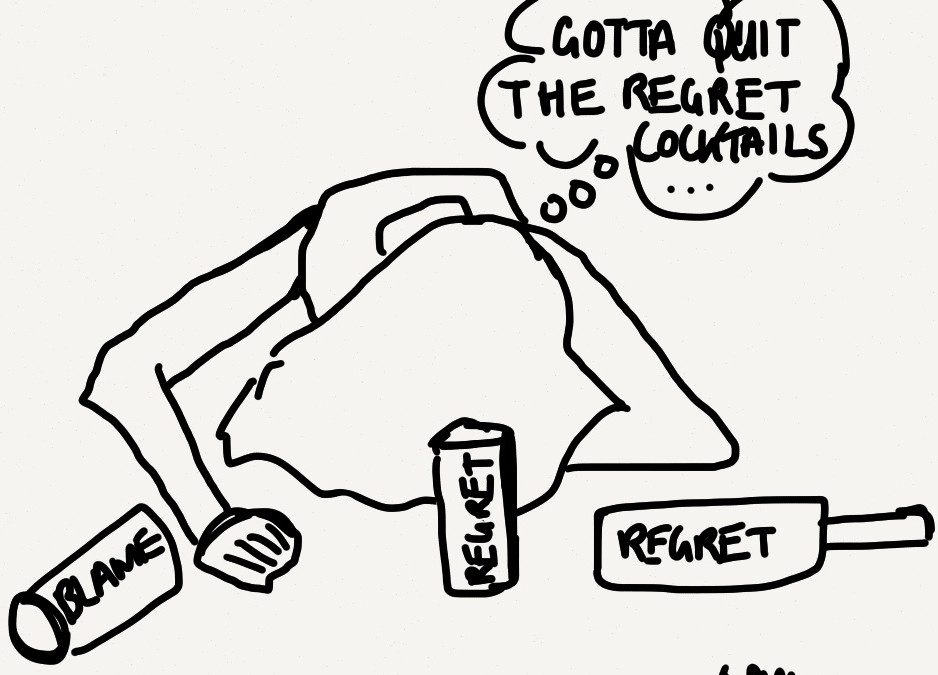


If only I could do what you say! A recent break-up with a man I was with for 12 years is now making me feel bad about my previous marriage before I even met this man. You’re right–to keep regretting keeps you from improving your life. Thanks a lot. Happy New Year–Ilene
Thank you for the reminder Natalie. I started this year in a very serious depression, and very nearly wasn’t here this year. I’m feeling a bit sorry for myself today about all the things I don’t have and how the decisions I’ve made have led to that. Your post (as it often does – how do you do that? 😉 ) came along just at the right time, and you’re right.
Thank you.
Lorena,
I too started the year in a serious depression and ended up making decisions that led to disastrous consequences. I can relate to your feelings because there were times that I thought I wouldn’t or couldn’t make it. I wish you well in overcoming your depression. Hugs to you.
Lorena and Lilly,
I have also had the same experience of crippling depression which started late December 2012 and I spent the majority of the year seriously depressed and on suicide watch.
I made choices which unravelled my life faster than he managed to do, but I am now looking forward to a new year and new chances.
I’m glad we all made it to another Christmas, through days where we were afraid of not making it to another dawn.
I hope the new year brings a fresh start for all of us and everyone else on BR. I have learnt that it is important to want to turn the page and have the determination to do so. And I respect you both for having had the strength to make it this far.
Here’s hoping for a better year than the last.
Love, JustHer x
JustHer,
It sounds as if we are on the same path to recovery and it’s so good to have the company. Coping with depression is unbelievably difficult so I admire you for coming through too. Let’s keep turning those pages. Love to you, JustHer and many good wishes for 2014.
OK so I have this sorta of semi-ritualistic habit of checking the situation as i have come to think of him FB we were never Facebook friends so its easy to say its a way of seeing if he has moved on now as petty as it sounds, I do this and I know its no good because a boiling anger comes over everytime the profile pic changes. I just feel so #($*$…I havent fallen off NC its been nearly 4 months. I have thought about contacting him but each month it gets clearer why I shouldnt.So I need to make this conscious decision of not checking up on him via FB. My ego just cant handle that my devious reason for NC didnt result in the oh so romantic grovelling I expected ( Background: He is separated from the wife. The separation has nothing to do with me it happened a few months bfr I came on the scene and we started dating then depsite redflags I know can pinpoint we dated for 4 months then the timeout turned breakup and getting back together for a wk all initiated by him.
I made it clear that I wanted a relationship which he said he cant give me that but wanted to be friends I tried it for a wk and it felt like crap so I told him I cant deal with being friends and talking so maybe in the future but not now n asked him to stop calling cos we all know how Friends become FWB and then maybe 5yrs later someone gets shafted. He called 1ce from abroad after that and I used Nats technique n asked the reason for his call n it was Just to say Thank you for recommending spots to sightsee… the hell.. lol! This was 3.5months ago and there hasnt been a sign or word since. Naturally it hurts that people can treat and forget u like that and looking back I dont regret my actions on how I ended it I just feel used and this is something I must get over it happened and I dont want it to happen again ..Im seeing a relationship coach now .. If anyone knows of any techniques to stop this whole fb stalking thing .. Please do share .. HappyHolidays to all …
NCincanada,
I didn’t facebook stalk, but I did stalk his blog. It was self-torture and like you, all it did was hold me back. I eventually came to the conclusion that it was me or his blog! If I was tempted I’d get off the computer immediately, I’d make some tea, phone a friend, take my dog for a walk, have a shower or count to 100. Don’t push aside that wise little voice that tells you to stop peeking. That’s you trying to take care of you. It really is true the less you know about their lives the better. I’m not even tempted now and it feels like freedom. Who wants to keep getting hurt over and over again.
Lily,
Thanks! you are right. It does no good and you know what since I know the effect this has on me it makes no sense to continue.I need to accept he has moved on and I should too . BE kind to myself
When I finally got to go NC on my lyging cheating ex arseface husband I did all I could to erase his presence from my life.
He had already unfriended me from FB when his future Mrs Arseface (co cheater) complained about my liking or posting on his timeline (What a nerve I had, posting on my own husband’s FB wall!) However, as you are doing, I could still see and check his FB and hers and members of his family. And he and Mrs Arseface could still see mine.
Then I discovered the power of the BLOCK! When you block, not unfriend, but BLOCK, the person blocked becomes invisible to you. You can’t see their page or profile pic at all. If you have common friends, as he and I did, any comments they make on the friend’s wall can’t be seen by you. And any you make can’t be seen by them. They can’t see your profile either.
I BLOCKED the Arseface, Mrs Arseface and most of his family and friends.
It was hands down one of the best things I did to help myself get focus on myself and heal and move on. Amazingly, even though I knew the password to his email account, when I blocked his FB I gained the willpower to stop checking his email as well.
So the technique is incredibly simple. JUST BLOCK ALREADY!
Hi FWD,
That was an excellent thing you did for yourself. Blocking is the best, because it works both ways. I wish so many more BR ladies who are TRYING to be NC would do it. The freedom from regret, worry, frustration and a gazillion other negative feelings are recede so quickly that it’s just amazing. You feel so much stronger and independent from them.
I would block but I dont even have him as a friend to begin with so I dont think it is possible but I am going to check and make sure. Thanks Ladies and Happy Holidays !
Oh I did it… Found a way to block even if we are not friends .. Wohoooooooo thanks for the great tip!
You’re very welcome 🙂
Many people don’t seem to realise the difference between BLOCKING and unfriending. Or that yes you can block people who aren’t friends. Or that people who aren’t friends can actually still send you private messages, they just go to ‘other’ instead of your inbox.
Make the technology work for you!
My FB is actually public to almost the entire world. It was initially a response to all the secrecy and hiding that the cheaters around me were practicing and I’ve found it to be very positive.
But even though my FB is public the Arseface et al still cannot see it at all because he and his snooping screwed up sad latest victim are BLOCKED!
I have read nearly every article written by Natalie and they all strike a cord with me…first time I have commented but I suspect I will now be a regular! I had to however comment on this “Arseface et al” I haven’t laughed so much in weeks…Thank you….
Welcome Archbold 🙂
I’m glad you got a chuckle. Gotta take the laughs where ever we can get ’em!
I don’t get to comment as much as I would like but read every day and usually find a nugget of wisdom from Nat or the BR commenters that strikes a chord and helps me in whatever I’m currently facing.
I too read voraciously when I first discovered this site and often copied and kept articles or comments that were particularly powerful or useful.
Here, along with my family and friends and counsellor and furry white dogs, has been the saving of me over the past year.
And Because of the good attitudes and skills I’ve learnt and am practicing the coming year is looking so much brighter and healthier 🙂
FWD
Yep blocked the ex MM several months ago. Means I don’t give in to temptation to peep myself, and I can do/say what I want without wondering what he would make of it. Serenity.
Hi Tink, remember me…runnergirl?
Hi Runnergirl! You bet I remember you. How have you been? So nice to have you back. Even sporadic posts from you are better than none at all. HAPPY NEW YEAR! (((Hugs))).
Happy New Year to you too. It has been an amazing 2013. Every single thing Natalie has posted and you all have commented has come to fruition…big hugs. Wow were you all right!
FWD,
You’re so right!
I knew the password to his Facebook and all his emails and used to spend HOURS checking them. I used to read all his messages and his replies and then cry myself to bed every night.
I continued this for 9 months after I started NC!
He changed his Facebook password and I even managed to guess the new one! It was me putting my desperation in front of my mental well-being.
But then when I started NC properly this October, I said NO MORE. I blocked him everywhere, changed my number and vowed not to check his email or Facebook. And I haven’t.
It is a refreshing feeling and I would definitely encourage everyone to do that. I consider THIS to be proper NC, not the wishy-washy game I was playing earlier.
I wasted 9 months of petty NC and delayed my recovery, I pray that no-one else does this and learns from my mistakes.
Just Her,
I am very glad that you finally wised up and blocked after 9 months of half-assed NC. GOOD FOR YOU!Better late than never, as the saying goes. Hope your new year will be much, much better better.
Tinkerbell,
Thank you so much – you’ve been an absolute star with your advice. Some tough love was needed.
Can’t believe it took me SO long, but I have finally done it. Including not contacting him AT ALL on his birthday, 3 days ago.
Sometimes I think we try NC too soon and we really have to hit rock bottom before we have the will and determination to see it through – it was so in my case, anyway.
Happy New Year to you too, Tink! I wish you all the best for a new beginning.
Thank you so much for this comment! I am new to this website, and..Let’s just say I needed to hear this. This sounds awful, but basically I was in a relationship with a visiting exchange scholar, who had a girlfriend back home. We had a “great” time, and now he has left. I’m now realizing that if it was such a “great” time, he would still be in my life, and now with his girlfriend. It’s been a rough couple of days..
The good news is that I blocked out his stuff, but then I found myself seeking out information on her. After reading your post, I literally blocked her, and it’s as if a weight has been lifted. I knew what I was doing was wrong, but I just couldn’t stop.
Thank you again!
NCincananda,
There is no magic formula to prevent you from checking him out on FB. You just STOP. You find other things to distract you from the urge. Why is it sooo important for you to keep tabs on him? Why are you NC? It should be because it is the end for YOU, and not for some ulterior motive like trying to stimulate his interest and intention and possibly get him back. You have to KNOW that no matter what, you will NEVER want him back. If you cannot get to that point, then you might as well be with him. It is very hard to be friends and not a fallback girl with someone you’re in love with. But you have to make a decision. I know. Good luck.
Be with HIM… OH Heck No! the habit started when we were on the timeout and I was curious to find out what triggered it.. Lol .. We broke up and I continued but I have done the block.. I am not as active as I have been in the past couple of yrs on FB. These days I dont want to be on too long so trust me the fact that I have to do anything makes me feel too lazy..2014 its a complete blackout, I will be forgetting him but NOT the lesson learnt :-)!
NCincanada, I can relate to this. In fact, I’m guilty of it at the moment. It comes down to willpower and I don’t feel I have much. Good on you for blocking him! Grizelda on an old post (I think it related to shame) had a wonderful analogy that really helped. See if you can find that on here? It is about throwing an arseclown figurine into a fire. Each time you pop your hand in, you get burnt. It’s beautifully written and incredibly helpful. Let’s both not FB/Instagram check on the EUM from this point forward! An early NY resolution ok? Hugs to you! Nel xo
Nel.. Im putting one foot in front of the other and will keep walking..YESSSSSIREEEEEEE!!! Thanks for the support.
NCincanada,
(I love your name)
I see you found the power of blocking below, but I just wanted to let you know that I have been there (see post to FWD). I did it every day for HOURS. I would skive of work and then spend my time stalking him. I never had FB on my phone before, but then I downloaded it just so I could stalk him on the go! (pretty sure, that is why Mark Zuckerberg released a mobile app!)
But honey, it made it so much harder to believe in my recovery.
As Tink says, there is no slow and steady approach to stopping. You just stop. I just decided one day that it was detrimental to my health and did. I still have bad days when I slink into suicidal depression mode, but they are a lot less frequent and normally because of external forces which have nothing to do with him.
You sound so strong that I know you can do it.
Take the leap and free-fall into an amazing new year, new beginning.
JustHer, you’ve inspired me! I too have suffered crippling depression, and the fact that I’ve got a dog to look after and walk was the only reason I got out of bed. I too am guilty of FB/Instagram stalking. I know I just have to stop, and I will. From now. No more. Thank you for your wisdom, and for being quite an inspiration. I just have to remember you girls when I am tempted to take a peek at his page/s. Besides, there’s nothing on them. I’m just making up stories in my head if there’s something new. And that’s just not good, is it? Thanks again. Hugs to you and best wishes for your mental health in 2014. I think we can both stay strong on here. Nel xo
Nel,
It’s lovely to hear about your own fight and successful epiphany.
I have been thinking about getting a dog too, for their unconditional love (currently reading a book called Lost Dogs and Lonely Hearts which I recommend as bed time reading!).
I think we have a strong desire to connect with some part of the ACs even after we have given up on the physical connection and that is what the stalking provides. It lets us comfort ourselves that they are still very much ‘there’, even if they never were.
The worst part is filling-in-the-blanks of what social media cannot tell you! Somehow we reach the worst possible conclusions because of this.
I’m glad you have made the decision to stop – there is nothing that will help you more! Your life is much to important to let it be all about someone else’s, honey.
There’s a new beginning for all of us in 2014. Love, JustHer
JustHer, you are are too kind! You are so right when you said my life is too important to be worried about someone else’s (and, at that, a cowardly nasty one!). I have turned another corner today – thanks to you. I can’t thank you enough. Also, I can’t recommend getting a dog enough either. I think Nel (that’s my dog’s name haha!) has honestly saved my life this year. When I am not at work, Nel is never far from my side (sometimes frustratingly so) but I love her to bits. Hugs to you, JustHer, and here’s to 2014 eh! No more stalking from this Nel either. Time is far too precious. Love from Nel xo
Yep, I do this all the time. First guilt over the end of my 12 year marriage, that I did not continue my research there forgetting that Iccouldn’t have continued the work, the university pretty much un- funded me, starved me out. That and the minor inconvenience of having my car tampered with, being followed at night, and more direct threats. Now my guilt is over not being beautiful enough, legs too short and heavy looking, my big Indian nose, lack of the proper Indian high cheekbones, crappy eyesight so I squint all the time, and so on. After having to see latest conquest on campus AND hoofing down our main street today dammit, I get into thinking about how much prettier than I she is and start hating on me all over again. Had to see AC at a public event on campus a few days ago, I was dressed well, wore some serious turquoise. He glared at me, avoided me (goody!) most of a time like I was dog crap on the floor. A woman I know from the community came up to me and said “you are so beautiful”, gave her a huge hug. Some of the conquests were much more beautiful than I, some less so. I am probably the only one who called him out on his behavior. That’s the real issue. Do I regret it? No, I had to do so. He wanted to know why I was so angry with him (as though showing up with another woman hours after inviting me to spend a weekend with him wasn’t enough?!) ; I took time to think, cool off, then wrote him a well crafted letter, one stating facts without being accusatory, written in such a way that if it were shown to anyone, it would make him look like a complete ass. Grad school is good for something, eh? Yep, I regret the loss of my marriage, almost daily. Had I not left, I would be spending the holidays delivering meals to the elderly in our area, listening while my ex spoke Finnish to the old people, we’d be holding hands, discussing social justice issues, decrying the consumerism of the holiday season. We’d be holding hands while watching the sun set over the big lake on Solstice. Normal. That’s not what’s gonna happen this year, maybe never again. That level of connection is rare, I feel that my interaction with men ever since is sooo much “less than”. Thats why AC could weasel his way into my life, he was the only man since my ex that I felt I could freely talk to, plus he is damned good looking. The only thing I regret about the AC is being stupid enough to first, respind to his advances in the first place then later think he would at least apologize. Dumb!
Noquay,
Dumb you are most definitely not! I’m so glad you called that woman using, hideous excuse for a human out on his behaviour. You should feel proud. Sometimes I regret not letting the AC have it. Can I ask what has happened to your ex husband? Is there any chance that you two could get back together? I feel sad that you are stuck in that place having to endure seeing that man. I’ve never seen what you look like noquay, but you sound beautiful to me, inside and out.
Noquay,
First of all, I’m sure your looks are a lot better than you describe. Turquoise matches your Native American skin tone perfectly so I know you looked amazing on that day. Furthermore, it’s whats in your head that is important and you’re nobody’s dummy. I know you feel you lose out frequently in the social realm, but that THEIR problem, not yours. I’m sure you cause many folks around you to feel some insecurity. Again, their problem.
I’m really hoping that your reminisicing ( I hate spell check sometimes) about your marriage is really pointless because it would be very sad if you unconsciously felt that maybe you left a bit hastily? Is there really NO CHANCE at all of a reunion? Would you want that?
I’m feeling very much alone, frustrated and angry . I’ll be glad when the holidays are over. My family is very tiny and very fragmented. I’m tired of reaching out and feeling dependent on them to make my holidays happy. Petie is still recovering from his surgery and I’m feeling a bit abandoned. He calls every day, faithfully and we talk for long periods but we have no holiday plans. He can’t even wear a suit, yet. I can’t help but wonder if I’m being too patient and understanding for my own good. I feel as though I will NEVER get off this seesaw with him. And, I’m on it alone. He’s stable. I’m the one who keeps fluctuating between trying to be less passionate and then having these overwhelming feelings of love. I sent him a Christmas card that is kind mushy, but that’s how I was feeling. Now, I’m wondering if I should have a more casual one. I certainly hope I overcome this horrid mood soon. I’m not feeling very joyful.
Hi Tink,
I’m confused about you and Petie. He’s still recovering from his surgery, can’t even wear a suit yet and he calls you faithfully everyday to see how you are and have a nice long chat?
Why do you think he’s actually calling you and still being there for you even though it’s not physically possible for him to be with you?
It seems to me that he still likes you very much and for a man in his position (post surgery and recovering) he’s doing the best he can in a bad situation. As long as you realise that his condition isn’t going to improve in the future, and do you think he’s trying to let you down gently because he knows how you feel about him? Is this what is making you frustrated and somewhat angry because it’s Christmas and you want a whole lot more from him?
Would he be open to having you visit him for a day or two just as friends only as he’s probably not able to handle your emotions as well as recovering from surgery and coming to terms with his own condition.
I think you need to back off and stop pressuring yourself to get an outcome either way from a guy who’s not capable right now.
Abraham Lincoln said something to the effect that people are as happy as they let themselves be (apologies to Mr Lincoln for my misquote) and it’s actually quite true.
So stop beating yourself up Tink, if something’s meant to be, it will be and if it’s not …. That’s God or your guardian angel looking out for you and telling you it isn’t right.
Hugs xx
Pauline,
Thank you for you concern and your post. You get the picture of us very well. I had a long talk with my sister and she knows all there is to know. Her take is that, all factors considered, he makes a better friend than a boyfriend because he seems to have some problem with commitment. The three marriages says a lot and do know that I prefer to not live with him because both of us are too set in our ways. But I am going to visit with him for a few days, soon. He seems to be looking forward to it but no date yet. You hit the nail on the head when you said I feel angry because its Christmas and I want a whole lot more from him. Pauline, you have no idea how much I keep telling myself to back off. I DID actually redirect my mindset when I TRIED to be NC, but eventually at the slightest effort from him, I’ve been sucked back in all over again. And yet, it’s because HE is so right for ME and I know he feels the same. He’s not trying to let me down gently. It’s the whole ED issue that really fecks things up so much. He was pulling away until recently, but now he’s encouraging much more attention from me as we’ve talked about the reunion. I’m afraid to behave in a needy manner (physically) because I don’t want him to feel that I have expectations he won’t be able to meet. I actually told him this, and he said I was giving up hope and to “bring in on”, as if my flirting and sexy talk is going to give him an erection. I KNOW WE ARE BOTH ENGAGED IN A GAME. A FANTASY. And because we enjoy each other so much and it’s so late in our lives we feel like “What the hell, why not enjoy the good time where you can get it.” Neither one of us are leaving the relationship, so I at least have the assurance that he’s not going after another woman. I AM THE WOMAN for him. He has shown me that. It’s just this intractable situation that causes an invisible barrier between us.
Thanks, Pauline. I won’t say anymore. I’ve exhausted the subject too many times and I don’t think Natalie appreciates it at this point when it’s not on topic.
I’ll give an update after we’ve been together.
MERRY XMAS!
Noquay,
With the mix of toughness and vulnerability you share with us, I already know I’d find you very attractive (platonically). Add to that dark skin, light eyes, and turquoise! Not to mention passionate feelings about the earth and other people, and I’m sure you stand out in a great way. That’s why the AC is probably threatened by you. If someone that stands out like that calls you out, you start sweating. And you want to put them in their place. And maybe, just maybe, you’re also a tad jealous and a little bit turned on as well, at the same time. But you (the AC) would never let on to that. Because, after all, why would a woman like Noquay give you the time of day again, when it was probably a fluke before? After all, you know that you’re not man enough for her, if you’re even willing to admit that to yourself.
That’s what I see going on here, from my perch. For whatever it’s worth.
Feelings don’t have intelligence; they just are what they are, but sometimes they lie and we don’t have to act on them.
I think you are attracted to this guy. Yep, this pig turns you on, but clearly you don’t share the same values and…, but there he is every day, and wouldn’t it be nice if he was a ‘better’ person?
To me, you don’t have a right to tell this guy about himself. This guy and anybody else who walks the earth can be and do whatever the eff they want,(Fortunately, society jacks their asses for things like theft, assault…we lock some of the degenerates up, while others stay in our mist…. And, I think YOU need to accept that, and move on with your life. You talk about this guy and his morals and his choices way to much!!!
You live your life the way you want, and let other people do the same. End of. You do have choices Noquay, you just don’t like the ones that you have. So, you aren’t making any.
You have been through hell, but guess what, other people still live there.
Put an end to the self-pity, you have been given so much. You’re effing brilliant, and I’m damn self-fish right now; I just want you to show us all how to let go and move on….
xx
We celebrate success stories. Those are the people who have moved on from BR. They have read all the articles and responses, have taken the advice and finally get it. Presenting the painful experience which caused someone to google a phrase to find this website, and then present their experience for emotional support is truly amazing.
When I first landed here I thought, eventually I hope I will be able to help others. And for about 2 years I have followed those willing to be vulnerable and put their stories before the entire globe..And I have thought, no more from runnergirl, she has moved on. No more from Tired she is really a success story. Not much from Grace lately, must be ok, not needing support. I followed Lilly closely with her heart wrenching story and yoghurt, who seems to have moved on too. Today is my one year anniversary NC with someone I really was in love with. I see him every week. Answers: resolve your parental/family issues. If you don’t
you may find yourself an old lady revisiting childhood issues.
Times are very different now with casual sex and the internet way of meeting people. And the lack of morals and care for one another. We live in a world of self gratification at other people’s expense. Shame on us.
My regret in life is that I did not keep NC forever from mathman, as when I found him again after 30 years I broke contact. I thought we could be loving adults after so many years. If a person is selfcentered, that’s it. Move on. You may be attractive and fun and smart and educated with a gazillion interests and a great career,but maybe there is someone out there who is not, but is a kind, loving, person who would like a committed relationship to someone who may not be young, or pretty or super duper educated. On some level we need each other. And Natalie, we respect you, because you are a success story.
Oh…runnergirl is still here. I’m running a campaign and I’m having the time of my life. I have a little regret. The exMM has been very helpful but he doesn’t get to see me in real life. I’ve finally gotten out of my rut. As a candidate, I have to meet people in real life. I am so far out of my comfort zone, I don’t even remember what it was. I have to walk into a room of strangers and make friends. I’ve made some incredible friends. Dear lord in heaven, I have to ask for money! I’ve raised 20K. Of course I have to raise another 100K by June so there’s a lot of work ahead Everything I’m doing I learned from BR. You all are amazing. My biggest regret: Not doing this sooner. My focus is now me and my campaign. Guys…they can donate or get lost. I have ran into several god fearing married men who are totally supportive. Then when push boils down to shove, they just want to get laid. I’m not interested in that. Period. So yes…I’m still here.
And Simple Pleasures, you reminded me, my two (or is it three) anniversary from the big break up with the exMM that brought me to BR was December 19th…don’t remember the year! That is success.
S.P.
I don’t know ig it’s because I wish I was there, but I don’t think we can assume that those who’ve stopped posting on BR have worked out their lives to a tee and don’t need any support. There can be many, many reasons why certain individuals appear to have dropped off the radar. I’m sure other issues have taken precedent for the time being. They come and they go, or they go for good. I don’t think a permanent departure from BR necessarily means they’ve got their sh*t together. Life constantly presents challenges and if you’ve EVER been here and actively posting,in the first place, most likely you’re facing OTHER challenges and have not suddenly become so perfectly strong that you can kick BR to the curb. I don’t see BR as a relationship or lovelorn blog. I see it as dealing with life, in general. We never really GET THERE. We’re continually evolving.
HAPPY NEW YEAR!
I’m a prime example of that. Rarely post, reader for years. Sporadic as you say but read all the time even if I’m feeling OK. Sort of got my shit together but my emotions are so varied that there would just be no consistency so for that reason I would rather stay in the background. I hope that’s not too selfish of me. Half the time, what goes through my head is so dramatic and dynasty style that I can’t keep up myself. It’s coming together. Slowly.
I will add, I am very grateful to you all and the gem posts are what have got me through.
Noquay,
A married friend went on holiday to a tropical resort and while his wife was shopping he spotted this absolutely beautiful woman sitting by the pool. Body like a goddess, legs about 5 miles long, blonde and tanned in the regulation skimpy bikini. Being a not bad looking dude himself, he sucked in his gut, threw out his chest and sidled over to have an up close look (typical male). He escaped about 10 minutes later because this gorgeous girl had no conversation, no brains, no real personality, she was just a product and didn’t have to be or do anything else. He was laughing telling us this but it just goes to prove that looks will get you in superficially but you need to have an awful lot more going for you.
I always remember this when I start being too critical of myself physically.
That AC lost out big time with you and he knows it, you’re so far ahead of him the only thing he can do is try to drag you back down to his level which isn’t possible.
He hasn’t evolved past being a pretty face and sucking in as many women as his ego needs to keep himself validated, it’s probably the only way he can feel real.
Assclown’s on some level seem to know this which is why they get nasty when you call them out for their behaviour and then they have to move on so they don’t have to look at themselves or what they do too closely, it would be nightmare territory for them.
Be grateful that you’ve got a good education and a good mind to back up everything else that you are. Fuck the rest of them!
I regret that after 18 days of NC I “blew it” by jumping on a little excuse (I got one of his bills in the mail) to call him. We emailed back and forth a little bit, and it stressed me out to no end. I have re-blocked him and am resuming NC. I regret that I didn’t have the guts to keep going forward. Lesson learned: he’s never ever going to change, so don’t ever ever contact him again. That way, madness lies.
Oregongirl – those 18 days NC are still 18 hard-fought days of NC and you are still a stronger person for them. You certainly didn’t blow it! Don’t be too hard on yourself. There was a valid reason for contact (the bill) – it wasn’t a “let’s catch up” or “I miss you” form of contact. Don’t be too hard on yourself! Hugs and merry Christmas. Nel xo
Oh the dreaded could have’s, should have’s and might have’s. Contemplating the ‘what if’s” is a road to nowhere. Many times I’ve beaten myself up for not doing things differently, but how could I have done things differently before I’d learned how to do them differently? Does that make any sense? I’ve learned now, I won’t repeat the same behavior, so it’s time to stop punishing myself and be a bit kinder. I’m heading into a new year with a feeling of optimism for the future. There’s some residual stuff left, but I’m coping with it. It’s a good feeling and for those BR readers currently experiencing emotional pain please have faith that you will get through it. Keep reading BR;I’ve gone from the pit of despair to acceptance and hope for the future and so can you.
Lilly,
You’ve done an amazing job! Give yourself the credit you deserve!!!
Merry Christmas!!!
Lilly,
This Christmas for you will be better than last year, and will continue to be better from now on.
Tink,
I do feel better this Christmas despite a brief fall from the horse (drunken reading of reference, but I’m back on and am looking forwards.
I’m sad that you are awash with uncertainty though. As you know I’m no relationship expert(!)but it sounds as if some important needs are not being met in your relationship. Having to try to be less passionate must be frustrating and it’s no wonder you’re feeling lonely and uncertain. I know you’ve discussed this with Petie before, but if an unsettled feeling hits home maybe it’s time to air those uncertainties again. Petie will give you truthful answers and the solution will come I’m sure. That’s it I’ll shut up now!
Wishing you a return of your joy this Christmas, xx
lOVE YOU LILLY,
After church service this morning I felt as if the pastor soothes my soul and said so many things that I needed to hear. I have sooooo much to be thankful for a helluva lot more than a gazillion people and I AM LOVED by many.
Allison,
Wishing you a very Merry Christmas too, and thanks for all the wake up calls, xxx.
Ah those regrets are full-force kicking me in the arse. I regret taking him back time and time again, I regret accepting his crumbs, I regret being a booty call. Most of all I regret not taking better care of me!!
He’s been baiting me most of the week…..messages meant to make crazy drama and get me to engage in yet another worthless conversation. I’ve not nibbled once!! I am feeling incredibly empowered….which I don’t regret one bit!!
xoxo
Jamie
@ Jamie … YOU GO GIRL ! I think I should count myself fortunate he didnt bait me after I told him to take a hike and I wish he would .. As if grovelling would validate me (OMG) I just realized after typing that is what it really boils down to.. Writing is cathartic .. lol..don’t fall of the wagon and Happy Holidays
Hi NCincanada,
Yea, my AC likes to pull me back in……I mean who can blame him though since it’s worked every other time. He is soooo good at it too!! He is a sales manager so is really skillful at overcoming my objections. Even though I’m looking him in the face telling him that I’m not happy. He actually said to me “well that’s not how I feel”. The world revolves around him….well minus me now. Please be happy that your guy didn’t lure you back in or keep contacting you. Clean break is like pulling the band-aid off quickly.
And you bring up a good point……writing it all out has allowed me to see a few things that were simply falling through the cracks.
xo
Jamie
This is an interesting post for me, Natalie, so thank you for that. I’ve had a very tumultuous end of the year, what with quitting my job and redefining myself in every way. Though, in my case, I can’t say that I have regretted any of my decisions in this regard. It’s interesting, because although I’ve made some very defined lines in the sand (lines that go against the grain of what’s “normal” and “expected” in society, a.k.a. quitting my job in a bad economy, choosing to stay single–at least for the time being–due to not finding a man with which I can form a mutually respectful relationship), I find that the irony of this is that I am actually living completely without regrets. That has always been my endgame, traditional life be damned. And I have to say that I sleep very deeply at night.
Rev,
Those sound like good choices and I’m happy for you. Keep sleeping deeply and thank you for being there for me.
oops, pressed the post key too quickly!
Many hugs and kisses to you too Rev and also thanks for making me laugh so many times.
Hey Rev…it is good to find you in such a good space. Just keep it up and keep moving forward. Trust me, I’m not living the traditional life or what would be expected either. Maybe that is why there are no regrets. There is no guy that could even begin to keep up with me and I guess the same for you. I do have to admit that all my exes have been major contributors to my campaign. I’m not even the least bit remotely interested in a guy or “finding one”. I’m having the time of my life finally being me! There is so much to me. And I bet there is a ton to being you…all of you.
Runnergirl!!! Great to hear from you, girl. Glad to hear you are so busy making it big that you don’t have time for the drama of any ACs out there. 😉
I too have been sporadic at best here on BR, I suppose since I have things pretty much under control with regards ACs and boundaries. It took a while to get here, and a lot of stupidity and growing pains. And I’m not saying I might not have relapses, but it feels damn good to be living in “the arena” as Brené Brown says. So glad to hear from you, runner. I’ve thought of you lately, so I’m glad to hear your success story. And you’re right, there is SO MUCH more to ALL of us ladies and gents here! 🙂
Hey there Rev, it’s great to hear that you have things pretty much under control on the AC front and you are living in “the arena”. I’ve been hit on by at least 3 AC’s on the campaign trail and they got flushed so fast. I remained “friends” without any benefits whatsoever. If they want to donate to my campaign…go for it. Little did they know, I’m a proud BR lady! One had three kids under the age of 10 and a wife and was a man of the lord. Ohhh, just ick. AC’s are just out there everywhere. After BR, there is just nothing but ick when I meet them.
Jaime,
Good for you!!!! It is empowering, isn’t it.
Why not give yourself another gift: BLOCK!
Here’s to 2014!!!!
Jaime,
Yes! Block! You’re beginning to make progress. Blocking him would help you so much more.
Hi Tinkerbell!
He has been carrying on these one sided conversations via text. So wierd!! He is saying things like “well I guess your dating someone else” & “can I assume that we wont be spending christmas together”. Haven’t answered any of it. Hoping he will get the hint and just stop.
I went on my state court case website and put in his name. He has had a few protective orders filed against him. Yikes!!
xo
Jamie
Block, block, block. BLOCK! Why are you reading his stupid, worthless text messages???
Hi Jamie,
I think you may be giving him too much credit for persuasiveness. I say that because 1) you’re too naive, 2) you have not been ready for him to be out of your life permanently. It’s great that you are not responding but I don’t like the method you’re using to block him. If you live in the US, why can’t you go to your provider and have them do it for you so that you won’t even know when he calls, nor will you be able to call him. You’re relying too much on your will power which is risky. I fear you may break down and start checking what he has said and then eventually you’ll be talking again.
Hi Tinkerbell,
I use a prepay cell service called Straight Talk. Unfortunately with this carrier I don’t have the option to call them and block a number. My best option was to download an app on my smart phone…..which will block him BUT it saves text content on the app site. I can go to the app and read his text messages at any time.
Yes, I admit I have been reading the messages BUT I’m not responding. Don’t plan on ever responding again. I gotta say that my willpower this week has been a huge factor in my empowerment. For every message I don’t respond to it’s almost as though my self-esteem meter is rising. And I like it!! 🙂
xoxo
Jamie
Ok, Jamie. Glad you told me about Straight Talk, as I’m just about to change to that plan and did not know about the lack of blocking. I won’t be having to block anyone. I understand, now. Good luck maintaining your will power.
Hi Tinkerbell,
Straight Talk leases networks from the other carriers so doesn’t have the traditional customer service department. I had to download an app to have blocking capabilities. I will add though that I do really like Straight Talk….saves me a TON of money!! I pay $45 a month for unlimited talk, text & data.
Thanks for your support!!
xo
Jamie
Hi Allison!
Yes, I do need to block him again. Although my blocker app on my phone will notify me when a blocked text or call comes in…..and since he’s the only one I have blocked I know it’s him. I know I will get to the point where I don’t even care to read what he’s writing…..the big thing for me is that I’m not responding. HUGE step for me!!
xo
Jamie
Jamie,
Difference is, now you are rubbing the drug of choice on your gums instead of smoking it. You are still engaging in him every time you read his text, you are investing time in him, and you are still getting validation and a ‘high’ each time he texts and you ignore. It’s an improvement from in person interaction with him, but you are still involved. Cold turkey works best Honey, because what’s coming down the pipe at you when he does stop texting, if you are validated by him pseudo wanting you….that feeling of empowerment and self control will crash down and you will withdraw and feel like your back in the shit pit all over again. I know because I did it, been there and let this kind of half measure to myself drag on until I had enough pain. Letting go means NO MORE CONTACT. It means discomfort at first and yes, it’s really hard, but if you are serious about moving on and having a better life, he needs to be out and not on the periphery. The attention from him is validating, don’t kid yourself. This keeps you invested on some level.
Exactly.
Listen to Selkie, Jamie,
This happened to me too and you’ll be back in that pit before you know it. I know it’s hard to let go but you can do it, xxx.
Thanks Lilly!!
So sorry you’ve been though this.
xo
Jamie
Hi Selkie,
I hadn’t even considered any of this. Yikes!! I must say that I’m feeling incredibly naive right about now. 🙂
Thank you for taking the time and having concern for my situation. I remain nc on my end and am certainly eager to keep it that way. This morning will be spent finding a better blocker app to put on my phone.
xo
Jamie
Jamie, Don’t feel naive. I hate to say I’m seasoned at this because having been through this enough times is really not something I’m proud of, but that said….it took me a while to finally get myself to a point that I could see what was hurting me and what was helping, and what I had control over. The relief I felt when I finally blocked my ex was tremendous. It put me in the driving seat, and kicked him right out of the car. Before I blocked, I felt like I had the wheel but he was the back seat driver nagging and clouding me. My heart no longer jumped when the phone rang and I didn’t sit on pins and needles when one hour had passed, two, three, then one day, two days, and so on waiting for that next text or call. Looking back, it was the pivotal moment I knew I had my own back. Now THAT was empowering. Hang in there and keep doing the best you can. If you falter, there’s always a fresh start at it tomorrow.
Hi Selkie…runnergirl here. You are so right. And I’ll take it a step further. I don’t wait for an text or an email anymore. And then when he does, it is simply an annoyance because he thinks I’ll drop everything to respond. But…Guess what…I’m TOO BUSY! Perhaps he is the one with regrets?
Runnergirl! I’ve often wondered how you’re doing. It sounds like you’re doing fabulous. High Five Girl! Best of luck to you while you take life by the tail. Regrets have no room when we are full of hope.
Selkie, Wiser, I have been wanting to express those same thoughts for days. We (others here, too) can all see Jamie is not letting go. She’s getting her fix by his ‘chasing’ texts. (I feel like saying “Class, pay attention. Textbook case here.”) The walls will start caving in at about day 3 of NC from him. If he goes 5 days NC, she’ll be full of pain, recrimination, anxiety, anger. Certainly won’t be feeling empowered. Ignoring AC lazy contact attempts is empowering and ego-stroking for us, and Jamie is on a lazy-contact pipeline right now.
Now, Jamie. I don’t fault you for enjoying his chase. Love is a game. I know some will disagree, but, there is a push-pull/lead-follow dance that happens between lovers. Songs have been written about it. The classic song standard ‘It’s All In The Game’ has lyrics that spell it out “Once in a while he won’t call, but it’s all, in the game; “You have words with him, and the future’s looking dim. But these things Your hearts can rise above”.
Jamie, sometimes NC is used to get AC to toe-the-line. We all make course correction in our own time.
Hi Elgie,
So what your saying is that I’m not a “one-of-a-kind” example of how this really should go?? I’m not special?? It’s not different for me??
LMAO!! Sorry, wanted to have a little giggle at my expense. Everything you wrote does make perfect sense……mostly because you all have been through it. And I’m certainly not above using the experience of others to better my situation.
In reading his text messages over the past week I have come to see the person who he really is. I am feeling shut down about him. Although, given what you wrote, that could change once he stops texting me. So for now I will close and search for a better blocker app.
Thanks for writing what you did…..it does mean so very much!!
xo
Jamie
I try not to beat myself up over choices I’ve made. You can’t move forward if your stuck regretting decisions that you made in the past.
I love this quote I recently read on pinterest, ” I’ll never regret the things I did wrong, I’ll only regret the good things I did for the wrong people”.
I’m the classic giver/fixer/Florence nightingale and I do wish I didn’t give so much to this AC, especially emotionally, but I don’t regret him and I won’t allow me to beat myself up over giving so much to someone who is incapable of giving back.
He beat me up enough emotionally. I just want to learn from this and move on. As hard as that is…
Lorraine,
You have the right idea. Why help him beat you up more? He’s already done a very good job of it on his own. No help needed from you. It’s great that you’ve reached this point. Goody.
Lorraine – this is me exactly. I have learnt this year that it’s not my job to fix everyone and make them happy and be nice all the time! I have also learnt that many people don’t deserve our kindness either. Hugs! Nel xo
Been on a Regret Binge for a while (not about romantic relationships, thank goodness, so that’s a plus). Thanks for this food for thought.
Thank you Natalie for the great post, the most what is “killing” me – one question: “WHAT I ACHIEVED THIS YEAR?” And the answer is: “NOTHING”…Maybe couple of things: I rid of two ACs and the “bestfriend” who called me a c@@@! That’s all really…I hope the next year will be different, and I will finally change my job and adopt a child;)
Little Star,
Actually, hon, that’s a lot! You’ve unloaded quite a bit of baggage. Great!
Thank you Natalie I needed this because I am extremely regretful and it’s sucking me dry. I am reading NC after being a fall back girl for almost 13 years. I was never able to move on and meet someone else because I hope he would change one day. After being a fall back girl through his 2 marriages and 1engagement I finally had to implementing the NC rule. Why do I still want answers to my thousands of questions knowing the answers are all going to be lies. Why can I let him go. The dream he sold me is very expensive because deep down I am still thinking he will change knowing that he will never change. I just want to wake up and forget the last 13 years of knowing and being with this man. I struggle everyday with it. I check daily FB, what’s app, just to name a few trying to find his movements and his wife to see if he really did leave her. The wife which was once a girlfriend he cheated on with me. Yes he married her and not me. My story is twisted and would have people telling me that I made myself blind to the truth. Which is true. So yes regret is currently my middle name. It’s only been a week implementing the NC and I hope I am doing it for the right reasons. I really appreciate you guys sharing because it helps. Thanks, happy holidays and a great new year!
Lilly
Girl, you made me cry this morning. Good tears. Remember, we made the decisions we made because we were operating with the information we had at the time. When that info comes from dishonest/using folk, no wonder we find ourselves in an emotional @#$%storm. Kinda like buying a used car and it seems to run great. The salesperson assures you that its in tip top shape. You drive away into the sunset and the damned engine blows up, leaving you marooned in a snowstorm. Being a smart, savvy chick, you take out your emergency survival kit, make a shelter, stay warm, but you will be marooned for a long, long time. This is what ACs do; are dishonest, and hand us often many years of having to heal and be alone. Thanks. Had AC told me (or others had told me; apparently his shenanigans were common knowledge to many) that he was involved with someone else from out of town, I’d have distanced myself post haste. We’re often also operating from a place of trauma, of great loneliness, of vulnerability. That’s where I was when AC began to pursue me, you too were probably vulnerable in some way.
Often too, we the wronged parties, are the ones that take it in the shorts financially, either having to pull up stakes to move, having to spend lots to try and move on. Part of the reason I cannot afford to go home is that I have spent thousands on on line sites, better clothes, tons of gas, even had to replace my car in order to try and get “out there” meet new people. What I met was my version of Tinkerbells Petey, a nice person who can never have a true relationship and a terrific, warm, damn good looking guy here for the races that neglected to mention his girlfriend. Not much return on investment there. Should’ve been working on my farm, getting more training in. Probably should give up for the next 6 1/2 years and just concentrate on getting work done, raising the value of this place for when I sell it.
Nope, I cannot go back to my ex; he is happily living with another woman in his home state. Older, educated men get to move on, and quickly because they are rare, in demand, the female counterpart does not unless you want to “settle”, a strategy that does not work well. Too much incompatability. (A friend of mine, an administrator, was just fired because her uneducated, socially unskilled husband lost it and said inappropriate things at a high level, very public event. She has two kids to support).
I don’t consider myself externally beautiful, more exotic really. Smallish wiry body, intense blue eyes in a dark face, extremely long black hair, a very sharp wit, irreverent as hell but polite and caring, very skilled. My ex saw these things and loved them, I think AC saw these things but they were repellant and/or a threat.
Lilly, I want to say how proud I am of you, you had a s@#$load of bad thrown at you and you are coming out the other side. Happy Solstice girl.
Noquay,
Just as I said absolutely beautiful! Don’t give up anything could happen in 6 ½ years. Online dating seems the way to go for you. It works for some people and intelligent, environmentally aware, kind, decent men are out there; you just haven’t found them yet, but you will and when you do he will be a very lucky man. Happy Solstice noquay.
Noquay, Lilly
Or it can change in a day, here’s some ABBA for you, yay!
http://www.youtube.com/watch?v=7Thvf6IxnQg
grace,
Thank you for the wonderful gift and thank you for helping me along the way, xxx
Am trying nc again! It’s been 7 days on my part, 5 on his. In the past three years, he’s never gone more than 5 days nc with me. Have updated my iPhone so I am able to block him, but haven’t done so yet. Still feeling really sad, and not a great time of year.. I don’t want things to be over but I know out of respect for myself it has to be. Roll on January!
I’ve been doing some reflecting myself and trying to nip the regret monster in the bud. The relationship with the ex is long over, but I still have some down days about it, especially when I remember how it felt to be dumped by someone who had three days prior stood in my kitchen and said “This is real, you can trust me.” And then when I called him on it during the humiliating breakup conversation, he said so casually “Well, I meant it at the time. Gotta go now. See ya!” He patted me on the knee and out the door he went, never to look back. A professional man of 60, if you can believe it! I remember feeling so powerless, like I had actually shrunk in size or reverted back to being a small, bewildered child.
But I’ve learned since then something I want to share with all of you who have been rejected, humiliated, tossed aside, dismissed, disrespected, cheated upon or had any number of other painful experiences heaped upon you. Please remember that YOU have not been diminished by this awful treatment. They have. THEY HAVE! They have diminished themselves by their own crappy behavior. This is a reflection on them, totally. No matter how effortlessly they seem to be bouncing through life, please remember this. I have a good friend who had this observation about the ex: “Wiser, this is a ‘small’ man.” And that’s right. These are small, diminished human beings. Small of heart. Small of spirit. Deficient in self-respect. Shrunken internally. Honestly, they should be pitied more than anything.
So my greatest Christmas wish for all you wonderful BR ladies (who I love like I do my closest friends) is that you stand tall as this year ends and say to yourself, “By God, I’m a strong woman!” Claim your full height and queen-ship, and don’t let any ‘shrunken’ people try to bring you down. Blessings and love to all.
Love your words, Wiser. You are right. They are the small ones – too afraid to really love the way a full spirit can love. And we end up feeling small.
Stand tall! I will, I promise. I will stand tall with you and all the ladies on BR. Together we have so much love – let it shine inwards <3
That is the most empowering message I have read in a long time. Amazing post and a very important message to us all. Seems like your pseudonym is the correct one for you.
Merry Christmas to you all.
Absolutely awe inspiring! Love your words, Wiser. Thank you so much for strength and encouragement. Happy Holidays!
Wiser- Thank you. I needed this tonight.
Wiser what wonderful words of wisdom (you are certainly your pseudonym). I loved them so much that I have saved them to my phone to read again and again. Can’t thank you enough! Nel xo
Wiser,
I felt EMPOWERED by your post.
Wiser
Thank you for your words! And I´m thinking I could use them for all kinds of relationships, not just romantic ones.
I’ve been away from BR for a few months and now I’m back in worse shape than before. Long story short, we got back together, kind if, and lo and behold she’s been seeing at least one other (older) guy. She didn’t tell me though, I found out. Now I’m literally minutes from a check-up to see if I have any stds. Not feeling regret as much as anger that I went back to the sh*tty quasi-relationsh*t, wasted so much time and energy on it, and might get to deal with an std. Eff. I blocked get phone #, fbicked and gave every gift token or anything that reminded me of her back to her. No more.
I’m sorry. I hope you will not be tempted any more. We must always remember — there were reasons we left in the first place.
Hope you get treated, if necessary and will be well soon.
Ahhh regret… The bitch that keeps us from being in the moment.
There are so many things that I have regretted – so many mistakes I have made. This new year, 2014, I am going to focus on acceptance and forgiveness – especially of myself. I have a chance to work with a lot of young families in my line of work (preschool) where they are all in the beginnings of growing their families. The dads are very involved and it is a daily reminder of what I don’t have. I feel guilt on a daily basis – gosh it’s Christmas and I don’t have any family traditions really for my children. I work 2 jobs and go to school and it is a huge deal if I make dinner, let alone do anything extra. I beat myself up with guilt and it always leads to thoughts of regret (why did I have children with a man who obviously was not good dad material… etc.) Well today I stopped myself from going down that road. I have to think of what IS, not what I think it SHOULD be. No, my kids don’t sit down to a hot meal every night, but I do other things that maybe is more important to them than that. I support their passions. Maybe what is the “ideal” family in my mind is overrated, unrealistic. I need to focus on what is good and what is loving, not what is lacking.
That is true of my love life too. Yes, mr. uk did some crappy shit AC stuff, but why regret it? I can’t regret my actions because they happened. It has led me to a place of growth. I am still in the process, but it is happening. If things hadn’t turned out the way they had, then I’d be in a relationship but not my true self, like in every other relationship I’ve had. Trying to morph into what I think they want so I don’t “lose” them, but instead I lose myself. So no regrets. I don’t regret my ex husband because I have my beautiful girls.
Acceptance and forgiveness.
Merry Christmas BR Girls. Love to you all <3
Such a horrible time of the year to be depressed and regretful. I have been deep in the mode of regret, but have also been rocking back and forth between trying-not-to-regret and letting-it-all-out. Things I regret are:
1. Ever meeting the arsehole
2. Given up everything in my life, friends, family, hobbies, work, interests, all for him
3. Losing my self-esteem to him
4. Breaking up with him and them repeatedly running back to him
5. Letting him physically and emotionally abuse me
6. Not walking away the second I heard that he was cheating on me
7. Giving him too many chances
8. Forgetting who I was
9. Trusting the wrong people with my feelings and secrets
10. All the secrets he knows about me, which I am worried he will eventually use against me
11. Not being strong enough to look after myself
12. Wishing he has changed, and even now (a tiiiiiiiny bit) hoping that he will come back for me (a year later)
13. Ever breaking NC
14. Pushing away every nice guy who I dated following said arsehole
15. Not pursuing a guy I dated (only 2 dates) who I feel like I could have had something with
But given all these regrets, I somehow still feel that 2013 wasn’t just a wasted year after all. I have recovered from the trauma and now it is just about recovering from the hurt. The most important part of the recovery is over, I think. I can now go weeks before breaking down and crying my eyes out.
I feel like I have changed completely from who I was before, and have often questioned whether I will be happy again, but I am now starting to believe in myself more. I am slowly working my way out of poverty (VERY slowly) and looking forward to eventually starting that new job.
I didn’t think a time would come when I could say this, but I am looking forward to moving on. Moving on to a new year, moving on to a new relationship and moving on to a whole new life! I’ve still got a few years in me yet, I think!
I’m no longer afraid to fall in love. I’m afraid of completely trusting others, but I trust myself more now. Who knew a year could make such a difference? The “proper” NC I started in October has been the biggest help of all.
I can’t say it’s all in the past, but there is definitely less in the future.
I made a mistake.
I have still been chatting via Facebook with that quick-witted man who reminded me of my ex. This has gone on a few weeks. I thought a friendship was growing. He lives in a different city and has a cat (I am seriously allergic to cats), so I reasoned nothing would happen romantically. Justifying much?
Anyway, he could be real nice and funny; my defenses started to drop. Then he’d cut right back in with the wit and self-deprication. And sometimes he’d take such a snarky, superior attitude toward me. Trust me, though, I bit right back. (Something I never did with my ex. I wouldn’t have dared.) Usually, this guy retreats (disappears) when I stand up for myself.
Sometimes the chatting was real good, so I thought it was worth all this. Then I reconnected with an old friend (an acquaintance of the ex actually) and she has been really warm and supportive in general. She treats me well and with respect. Sometimes my crass behavior stands out like a red thumb and I feel a bit uncomfortable.
After spending time with someone nice and warm, I messaged with Snark Guy and he ended up being so disrespectful during our last chat, I couldn’t ignore it. He angered me irreparably; I did not respond to him and have not since, which was last night.
Over the past week, I have encountered a few people who have treated me very well (I’m not used to this) and it feels amazing.
BTW, blocking the ex on Facebook is what saved me through No Contact. I would have gone bananas had I not.
I was outright kind and warm to this latest fella at times, and he was a dick. Not my fault. I can’t help that some people are too stuck on themselves too accept warmth. I owe him nothing. NO CONTACT all over again here I come. This one should be easy, as I’m not losing; I am winning by no contacting this foo.
BTW, that picture is me except with real booze; I’ve gotta watch that, too.
NO CONTACT with booze! YES. That might work, as well…
Perhaps the two are intertwined: BAD HABITS AND BAD MEN. I think so.
I didn’t drink for near two years after the ex and I split. Then I’ve gotten sauced at home by myself a couple of times (I’m well above age btw) and cried about stuff, such as the ex, money probs, etc. I hear that’s scary territory to drink alone to replace actual problem solving. Another mistake! I am learning.
Timely article thanks again Natalie. I’d be grateful for some advice from any readers. PLEASE! I dated an AC for a matter of months, this was 2 years ago. Clearly im here because i have load of issues not because this guy is a jerk, i realise that, 2 years is a long time and I am wasting my time on earth.
I was keen that we stayed on good terms as i knew i would have to see him again. He knew i was upset when he called things off but wasnt particularly compassionate about it. He would ignore me, then get angry when I sent him a frustrated message, that ironed itself out, he made advances when I was drunk – back to square one, more ignoring, more anxiety for me, I told him about himself – was so sick of the control he had over me, then apologised. We went on a group ski holiday he ignored me the entire week, I was so full of anxiety and was pretty distraught. Mutual friends don’t get involved, ‘it’s just his way’ they say. We spoke after that he shouted at me. I said some unkind things. I apologised and explained what had upset me but nothing. He sees my friends and asks after me but when I contact him he ignores me. I havnt seen him in almost a year now and sent a big apology msg but he has ignored that. Why does he hate me so much!?
The problem is even if I don’t see him I hear about him all the time and it just provokes massive amounts of anxiety and self hatred, I hate the negativity of it all hence trying to turn it around. It also hurts knowing the other couples in the group (all quite new) are all working out and the guy I fell for hates me.
I thought by this time I would be over it all but I’ve had more disappointments this year with men, showing lots of interest and then ditching me on Facebook or text with no decent explanation, and then ignoring me. Why do men do that or is it something about me? Do I deserve this? I am 30 and have pretty much been single for 4 years. It really hurts. I have lots of friends but I spend so much time alone and I miss physical affection. I sometimes wonder what is the point of it all.
Jaycee,
I am sorry that you are having such a hard time. I picked up a few things from your post. You are still vested in the opinion of this ex about you. It’s important to explore why this is so important to you. Why is/was it so important to you remain friends with him? There also seems to be the issue of having the same social circle as him, which seems to add to your distress. Can you take a break from this group or be selective about being with people who won’t add to your distress?
I would also want to ask how much time you spent focusing on your emotional health in this break from this particular ex? Based on what you wrote, it sounds like you jumped back into dating without doing the work on yourself.
I would encourage you to read the articles on this blog and to seek a therapist if you have not already to explore some of these issues.
I think perhaps re-reading this post on regret (as well as the many others Natalie has written) and journaling your thoughts about your past behavior. That may help you gain some insight. Then you have to decide whether or not you want to let go and move on from your past behavior. Consider taking a few of the courses on Natalie’s site or read the books if you have not. And definitely seek counseling with a good therapist.
And for goodness sake, limit your contact with these guys on Facebook. Then go read what Natalie has written on this site about Facebook particularly taking a break from it and breaking up on it.
Jaycee
You may be setting yourself up to fail by caring so much about men who seem little more than strangers. Your ex has moved on. I doubt he hates you.
Peanut,
Don’t feel bad. I think many of us BR people may not be using the best judgement these days. It’s just Christmas a heavily poignant, emotional time. Why not add the cutting back on alcohol to your new year’s resolutions?
Having a tough weekend. Been swinging between anger and sadness. I keep crying this morning. I thought about it and yes, I do have regrets.
Ever getting involved with an EUM AC is a given, but the last two months have been so difficult for me. I REGRET ALLOWING HIM TO GET AWAY WITH TREATING ME LIKE THAT! He got off the hook after five years without so much as an explanation.
And how he contacts me every week or two with the I love you and miss you texts. Messing with my head. I regret being nice to him last week when he came to where I run and acting as if he did nothing wrong. Slowly trying to work his way back into my life? I guess to continue being his fallback girl.
Why are they allowed to get away with this behavior? I know I’m not supposed to send him an email telling him what I really think but sometimes I get so angry that he has gotten away with treating me like this I just want him to know that what he did is not okay.
I’m just having a bad day and needed to vent. Maybe the anger will give me strength.
Thanks for listening ladies.
Lorraine,
The only reason they get away with this behaviour is because WE let them.
I know you are angry at the crappy way you have been treated and I understand, most of us ladies here have felt the same after realising what a fool we have been over a man who wasn’t worth a rat’s backside and the impulse to rip into the creep can be overwhelming.
Its just not worth it in the long run. All it will do is give him an excuse to keep contacting you, get abusive and argumentative or whatever else his MO is and you will get stuck in that lather, rinse and repeat downward cycle all over again.
NC is the best way, it will give you the distance you need to get your head back together and realise that nothing you can do or say will fix this guy or your non existant relationship.
You’re certainly not powerless here, he’s not your boss and YOU get to call all your own shots NOT him.
There are two magic little words that work and they go something like this … Piss off! Get lost! Feck off! or any other combination you choose. Another is, don’t go away mad, just go away!
Hang in there girl xx
Lorraine,
What would be the point? Has he actually texted you since you ran into him on your run? I hesitated to say anything because you felt good about it and gave good reason , but I would not have chosen to run there again when the likelihood of seeing him was so high. It has thrown you back into a funk and you may have misjudged your readiness to be tested in such a manner. I know the area is lovely by the lake. I just don’t know if it’s the best decision for you right now. Granted you can run into him anywhere and you don’t want to allow him to set limits to your your freedom of choice. But, eff him! Who cares what he thinks?! He knows how you like it there so he’s going to be showing up at random.
Lorraine,
Maybe take a page from Noquay’s book?
The AC in my life once said that “all my ex’s hate me”. He said it with pride.
I think a major reason he tries to get a foot back into my life is that I left him without displaying an ounce of anger. He did not get the satisfaction of leaving me angry at him – it’s twisted, but I really believe he wants me to be hurt AND angry over him.
So, showing anger is an ego-boost to many ACs. Don’t do it, Lorraine.
I think you are absolutely correct. It would be an ego boost. I am getting closer to blocking him, maybe my gift to myself for the new year.
I will not give up running by the water. I ran there before I met him, he’s not taking that from me. I will get stronger, I will run past him.
I feel like I’ve just become so weary of this situation. I’m ready to move past it. He’s so beneath me. I’m finally starting to see him for what he truly is.
Merry Christmas!
I am living in a pool of regret. I told my tale of a long distance breakup out of the blue that happened two weeks ago when I got home from vacation. Now I am full of regret and humiliation about the breakup it self.
I can’t find anything during the relationship that I regret. I showed up in warmth, playfulness and joy the whole time we dated. Then I get fearful that I overlooked something. I was too nurturing, or he didn’t have fun with me, or he just was not attracted to me anymore.
I feel I ran him away during our breakup. When I got home from my two week vacation, he was supposed to have bought tickets to see me over Xmas. He had said several times (I only reminded him 2ce in a 6 week period) he would do it. He never did, and when asked about it, then he started with the “I need to talk to about this stuff”.
The regret comes from thinking he was on the fence, I pushed him off it to breaking up. Now all I wish I had done during those 3 conversations over that fateful day was to ask questions and agree with his fears. Instead, I said I thought we should keep trying, that we would regret cutting it off now, that I was falling for him, and could see him as my husband (not now, but at some time), I offered longer visits, I offered more frequent visits. Then I gave up, and wished him the best. At the time, I felt so confused by his change of heart, and blindsided. I felt I was looking for solutions to the proximity and getting to know me that he presented as the issue. Maybe he just wanted to date others…. Or stopped liking me,
I am so embarrassed that he thought I was begging. I have been in NC since, and he sent me a goodbye letter. I never responded, as I had said everything, and he as saying goodbye.
But I regret that day so much as if I scared him away. Please help me, I feel overwhelmed with sadness.
Heartb
You did the best you could. If you hadn’t tried to dissuade him, you’d be kicking yourself for giving up too easily.
We look for factors that we could control as it gives us the comfort that we have sovereignty over our lives. We don’t. We don’t get to decide when we are born, when we die, how we will die. If we can’t control these major events that deeply, deeply concern us, how are we to control other people?
That’s not to say we just give up entirely on making decisions but sometimes you have to recognise the limits of your power.
You didn’t scare him away. It is a myth that you can scare someone off so easily. He was already spooked by the idea of a long term commitment most likely. Maybe that’s why he got into a low-hope long-distance relationship in the first place. Maybe that’s why you did? It’s appropriate to have a period of reflection but a refusal to move on would indicate you’re not really up for the risk of a relationship.
It’s perfectly understandable to retreat from the field and many have reached that conclusion, nothing wrong with it. But if you want another relationship, you have to lose the notion that he is the last man alive.
HB
I find it helps to think about times when I have broken up with someone. I had always made up my mind before the convo – there was nothing that could have changed my mind. Once or twice I have allowed myself to be talked round, for a while, but it all came to the same in the end. I found that comforting in an odd way when I found myself experiencing rejection from the EUM/MM. There’s nothing I could have done, said. Give up, accept it.
Next time don’t set yourself up to fail; choose someone close to home. There may be some success stories but these are the exception that proves the rule. (as in my case, choosing a MM – apart from moral issues it just isn’t very likely to work out).
Mymble
True that, the decision is made before the break up convo. It’s not a negotiation. Like being made redundant, or fired, they’re not going to change their mind no matter how compelling your argument or even how awesome you are.
Stuck
You are right, I have zero right to tell AC about himself. The only time I came even close was sending him that letter after HE asked me why I was upset. I described the situation from my eyes, that is all. My only blaming was stating that if he is not interested in someone, he ought not to act as though he is. He also needs to stop doing the “poor me, Noquay hates my guts” to other female employees. Not ok under any circumstances. I have no illusions about his being a better person. The status quo works for him. I rant about his behavior because it is not simply me that is affected. Workplace morale has been destroyed because he was allowed to get away with not doing his job and the rest of us were clamped down on as a result of his lack of accountability. Thats not my issue to fix yet I have to deal with it. I know and socialize with two of his past conquests, I see their pain, hear their anger. Should I dump these women, who are friends?
Nope, I don’t like my options. Do I give my house back to the bank, loose most of my retirement, have my animals put to sleep (most of my critters I took in are unadoptable, with special needs, many are blind or partially so, many literally left to die, no one else will want them), abandon supporting my dad, and work somewhere else teaching subjects I no longer care to teach. My other option is to endure for 6 1/2 more years, hope the house sells for enough, go back home, where I can live much more cheaply and sustainably than here. I will be 60 then and fully understand that if I am seen as having little value now, I will be even less valued then and may completely remove myself completely from society at that point. My kind of “gifts”, a certain intelligence and stregnth are not really valued by society. Much easier when one is retired and has access to a much more fertile natural environment. Since the AC, I have taught myself home repair, some construction, started teaching in a new area, outside my degrees that more fits my values, trying hard to get a multimillion dollar center going that would benefit the community, campus, and get me away from AC and meeting new folks at conferences, give lots of time and money to help less fortunate folks here. I am spending the holidays because I spent tons of money on on line sites, driving hundreds of miles in order to”get out there”, find someone who works for me. That’s not staying stuck, doing nothing. I am a very alive, vital, woman. Just like any other such woman, I want to be loved, held, respected, have a sex life again, that’s normal. A loving supportive family never was nor is an option. Yep, I hate my feelings of sadness, self pity. I punish myself hard for these feelings, working to exhaustion, running hard, to exhaustion, drinking more than I ought (for me, once a week), going deep into the woods when I cannot sleep, giving my pain to the wind. Stuck, tell me how to die emotionally, to no longer need the company of a lover, to no longer want to be touched, to no longer want to make love, to no longer be attracted to anyone ever again. I am doing all I can to get there. Yep, many have their own personal hells and live with them. This is mine, many have it much worse, I understand that. BR is a forum, where we can speak our truth, describe our reality, get usefyl advice from others who see things from a different perspective. I live in a small town, am well known, prominent in this community because I do a lot for it. Though many colleagues, friends know something is very wrong, I cannot speak my truth publically or often even privately. I am sorry if you find my situation self pitying or offensive, but telling it to BR has been a lifeline.
Noquay
I hope you turn the corner soon. I am turning it now, I can’t say I did anything particularly impressive. I trusted God.
Nothing has changed really, makes me think the hopelessness and self persecution is in our own hearts and minds and spirits. The rest of the world chugs on. I sincerely doubt anyone around you views you negatively, not even AC (not that we care). They may be threatened but, mostly, people don’t really care – I mean that in the best possible way!
I don’t have much optimism either but I feel that’s a character trait within me, rather than the truth. So that’s a step forward.
I am comfortable with knowing that suffering is part of life in this world rather than something to be surprised by. That’s a huge part of the christian msg which doesn’t get enough airtime.
Enjoy your animals and your friendships.
Grace,
What you say is so wise. I´m trying to accept that suffering is part of life as well. And strangely, it gives me a certain sense of peace. Like it´s okay not to be happy and successful and it isn´t my fault if things don´t turn out the way I´d like them to.
It must be part of growing up, shedding the ilusions. It is quite painful, though.
Grace, Noquay: I love you both! I am walking a very solitary path but it often means a lot to me to know that, ironically, I am not the only smart, caring, woman of character to be walking such a path. Knowing that I may well be alone *because* of my good character and high standards, rather than because of some failing, helps – and when I find it hard to believe that of myself, I can be sure to know it in each of your examples. Thank you for sharing your lives here on BR. Thinking about you both – mentally putting down tobacco for you? – as Christmas Eve comes to a close here in Ontario.
Noquay,
My deepest need is exactly what you listed. Like you, I have everything else (FOR MY OWN PERSONAL CONTNENTMENT) a lovely comfortable home, plenty of food, good friends to spend time with, beautiful wardrobe, keeping myself looking my best, read voraciously, keep up with current events and always seeking to learn something new. I had a fairly lucrative, successful career and able to enjoy a very comfortable retirement. I like my life. But, I want to be madly LOVED by a man, to be kissed and held tightly and told I’m the greatest thing since sliced bread. Is this so unreasonable to want? Is it so unattainable? Apparently so. I need to fill up MYSELF. Not look for anyone else to give me what I need to give myself. Petie is the closest, I’m ever going to come to fulfilling those cogent desires. That’s why it’s damned near impossible to let go. Even though he’s not enough sexually, he’s sweet and as attentive as he is able to be which is still much more than I’d have without him. And he does love me. I believe it mentally but my heart says otherwise. I have a problem mentally BELIEVING in that love, not only with him but with my friends and family also. Other people loving me will never be enough because I DON’T FEEL I AM ENOUGH. I guess that’s why I’m still here on BR, sad to say.
s
I have no problems with any kind of regret for the decision I made to end my long term marriage although I am angry that he bsed me for so long about changing and I bought it. My problem is how to handle my feelings towards him at Xmas when he will come to my daughter’s house for a few days at Christmas. I arrived here a week ago to help out. I am exhausted from finishing up two major work assignments, developing a research proposal and getting a visa for a language study in France, putting together the separation agreement, calling the realtors and thinking ahead in terms of how he is going to sabotage things. His official position is that he is so busy and exhausted -while he doesn
t even know what needs to be done, doesn’t plan ahead but always makes it so that he is a poor victim. I am so ENRAGED by him now that I see how entitled he is…how he always blames me either subtly or not, how he second guesses me and even in terms of the simplest of work requests he makes it so complicated and ambiguous it is impossible to understand.Thus causing me more and more stress. I am getting upset about how I will protect myself in this environment for the next couple of days (thank god he is staying elsewhere) His smiling face, pretending everything is the same – I feel as totally manipulative butwhat do I do with my own feelings? Drinking early and often is not an option.
What I have found out this year is that as the veil drops, then the awareness becomes more acute and that is what has happened to me. I am a different person that I was a year ago…and I thank BR and all of you wise people for that. In mid January I leave my home and what was my city for the last time. There is a lot of grief involved with that. And it is ME too…the fear I have of not being seen to be nice in front of everyone. Ugh
Wiser you are so right…remember that when these guys do these things this is all about them and their characters….they are weak, which is why they act as they do.
Espresso
I feel for you. I too am going to have to spend Christmas day with the Ex (for the kids) and cook him a big fancy dinner. He’ll be all seasonal and jolly too, urgh. I’ll be the grumpy one if I’m not careful. Usually I would have gone to my mothers but she lives 100 miles away, so he’d either be excluded or have to stay under the same roof and travel together. And I will never get in a car driven by him again for as long as I live, after last time when he had all of us in tears with his violent driving and refusing to explain or answer questions about where he was taking us. I was on the point of calling the police on my mobile phone.
Hi Mymble,
I don’t know what the circumstances are that you feel you should spend Christmas Day with your ex for the kids but I’d like to offer an alternate view.
Kids don’t mind having two Christmas’s and the things they remember are the unique traditions and rituals that we create for them and ourselves.
My daughter was very young when her Dad and I divorced and because of a messy custody fight her Christmas Eve, Day, Boxing day and school holidays were split between her parents. Each year she would go from one parent to the other mid Christmas morning and then reverse the next year. My parents lived about two hours away in a country setting so it meant that my daughter and I would always have a two hour drive on Christmas day. This actually became a lovely Christmas tradition. There’d be hardly any other cars on the road. We’d have the radio on and listen to carols and sing along. We’d have yummy snacks and stop at a service station and choose whatever ice cream what we wanted. We would talk and talk and talk. And there was the anticipation of seeing one family or another at the other end of the journey. It only happened for a few years before her father moved away and she is all grown up now but we still remember those few Christmas’s very fondly.
Recently a couple who are old friends separated and despite the rotten circumstances (him cheating and leaving her) they have managed to deal well with each other regarding their two sons. When it came to sorting out Christmas they agreed that the kids could stay with their Mum for the whole of Christmas Day. On Boxing Day they go to their Dad’s for X-Boxing Day. They go to the movies for the Boxing day release kids movie and at home hang out and play whatever the latest greatest X-Box game is. The kids love both the traditions and I know will have fond memories of their unique Christmas’s.
Surely if you and your ex can spend Christmas day with each other for the kids you can come to some arrangement that better reflects the reality of your relationship than some fantasy that I guarantee the kids will see through.
*hugs*
Thanks FWD, I don’t see myself doing this every Xmas for rest of my life. Part of the problem is that my ex has no friends or family (for various reasons) so the kids feel sorry for him and worry about him, and I suppose I do too. I honestly think I’d rather help out at a homeless shelter or something and next year I may well do that.
I am trying to hold on to an epiphany I had about a week and a half ago. Actually was advice from ExFriend, in a professional capacity. He said, “You don’t create enough consequences for people. I mean, you don’t play into their stuff, so it isn’t working, but it isn’t NOT working, either, you know? Because there are no real consequences for them.” It struck me as hilarious, the irony of getting that advice from someone I was best friend, emotional caretaker, weird pseudo mom-girlfriend hybrid to for years, who then dropped me the minute I got difficult by having cancer and needing friends to be friends. He then confided that he is starting up romantically with female best friend (the one before me), out of whose life he bolted when she lost her job and moved an hour away. (She has a new job and moved back, and is the best, most convenient deal now.) He continues to socialize with his ex, who works with us both, blames me for breaking them up, though I had stopped speaking to him for his behavior prior to that, and is still harboring feelings for him and trying to get back with him. He asked what I thought and I told him I thought it was a bad idea and unkind to continue giving ex hope where none exists, and disrespectful of old friend/new love. He scoffed, and told me I can think what I want, but he will continue being playful and enjoying life.
And, suddenly, in that profoundly weird conversation, all that horrific pain of the past year became just so FUNNY.
I don’t have to take care of people. I DON’T HAVE TO TAKE CARE OF PEOPLE! It’s frigging exhilarating!
But the most exhilarating thing is knowing, really KNOWING, that his terrible behavior has had precious little to do with me. He is selfish and does not consider the effect his actions will have on others; an asshole.
Seeing the cycle of how he treats people in several stages at once gave me clarity.
-He told old friend he wanted a FWB, since they are neither dating anyone else. He offered me that deal years ago, with the added ‘since the hot chick won’t have me’, and I gave him hell for it.
– He told ex that “he enjoyed their time together” in his Christmas card to her. He told me that as well when he was ‘confused’ as to why I was upset at having my friendship dropped after he made himself an integral part of every element of my life and left at exactly the moment I needed him. I should be happy, right? For a while, I gave him joy.
– He got angry and stomped away when I introduced him at a chance meeting at a store as “my colleague, EF” when he was the one who insisted that ours was merely a collegial relationship, and all the shared holidays with families, etc. were four years of delusion on my part.
I do have regrets, though. I regret how long it took me to figure this out, and how foolish I made myself trying to prevent him from leaving my life when he had already gone. And I am plain mad at myself for being upset that our Christmas and New Years traditions are gone. That’s what I have to deal with in the upcoming season.
Its one of those dull days for me, met my bf at our local town yesterday, we live about a mile apart in a small village. he wanted to talk about the break up, soon as we start talking, man did the guy shift all the blame on me, I was shocked how much he turned the table on me..
everything was my fault.
I need some answers please please….
Is it wrong if I want my bf to share his plans, hopes and dreams with me?
Is it wrong for me to want to know how much my bf earns at work? Im open about my earning with him.
I can barely communicate with my bf for fear of another confrontation, as he gives me the silent treatment if I talk to him about something that worries me.
I do accept I can be moody and nag him about things he doesn’t do to help me.
past few months he has started to do a bit more, like taking me out for a meal or drink, gives me money to do my hair. those are stuff he never use to do before.
Its just that we cannot communicate or find solutions to our problems, families and friends are involved because we live on a small tropical island and people in our area knows what is happening. sometimes we are fine, but most times we are in conflicts. He seems to think I have to do everything for him, like a mum, yesterday he argues that before we broke up I kind of refuse to wash his clothes, saying hes looked for a woman to look after the house, when I say I provide a roof for him when we were living together he got angry, he doesn’t like to face the truth, he is a very stubborn man, we argue he will go for months without calling or contact, I have to be the one to make the first move all the time. Yesterday before the argument he ask me to go out with him , I said no cause I was drained.
he was asking me also what I wanted to do for new years eve?, I didn’t reply…I got resentful cause we can never talk as adults, we are always arguing, it looks like we enjoy punishing each other instead of being happy. we will meet up and he will seat there saying nothing, yet he will be eager to see me.
Its always been like this with him. its like im the one making efforts for the relationship, he does the minimum of effort.
yesterday after so much arguments and no resolution he says he wants to move on because he didn’t want to face the truth of what we were talking about, he was accusing me of everything that went wrong in the relationship…Its like everytime we argue he wants to break up, yet he seems to think he loves me… its created a fear in me that every time we argue he is going to leave the relationship, and he blames me for that too…
After some weeks or months if we meet up he will say how much hes missed me yet he would never call or text unless I make the first move or we meet in the street then he will talk to me and be hugging me. I try talking to him about my feelings, he always shifts the blame on me, even his family thinks im the problem and I should get professional help. because he tells them his version of the story, hes got it in his head that im stubborn, dramatic, controlling, etc…
I don’t know how to deal with all this, its also the time of year when u want things to be right with the one you care about, I feel terribly sad. Last year we had broken up over the holidays and this year same thing.
any support will be much appreciated.
I have some parties to attend this week, I was hoping that we could have gone as a couple, but looks like I will have to bring a friend with me.
I have some bitterness in me as well because of so many years of arguing, some days when we use to be ok, he will text or call and I would not reply, just felt bitter wit him. we slept in same bed but turn my back on him, he do the same. its feels like he hurts me and I hurt him back. every communications end in big argument.
To everyone battling with regret and replaying the “should-haves” and “could-haves” here’s a poem “Antilamentation” by Dorianne Laux. I hope it helps, xx.
Regret nothing. Not the cruel novels you read
to the end just to find out who killed the cook.
Not the insipid movies that made you cry in the dark,in spite of your intelligence, your sophistication.
Not the lover you left quivering in a hotel parking lot,the one you beat to the punchline, the door, or the one who left you in your red dress and shoes, the ones that crimped your toes, don’t regret those.
Not the nights you called god names and cursed
your mother, sunk like a dog in the livingroom couch,chewing your nails and crushed by loneliness.
You were meant to inhale those smoky nights
over a bottle of flat beer, to sweep stuck onion rings across the dirty restaurant floor, to wear the frayed coat with its loose buttons, its pockets full of struck matches.
You’ve walked those streets a thousand times and still you end up here. Regret none of it, not one
of the wasted days you wanted to know nothing,
when the lights from the carnival rides were the only stars you believed in, loving them for their uselessness, not wanting to be saved.
You’ve traveled this far on the back of every mistake,ridden in dark-eyed and morose but calm as a house after the TV set has been pitched out the upstairs window. Harmless as a broken ax. Emptied
of expectation. Relax. Don’t bother remembering
any of it. Let’s stop here, under the lit sign
on the corner, and watch all the people walk by.
That poem is amazing. Thanks for sharing it.
Lilly- Thank you. The poem is a perfect fit.
Well this post is really timely for me. I´ve probably been doing the stupidest thing I could´ve been doing in the last few days, and torturing myself for it (in my case, torturing comes as a vague feeling of sadness, low self esteem and overall being unlovable).
The thing is, my ex husband asked me to take care of his cat while he had to go out of town for a couple of days for his work. Nobody else could do it for him, and apparently his new partner (the one he left me for) is abroad for 4 months orso. I had never been to his home and didn´t intend to. But then, this is a pet my children love and yes, I have a soft spot for cats.
So there goes Lilia to feed the cat, most times with my daughter, one time alone. There are almost no signs of my ex´s new woman in the house, which is a good thing. But there are lots of things that seem familiar, and some photos of our kids when we were still together. Oh yes and his bed used to be the one we had when we first moved in together. I don´t know why, but when I went alone to feed the cat – a young kitten, obviously not used to being alone much – I took him in my arms and laid down on the bed with him. After a lot of purring from him we both dozed off. I think I wanted to make a point, something like “he is with someone else now but I can still take a nap in their bed, and if she only knew, haha”.
But then of course, in the back of my mind, I remembered the life we had together and had the whole regret overdose. Which is pointless because I can´t picture myself with him anymore, things went sour a long time before we split. I just wish I could get back to the point I was in before I ever set foot in his house. Jeez, he even gave me a key. This isn´t good. I feel the past creeping in on me and am convinced, somewhere inside of me, that there is no way someone will ever love me again.
Lilia
It’s all right to feel nostalgia, you’re not made of stone. I don’t think the plan is to feel nothing and move on like a robot. I would have taken care of the cat too, especially if there was no danger of running into anyone.
Lots of things can bring it back – a friend get engaged, a friend breaks up, someone dies, your family says something tactless etc. Other than avoiding all input for the rest of your life, you have to roll with it and not persecute yourself for having normal reactions.
Maybe that’s why the victorians went into mourning for months, wearing black and not going out much. So that people would know not to ask them to look after cats or to help them plan a 50-year wedding anniversary surprise party!
Thanks Grace, that makes a lot of sense. I think I have a tendency to judge my own emotions, always have. That´s something I need to work on, it´s like I don´t give myself permission to really feel and let the emotions run their course. It´s probably at the root of my history of troublesome relationships.
I wish you a very merry Christmas and all the best for the new year.
Don’t regret. Do the work to heal your heart instead.
I lay in bed this morning thanking the lord above that I am happy and free of the misery of the heart break I felt this time last year. Last year I was sick mentally, physically and emotionally from the affair with the at work AC, and the process of bringing it to its due end and starting NC. SICK SICK SICK and I prayed every day that I could live through it and make my life whole and peaceful again. I DID IT! I wanted to let you all know that it is possible so that regretting the mistakes we make is pointless. Save the energy on changing bad AC love habits and you will change your future and your broken heart will mend and you will be happy and content again. I promise. I did it and I still have to see and talk to the at work AC everyday.
Happy Holidays to all of you and Nat who helped me get to this point by sharing your stories and advice.
What you said is encouraging. Ive been saying I want to be back happy and peaceful like I used to be. Its a process and the changes ive been making and things ive been confronting in myself have been hard and hurtful but im doing it because I want to get better. Im hopeful. I wish you the best SITBP.
Yup! Regret binge and the dreaded inner voices seem to be the order of the day! (The last 2-3 days to be exact).
I went to visit my mother 2 days ago to wish her a happy birthday, only to leave 30 mins later wishing I’d never arrived.
She was rather prompt in reminding me that my job is crap (“anyone could do it”), that I don’t use my degree, I should be earning more money and it’s my fault I don’t have a man and I’m in debt etc etc… Blah, blah, blah. Whatever. This woman is my judge, jury and executioner – yet a couple weeks back, she was telling me to stop being so hard on myself. Confused much??? Welcome to my childhood.
So, Christmas 2013 will be spent with my cousins and their young children so that I don’t have to sit in my parents house and be reminded of all the things that are missing in my life and what a colossal failure I am.
I already feel deep-rooted anxiety about turning 30 next Feb.
Absolutely nothing in my life is how I thought it would be.
None of my “relationships” have amounted to anything meaningful or lasting.
I broke 10 months of NC with my ex AC earlier this month (I was lonely and deprerssed and wanted some human contact) only to discover that talk is always cheap where he’s concerned and he will never change from being the same dipshit he was throughout our whole relationship.
The only thing keeping me going right now is the feint possibility that 2014 has to be better than 2013. I want to believe that there is hope and that my happy ending is just around the corner, but my PMA is severely low.
Merry Christmas all, have a wonderful holiday and an even better New Year.
xxxx
Be encouraged Rachel. It will get better for you. Hang in there. 🙂
Beware indeed. I regret subjecting myself to the humiliation of that involvement. I regret that I exercised poor judgment with him, that I was naked with him, that I let him take advantage of me. I regret that I have to endure interaction with him daily, his snarky comments, and that he thinks I’m of such low intelligence that I could not figure out he called me a whore one day. I regret that he has had such a lack of love and nurturing in his formative years that he could be so manipulative, cold, and cruel to others. I regret trusting him the slightest bit.
I don’t regret the way I handled myself when everything went south, that I’ve maintained my dignity, my composure, my NC silence (except that one Thanksgiving text slip-up), that I didn’t lose my sanity and could still smile through my pain. I don’t regret resisting the urge to get back at him in some way, because Lord knows I wanted to, but it would have only been a temporary fix.
I regret that I am still affected by this, but I want to leave it all behind me and keep moving forward with my head held high. I don’t want 2014 to be filled with my regrets, I don’t want to turn into a Bitter Betty, and I won’t keep making the same mistakes. Now that I know better, I will do better.
@ncincanada
Get rid of him on Facebook. Seriously what is the point? Last year at this time my ex posted tons of pics with him with his new gf on his pages which ended up on my newsfeed. She had actually had the nerve to contact me (I did not even know her) a month before via a fb message to inquire if it would bother me if she dated my ex. So creepy and weird! Yes it hurt a tad seeing those pics even though I was not super in love with him but my ego hurt and I felg invaded and betrayed by her messaging me. I defriended him that day, went out for new years that night with friends and voila! New me new year. It was a great decision brought on from reading this blog and I canhonestly say that I have not misstepped since romantically: I apply what I learn here to questionable dating situations and so far things are great; no regrets!
No contact is NO contact. Dont fb stalk. It is like choosing intentionally to create pain. Like hitting yourself in the face wuth a hammer.
Tink,
I think that is in order; I agree.
I get that FB stalking isn’t good. But I can’t stop. I am punishing myself I know it. But I can’t stop. I go from angry to sad and cry without warning. If I could only have will power to get off and block on FB. Coming on her to read everyone’s experiences was a way to distract me from stalking on FB. But as I finish reading the last post I am inching to go on FB. Help!!
Tinkerbell
Wish you could head up this way for the holidays. We would either head into the backcountry or paint my bathroom, depending on weather. Without family or functional family, holidays downright suck. I often refer to them as something folks like us are forced to acknowledge but not allowed to participate. Petey’s surgery sounds like it was extensive to have such a long recovery. My version of Petey has been put to work sawing my scrap wood while I am right now selling gift cards for a local charity. Yep, I do wish I were still with my husband. My leaving hurt him deeply and yep, I wish there had been some better solution to the issue. There is no chance of us reuniting. He used to visit for a week every year, we’d talk about all sorts of issues. He said he finds this town too trashy and depressing and hasn’t visited for two years. I am grateful for 12 years with an incredible person and very sad that I cannot seem to meet anyone even remotely as good. This is why the AC mess happened in the first place; a lot of trauma plus being too alone for too long.
Noquay,
Cannot wait until after Jan 1. It would be great spending time with you because I love the woods, trees, all kinds of animals. If I saw a bear I’d probably pass out but he wouldn’t attack because of your aura. It would be quite a thrill anyway, AFTERWARDS. LOL! Well, I won’t be alone. I’ll be spending it with my sister and niece. With our kids off doing their own thing with their friends the family is dwindled down to just us 3 for dinner. Oh well, it could be worse.
In the process of rethinking a lot of my issues and behavior for 2014. I’m definitely going to be making some changes that are needed. I know this and it’s way past time to grab the bull by the horns and stop avoiding what I need to do. i don’t want to spend another whole year being frustrated. I know you know what I’m talking about.
Have a wonderful day. BE TRULY HAPPY. And thanks for the kind encouraging words, (((Hugs))) Tink.
Tinkerbell.
Yep, I do. Bears are hibernating right now, so if we did encounter one, it must be on drugs or we’d be having a collective hallucination.
Stuck
I apologize for being so definitely naive but I do get that way when accused of doing nothing about my situation. I wish you could see the line of realtors, house appraisers, financial planners, that I have met with the over last two years. The message is the same: walk away and you are financially screwed. I am a cancer survivor and will be facing cataract surgery before I retire, I cannot afford to be without health insurance. Was thinking about the fates of the past three of ACs vics; he drove them out; he probably wants ME driven out too. I think his motto is “it is not enough for me to win; you must also lose”. I do take exception to your statement that people can do whatever they want. No. No one hasthe right act in ways that cause harm to others, be it financial, occupational, criminal, emotional, or physical. Lying, deception, selfishness, cheating are taboo behaviors in most societies for good reason. Ones actions are like throwing a stone in a pond; they create ripples that magnify; for good or for bad. Lilly’s AC did not have the right to hurt her, neither did espressos, Teachable, 2fearces, Lawrence’s, Graces, or anyone on this site. AC didn’t have the right to do what he did to me either.
Augi, I wish I could do this too! How can we? My problem isn’t Facebook so much, as my EUM is new to that and barely uses it. He posts lots of pics to Instagram though which is free for the whole world to view. And I don’t even have Instagram! I wish I could stop too. I know I get hurt every time I look but it’s so intriguing not to. Curiosity will kill this cat one day. I made a new years resolution with NCincanada to not look but I’ve already failed (sorry NCincanada!). Merry Christmas to you anyway xo
This post stings the truth, but also gives me relief. The holidays bring about a great amount of emotion when it comes to my relationship and what I needed was someone to tell me to ease up on myself. Thank you.
Wiser,
A wonderful comment. How right you are. My daughter broke up with her AC narc and has gone into NC mode straight away, is back to her old happy self and reading BR helped her see how right her decision was for her. We just had a chat how different we both are as people from a couple of years ago and how good life is. We are not wasting precious time on regrets. Lots of love and thanks to you wonderful people on here and Natalie , you are amazing ! X
I’m feeling so sad. So very sad. Been crying since 6pm and it is midnight. I curse the day I met this cruel man. What was I thinking? He gets of on seeing me sad and miserable. He was supposed to bring back my son today at 6.00pm but just decided he won’t bring him until tomorrow 2.30 pm against court order. When I told him I will report to police his answer was “you need a recovery order if you involve the police”. So he did his research and premeditated this knowing he will get away with it. I was looking forward to see my son’s face opening his presents.Was invited to spend xmas with my friend’s family tomorrow. Now here I am, crying to depression, alone in Australia, no family, just alone. I rang federal police and local police, they couldn’t do anything unless I have a recovery order, and guess it was after hours and everything is closed until after new year. He is a horrible horrible human being. Doesn’t he get tired? Emotional abuse, , beating me while in Labour, chocking me, controlling my life, ruining my life, keeping me in fear even after I have left, degrading me by examining my private parts, controlling my freedom I can’t leave the country. How much more cruelty this person he is supposed to do before he has enough. Someone call me, talk to me I feel like I’m breaking down:((((….
AfroK blessed Christmas from me to you! Yes this is possibly the last thing you would like to hear but you are needing to hear this and be able to divert your attention for at least a little bit because of what is sadly happening for you right now. This blessed wish especially is for you and I sincerely wish you so much warmth, love and peace right at this moment. If I knew your number I would call and talk with you like you are asking as I don’t want you to break down over something that was so out of your control to include being blindsided….his comeuppance is awaiting him don’t you worry! Much sincerity, peace and thoughts with you in the meantime X
AfroK,
Like Gina, I would call you and talk with you in a minute. The abuse that this man has and is subjecting you to is heartbreaking, but take a deep, deep breath you can get through this. You are not alone AfroK at least not in spirit. Try to keep busy until your son comes back and then hold him close and enjoy the rest of your day. Perhaps you can then go back to your lawyer after the holidays to try and prevent him doing something like this again. Sending much love and support your way. Hugs, xxxxxxx
AfroK – I don’t understand; forgive me if you spelled it out elsewhere – why does someone who choked and beat you have access to your son?
His behaviour is cruel. Using a child to get back at another adult is almost as low as it gets. His behaviour says nothing about who you are; you are getting stronger with each day away from him. With each day you believe in yourself you have more power and energy to be the kind of adult your son needs to have in his life.
Wishing you strength this Xmas day.
So I bought him Xmas gifts…didn’t receive a thank you…just a comment that he already had one of the things I gave him. And then heard about how depressed he is, blah, blah… Then a woman posts a picture of him on his fb page and wrote…I miss you. OMG…I have been such a fool for 3 years. He’s sitting there with gifts I gave him, which he didn’t want from me in the first place, laughing that he still has me. I will never learn and just continue to be humiliated from MY actions.
I know what I won’t regret. And that’s keeping my dignity, always. Not contacting him just because it is Christmas, etc. But, it is so so hard. I don’t even like Christmas, it makes me depressed at the best of times, but this year it seems particularly painful. I cannot help thinking of the people I have loved and lost in my life, and of course of the last EUM and if he ever thinks of me again. I’m tearful and restless and there is no one or nowhere to turn to. I guess what makes the present unbearable is the memory and also the imagined possibility of a warmth and closeness which do not exist anymore, and seem impossible to ever experience again at the moment. I only hope to be able to get through this
AfroK,
Dry your tears. Hold your head up.
Celebrate that you are free of him. He’s clutching at straws to hurt you. You are free of him! He’s desperate. It is a small man who manipulates legalities and a child to. Gwt the police to document your call in their records. Then be sure to follow up with the courts after the holidays- tell them about this. It might not affect this ‘right now’ situation but it will count for the future.
Then do a couple things for me.
Get up.
Wash your face.
Look yourself in the eye (in a mirror) and say “I am a woman of value. I am a woman of action. ”
Take a shower… change your sheets… take out the trash… whatever you can do to signify this being over for today.
LovefromNel
yes it’s hard. I broke the NC rule and sent a screaming voice note to him on what’s app. Which he read and did not reply. I decided there and then to delete every thing about him. His number, blocked on what’s app Viber etc. oh I have to deactivate my FB because I can’t stop myself. I am treating myself today taking myself shopping and then to eat. But with all this said I still can’t get him out of my mind. It really is an up hill struggle. i miss him, I mean I miss the dream. Now I have to face reality.
I know what you are going through and know how are it is. you will reach different level of success in your own time. Don’t rush it, you never know today maybe the day you just stop peeking.
Even as I write this post, I am in tears, I am angry and sad. It comes in waves and I bloody wished it would stop.
We are all stronger than we know it!
Augi thank you for your wonderful reply. I hope you treated yourself shopping and something lovely to eat. And I hope you’re going well with proper NC. I had a peek today after two days of having some self control! But I have to be kind to myself I guess. I justify the peeking in my mind by saying that it tells me where he is, what he’s up to, if he’s in town or out of town. But there is no real need for me to know about his cowardly going-ons, really. Hugs to you and happy holidays. Stay strong. We will get there. And thanks again xo Nel
‘ve loved this site for years. I’ve also lurked on it – reading and agreeing with the articles and posts. And hoping, wishing, praying that someone my situation was different. It wasn’t. And here I am on Xmas Eve, feeling isolated and full of regret.
I don’t want to bore you with too much of my story. After all, it’s really not all that unique. Almost 5 years ago I started seeing a man I *thought* was divorced (turned out to be legally separated). That was the first red flag I overlooked/rationalized. His divorce eventually was finalized, but it was just the tip of the iceberg in terms of his emotional unavailability. Though we were eventually a couple – we spent most of our time together, introduced each other to friends and family, it always felt that he held me at somewhat of a distance. He REFUSED to talk about the possibility of living together or getting married in the future. He would say, “I can imagine spending the rest of my life with you; why isn’t that enough for you?” And then I’d feel guilty and like I was asking too much. He also would flip flop on whether or not he wanted to have kids with me. LIke, he would say he wasn’t sure, and then he’d say no, and then he’d say maybe, and he’d get furious with me when I asked about it. He had a son from his previous marriage — and I really do think that was a big part of why I wanted to stay in the relationship. I adored his son. I wanted to be a family and I told myself that even if he didn’t want children with me, I could be a stepmother to his son.
There were other things in the relationship that gave me pause and upset me. He was extremely critical, finding fault in everything I did — from the way I loaded the dishwasher, to the way I dressed, to my shyness in social situations to way I managed my money. He also had a lot of women friends. A few of them were women he’d known for years — this actually didn’t bother me because I met and liked them. But a few years into our relationship he started making new women “friends” and couldn’t understand why it bothered me.
The last year of our relationship was the worst. Because we ever actually discussed issues and he determined the pace/temperature of our relationship, I held a lot in. And we all know what happened to us when we hold things in: boom. Basically I kept flipping my lid over little things. And when I’d get upset I’d become consumed by self-loathing. I’d beg him to talk to me, beg him to forgive me. It was so humiliating. One thing I never did – act out in front of his son.
He eventually left me because he said he wasn’t in love with me. The first few months were really hard, but I felt energized and free. Our breakup coincided with the beginning of baseball season, which was great for me. I’m a HUGE baseball fan and am lucky enough to live in a city with a great MLB team. It was a great distraction! My ex HATED baseball and loved to mock my interest in it. He would do things like ask me the most obscure stat or rule and if I couldn’t provide an answer immediately would tell me I really didn’t know anything about the game.
We weren’t in contact for about 3 months. I knew he was already online dating because I went looking for his profile (bad, I know). In his profile he lied about his age, said he was looking for women younger than me and that he was “open to having another child with the right woman.” Felt so crushed and humiliated.
I broke NC twice. Both times we ended up in a soul-killing ‘friends with benefits’ situation. And both times I caved because he used his son as bait. I really wanted to have a relationship with his son, and he knew that. He would call or text and say that M missed me. This time around, I stupidly thought we were getting back together. This past Friday we went to see Anchorman 2 and I asked him what his plans for Xmas were. I knew that his son was with his mother, and I guess I was hoping he’d want to spend the holiday with me. He hemmed and hawed and then said, “I’m going to Mexico for 2 weeks, don’t you remember me telling you?!” Well no, I don’t remember – because he never told me. I asked who he was going with — and even then I *knew* it was with another woman. And I was right. So there I was, crying through the movie feeling like such an idiot.
Which brings me to where I am now. Feeling shit loads of self pity on Xmas. I just turned 40 and regret so many of my decisions. I want a family and I’m alone. I stayed with a man who just didn’t love me very much for almost 5 years — the time I should’ve been trying to start a family. But as Natalie says, “letting go is a decision.” And it’s one that I haven’t been willing to make.
Merry Xmas to everyone. I apologize for this rambling post.
Dear Curveball,
Sounds like you’re ready to have those five years be done and to move on.
I feel deeply for you around being 40 and being on your own and without the kids you were likely hoping you’d have with this man (when things “got better/settled down,” as never happened). The relationship that brought me to BR started at age 36 for me, ended just before I turned 37, and I haven’t been with anyone since (I’m now 40).
I can’t say I regret choices I didn’t know better not to make in the first place. I can’t say I regret not listening to my gut about the red flags when I didn’t yet know that the flags I saw were really red, and just didn’t know how to trust myself. I learned a lot from those relationships and if I still had those lessons to learn at 36, then … it’s sad, but that’s how it was. I can’t regret not knowing what I didn’t know I should know.
As you let go of this guy and focus on what the experience has forced you to learn, you’ll likely come to see that you have always been doing the best you could, and hopefully that will ease any feelings of regret.
I am brutally sad about not having kids and a family at this point in my life, but it was hell when I would translate that sadness into a search for who to blame that concluded it must be my fault I am where I am.
Yes, where I am is the result of my choices, but it’s also a function of my starting position. When my self-esteem, socialization, social status, etc meant I was choosing between User #1, Liar #2 and Rescuer #3, when I thought I was choosing between the nice guys who liked me, it’s hard to fault myself for picking one of the bunch of crap options that were visible to me. If there were other options, it’s also hard to fault myself for not taking them when in fact I could not even SEE them.
If you haven’t been willing to make the decision to let go, it’s because you feared the free fall more than clinging to the bad, but familiar, known quantity. That’s very human. We’ve all been there. Sounds like you’re ready now.
Thank you for your response and your insight. Very thoughtful and kind. I hadn’t thought about my “starting position” and how that factored into my choices. And it makes me feel better — and breathe a little easier. Happy holidays to you. 🙂
“I can’t regret not knowing what I didn’t know I should know”
Brilliant!!!
@ready for change
It can sometimes seem the hardest during holidays. Try to be gentle and kind to yourself. Try to get out and be with others. Sometimes helping someone less fortunate can bring peace and unexpected joy. Most importantly try to rethink your image of yourself: you are a strong woman who has chosen to get the pain out of her life by going nc. That is the truth. About THAT there is nothing pathetic, right?
@noquay
You are not self pitying. You are stuck in a small town continually dealing with an ahole. I validate you.
Take a deep breath. Envision his negativity as smoke being blown out of the room as you exhale. Smudge stick your house or do something ritualistic to clean it: hugs!
PRAYER FOR SELF-LOVE~~~AUTHOR UNKNOWN
Today, Creator of the Universe, I ask that you help me to accept myself just the way I am, without judgment. Help me to accept my mind the way it is, with all my emotions, my hopes and dreams, my personality, my unique way of being. Help me to accept my body just the way it is, with all its beauty and perfection. Let the love I have for myself be so strong that I never again reject myself or sabotage my happiness, freedom, and love.
From now on, let every action, every reaction, every thought, and every emotion, be based on love. Help me, Creator, to increase my self-love until the entire dream of my life is transformed, from fear and drama to love and joy. Let the power of my self-love be strong enough to break all the lies I was programmed to believe–all the lies that tell me I am not good enough, or strong enough, or intelligent enough, that I cannot make it. Let the power of my self-love be so strong that I no longer need to live my life according to other people’s opinions. Let me trust myself completely to make the choices I must make. With my self-love, I am no longer afraid to face any responsibility in my life or face any problems and resolve them as they arise. Whatever I want to accomplish, let it be done with the power of my self-love.
Starting today, help me to love myself so much that I never set up any circumstances that go against me. I can live my life being myself and not pretending to be someone else just to be accepted by other people. I no longer need other people to accept me or tell me how good I am because I know what I am. With the power of my self-love, let me enjoy what I see every time I look in the mirror. Let there be a big smile on my face that enhances my inner and outer beauty. Help me to feel such intense self-love that I always enjoy my own presence.
Let me love myself without judgment, because when I judge, I carry blame and guilt, I have the need for punishment, and I lose the perspective of your love. Strengthen my will to forgive myself in this moment. Clean my mind of emotional poison and self-judgment so I can live in complete peace and love.
Let my self-love be the power that changes the dreams of my life. With this new power in my heart, the power of self-love, let me transform every relationship I have, beginning with the relationship I have with myself. Help me to be free of any conflict with others. Let me be happy to share my time with my loved ones and to forgive them for any injustice I feel in my mind. Help me to love myself so much that I forgive anyone who, I feel, has ever hurt me in my life.
Give me the courage to love my family and friends unconditionally, and to change my relationships in the most positive and loving way. Help me to create new channels of communication in my relationships so there is no war of control, there is no winner or loser. Together let us work for love, for joy, for harmony.
Let my relationships with my family and friends be based on respect and joy so that I no longer have the need to tell them how to think or how to be. Let my romantic relationship be the most wonderful relationship; let me feel joy every time I share myself with my partner. Help me to accept others just the way they are, without judgment, because when I reject them, I reject myself. When I reject myself, I reject you.
Today is a new beginning. Help me to start my life over beginning today with the power of self-love. Help me to enjoy my life, to enjoy my relationships, to explore life, to take risks, to be alive and to no longer live in fear of love. Let me open my heart to the love that is my birthright. Help me to become a Master of Gratitude, Generosity, and Love so that I can enjoy all of your creations forever and ever. Amen.
~~:o) (o:~~
2Fearce,
Thank you so much for your kind message. I ended up crying to sleep. I slept about 3am and now it is 9.00am. I had to push my chest of drawers against bedroom door because for some reason I got scared he might come abnd harm me.
I don’t have energy to wake up. He is not bringing him back today too telling the police he “might” bring him after 2.45pm. So again xmas day alone.
I agree he is a small man. He gets off on seeing me hurt or angry. He likes to engage in drama and recently I have been ignoring his messages that provoked drama and refused to comment on any of his drama seeking behavior. For example he has continued to destroy my son’s clothing items which in the past I was reacting too and now I have stopped. Sometime this year he wrote “rock ape” on my car to which I didn’t react. Last Thursday at 6 my son had graduation party at kinder. He drops him off and then as he walks him to my car he takes out a bottle of water and pour all the water all over him in front of me pretending it is a play, and my son was happy laughing thinking it is a play until I took him inside where everyone was looking at us like aliens. I asked the kinder teacher who was kind enough to lend us some dry clothes, then my son got his graduation gown and enjoyed.
I do despise this man. I just want him to leave me alone which he doesn’t want to though he is married. He doesn’t want me back but just obsessed with trying to hurt me, being nasty, call me names. I have spent about four years trying to be civil, going out of my way to do the right thing. When I do that he becomes even nastier and bullies me.
Thanks for the empowering ritual. I wish I can do it now. Still sad and angry but I will do it before end of the day. I have to. It just pains how he gets away with too much. Marrying, bringing wives here, abuse, , marry another one, then spend the rest of the time trying to destroy the previous wives..
Hi AfroK, I thought this might be helpful reading for you.
AfroK,
I’ve been reading your posts for a while and I am delighted by the strong insight you offer. Your wise words and understanding shows that you really are taking a step forward in the right direction, honey.
I cannot believe this jerk took your son away from you for christmas, but in his mean actions, I doubt he would really enjoy the season of joy and love.
You deserve much more than to be treated with such disrespect (as does your son) and I hope that there is some legal way in which you can tackle the law to retain sole custody with no visitation rights.
I hope your son is back with you now and you can still do some of the xmas rituals! It doesn’t matter that it is late – kids love a ‘second’ xmas!
Good luck, honey x
these posts are all so close to home, have recently been hurt by someone i spent months talking to had a sexual relationship with only to be dropped once his fiancee got wind. All contact cut and am now left feeling like the worst person in the world who is also stuck in a dead end relationship for the sake of children and because it’s all ive ever known. I literally feel like this is my life and its over at the grand old age of 36!!! Really liked other man and am now hating myself. Any advice would be gratefully received I feel like i’ve ruined my life.
Susan
1. Did you know other man had a fiance?
2. Am I correct in understanding you to have another “primary” relationship?
I may not be understanding the situation from your post, so I’d like to be clear on the facts.
Thank you
GI
runnergirl – so lovely to see you commenting again. I am relatively new to BR and have only recently starting commenting. I never knew there was such a wonderful resource for all these lovely girls out there who’ve been injured terribly by EUMs. I have to say, before I started commenting, I read many of Natalie’s older articles and the older associated comments. And yours were some that stood out. So I have to thank you! They are saved in a word document that I keep all the pearls of wisdom of comments. Happy holidays to you. Great to hear you are so well and focussed on you and your campaign. And a cyber hug of thanks for unknowingly imparting your wisdom years ago! Nel xo
Ahh LovefromNel,
Thank you so much. This is just such an amazing site with so many wonderful people. I’m really glad you got something as I was going through that terrible pain and darkness. I’m doing so much better, it is difficult for me to imagine that pain. The exMM still lurks outside the periphery but he doesn’t get more than cyberspace which is totally ironic because that is how he wanted it. Now a cyberspace response is all I have time for. Thank you for acknowledging all that pain, not sure if it was wisdom! So nice to meet you! There is light on the other side.
Magnolia what a beautifully written, thoughtful and wise post! Poppy picked out a perfect line. My other favourite was “I can’t say I regret not listening to my gut about the red flags when I didn’t yet know that the flags I saw were really red.” So very wise and true. Love it. Thank you!
It was his birthday yesterday and since I was awake way past midnight on 25th, I felt sick the minute the clock struck midnight.
I had so many plans – getting a friend to text him Happy birthday, without saying who it was from etc. But I did not act on any of them! I went shopping in the Christmas sales with my family and though I thought about him throughout the day, it was merely a few times.
It is difficult going out during xmas time because all the couples seem to come out, holding hands, kissing, cuddling and it sucks to watch. But I did not contact him and don’t regret it one bit!
Hope everyone had a nice xmas x
Talk about regret hangovers. This has come at a perfect time. Hi all. I logged in back in the summer to leave a comment when I was going strong at three months no contact. In December, I reached 10 MONTHS no contact, and wow. I was feeling good.
I’d pretty successfully erased my AC thanks to the incredible advice and insight here, thanks to Natalie, thanks to hours and hours logged in here. I made huge progress and kept moving, in work, in my creative life, in social relationships especially, rebuilding the friendships and forming networks which I’d obliterated in the two years of this relationship. I started new writing projects. I went back to take classes in graduate school and am applying, finally, to the program that will move my career in the direction of my dreams.
I really thought there was no way, after ten months of wiping the person who lied in a pretty unforgivable way to me, who left me in the dead of winter, who skipped off without a word, that I’d ever respond to or accept contact. He told me point blank that he no longer felt the same way about us, “because of the arguing” – arguing specifically over his lies to me.
I rarely, rarely drink. But at a holiday party a couple of weeks ago, I let a little loose, got to that “texting everyone at 3 in the morning” stage of sloshy, and then, typed in his number with a “Thank you for shattering my heart irrevocably” melodramatic text. Wonderful. Perfect. Ten flawless months down the drain, no?
He answered the next morning, called me with a lot of kindness in his voice. Didn’t seem to hold the 20 or so times I’d ignored calls, texts, e-mails, against me. I didn’t really feel much during the call, though. Partly from being hungover, partly from being mortified with myself for doing this…to myself. I was reserved, I pointed out that I wouldn’t bring up anything from the past, I wouldn’t harp on him for what he did, I wouldn’t hold his leaving against him. And gods against gods, I heard myself saying WHAT I DID NOT MEAN: “Do you want to be friends?” I want this person to be wiped from my mind completely, and there I was, asking him if he wanted to be friends. Unbelievable.
He didn’t sound too well. Said he finally got a job (kind of a sad one for someone his age), moved apartments. Is still smoking a ton of weed (‘to dull the pain’), “trying to make a band but failing,” and said, in what was most memorable to me, “guilt eats him every single day.” To that I said, “Well.” He told me he read my website, some book review I’d posted, and a blog post I’d written on lying and cheating. It was excellent, he said. Thanks, I said.
I just listened, acted upbeat and nonchalant, instead of telling him about himself, which I was dying to do. I told him about all my accomplishments this year, a bit gleefully, and as I listed them, I really felt proud. For myself. For having done so much with my time and carving out my future with this year, when I could have lay down and died, as they say. And between me and you, I wanted to die at this time last year. I thought and felt I would. I’ve never felt so much pain in my life. I’ve also never learned so much from pain. Done something with it.
The conversation ended with him happily saying we’d keep in touch. He sent an e-mail soon after with some nonsense article about politics, which I always hated talking about with him. These past two weeks I threw myself into holiday activities, volunteering, dancing, trips. But now I’m home. And I’m angry. Angry with myself. After all the work, the incredible pain and suffering I went through this year, how could I do this to myself?
Is my No contact work ruined and have I lost my dignity because I’ve broken it? Or do I just get back on board, see this as a mistake, and resolve to never return to pretending again?
How have you dealt with the regret of breaking your vows to yourself? Any thoughts from the lovely ladies of BR are much appreciated.
With regret,
Kangaroo
Kangaroo, please don’t be too hard on yourself. You got through ten whole months of NC! We’ve all slipped up honey. You are still stronger and so much more resilient for those ten months. And that is what those ten months are for – you. You are the only one that matters in this. So you can choose to see it as the slip up it was, or turn it into something much bigger. It’s not worth that. It really isn’t. We all make mistakes. And you have learnt from this one. So I would turn it into a lesson learned but that is all. Don’t beat yourself up. And be kind to you. Think how far you’ve actually come (and you indicated this in your post), rather than lament one small error. Write down all the great things you’ve done for yourself in those ten months of NC and choose to focus on that. And treat yourself this weekend – splurge on the Christmas sales, eat amazing food, get a facial or pedi. Look after you. Because apart from one small chunk of time in those ten months, you have been absolutely brilliant. That’s what you need to remember darling! Hugs. Nel xo
KangrooSong, I have to wholeheartedly heartedly agree with LovefromNel. I slipped off the NC wagon many times. I’m not an expert, however I’d say your NC is NOT ruined. You had a little fall off the wagon. You just get right back on track with your life. I totally understand that amazing pain. I felt it and thought I’d never live again. Now I can’t even remember how many years ago…although long time BR readers could probably tell me. Even though I broke NC, I could never go back. Bottom line or top line, you probably won’t be able to go back even if you slipped. Hang in there.
Thank you, runnergirl. I really appreciate it. It really is like drinking or some addiction – you just have to get back on board and continue with the ride. It makes me feel good to hear you say, though you broke NC, you couldn’t go back. I shouldn’t worry about my image and what he thinks of me – what he thinks doesn’t matter anymore. If he knocked on my door and wanted to get back together, I know, for certain, that I’d slam the door in his face. 🙂
Dear Nel, Thank you so much for your note! I felt SO so much better reading it. You reminded me that I need to be kind to me. You’re absolutely right – I need to focus on what has been accomplished, and the good that has happened this year, rather than the small errors. I did what you suggested – and actually wrote a little story about the past year that I posted on Facebook, about what happened in the winter, spring, summer and fall. Then I started putting in the names of the people who had talked to me, who helped along with way, as tags. And as the conversation underneath unfolded, I realized just how many connections I’ve made in a year, how warm and full of LOVE friendships can be, and are. And I felt really hopeful.
It’s funny how breakups reveal bigger tendencies in your personality, which make it easier or harder for you to recover. Mine is perfectionism, something inherited from an overbearing, nightmarish mother – I could do an amazing job on my work in school, be first in place, but a small mistake, in her eyes, invalidated everything good.
So I’m trying to be aware of that right now, and remember me, how I feel, is most important. If I hadn’t gone through the ten months of silence, I wouldn’t be where I am now. With the pain receding more quickly by the day and the AC looking smaller and more ridiculous. Thanks again!
Kangaroo, I’m so pleased I could help. Being kind to me is something I often don’t do and it was what struck me in your post because it was so clear you had tried so hard and done everything eight but for… The slip up. I’m so happy to hear you wrote a Facebook note! What a wonderful idea. Happy new year to you, Kangaroo! Let’s have a new years resolution of being kind to ourselves first and foremost! Love from Nel xo
I’ve been reading this blog for weeks now as I’ve been trying to build up courage for NC in my own situation… so I’m not sure I’m the one to give advice. I think it’s amazing what you’ve accomplished in ten months. You fell off the wagon, but… I don’t see how you could have handled the mistake any better than you did. You kept it casual and upbeat, conveying the message that you are doing great without him. Meanwhile it sounds like he’s in a rut. So have you humiliated yourself? I don’t think so.
But don’t respond to the emails or any more contact with him. If you’re like me, you will feel bad going dark on him again because you said you wanted to be friends. But don’t feel bad. You have to do what’s right for YOU. Being happy is much more important than being polite. Did he worry about being considerate to you during your relationship? I bet he didn’t.
I would focus on the fact that you handled the post-contact conversation gracefully, which is a big accomplishment, instead of berating yourself about breaking NC. And going forward, treat it like an alcoholic would treat a relapse: just pick yourself up and start NC again. Being friends with him will NOT make you feel good, and right now it’s all about YOU feeling good.
Curveball and Wiser, my mouth dropped thinking about the pain you had to feel when the ACs cold-cocked you guys with hurtful words. Man, those experiences are so painful, *I* can feel them.
You deserve better.
*You deserve better*……hmmmm… I’ve always thought something was a little off with that phrase.
I feel that we don’t get things we “deserve”. We get things that we Go After.
If we train every day for a foot race, and we win that race, then we Deserve to win – because we went after that win.
What made you keep going after the AC “win” …looking for affection and devotion from a dis-interested party?
Why did you continue to be with these men when they gave signs of disinterest in your well-being?
You kept feeding the AC……….why shouldn’t he stay around… he doesn’t have to do a thing……he has nothing to lose and gains all the advantages.
You forgot that you can’t change other people?
BTW, these are questions that I’ve posed to myself.
Sometimes I can clearly see the reality of AC. It really is all about him. I did not realize how much of a playbook ACs have until I found BR. And a lot of the time, ACs don’t have to lie to us, they just have to let us continue to lie to ourselves.
For those lamenting going back to their ACs….someone here wrote we go back to ACs when we feel depleted. I found that is true for me, and it helps me to know that. If I’m feeling disconnected and intensely lonely, I can convince myself that the AC connection is worthwhile.
I had accidental conversation two weeks ago with AC..I picked up my old-fashioned-no-caller-id home phone mid-afternoon on a sick day off from work…totally shocked to hear AC…..we had coworker conversation…no one talking about the elephant in the room of no seeing each other in 6 months….it ended with him saying he just wanted to know he could call for career commiseration in the future….
A week later on my first day back to work after 10 sick days off, not one coworker said welcome back to me. I felt so alone…I am in a soul-sucking position at work…but I had some friendly acquaintances I thought….but not one welcome back, and it stung me a bit. That evening I emailed AC saying “sometimes, I miss you terribly”. That set off a barrage of reset-emails from AC, I’ve not responded. I know I am sending AC mixed messages, but I am more interested in healing myself.
I’ve come to believe that ACMM’s wife can’t really be OK with his activities, even if they call it an open marriage, it has to hurt on some level. Unless she’s gay and living a charade, I don’t think she can really not care what he does.
It is true that letting go is a decision. My overt reason for dumping AC was unsatisfying sex for me…although I knew it was more complicated than that. I kinda feel it was a blessing that his skills were limited, or else I’d be hopelessly in love. So…when I start feeling like I miss him, I visit a website where women talk frankly about their sexually unsatisfying boyfriends and husbands and my desire for AC vanishes like a fart in the wind!
I wonder if I’d be any different in ACs shoes…I like physical pleasure too. If I had several handsome intelligent men willing to contort themselves and their schedules and their lives to give me some convenient good lovin’, would I devote myself to just one?
Hi everyone…I did fall off the wagon for a bit, but thankfully I remained strong. The ex eum sent me a text that said I broke his heart on christmas because I didn’t give him a card…I had to reply; I said broken hearts heal, use the pain, learn from it, don’t grow bitter and move on.
I know he has issues, who doesn’t really. I try to be gentle but firm, and it seems to be working for me.
I am not the woman of his dreams and he needs to realize that I am no longer willing to compromise my values to bend to his wishes. I am not going to give up my brain so he can do all the thinking for me. I am not a sheep who will accept him doing whatever (and whoever) he likes, and be ok with it all. I am not his door mat. I deserve to be treated with love care trust and respect, specially from the man in my life. I need to have love, care, trust and respect for the man I am with. I don’t have much respect or trust for him any more. He is not a regret on my part, I have learned so much from this experience, a very hard lesson for sure. Today I feel very strong, centered, alive, free. For the first time in I don’t know how long, I believe I can truly love myself. I’m not perfect but that’s ok.
I was with a Mr AC/EUM FOR 12 YEARS or more! I too was EU wanting to devote my self too my daughter who had esteem issues due to bullying. He was more EUM than AC and I knew he had a girl friend and child when we first met as I was ‘drip feed’ of course by then I was hooked and I did the usually tried to brake off contact , limit contact at my own request to stay in control but I was in deep as I say by then. And when he tried to make me his by asking to move in
or have his baby 8 years later I had no trust so said no or made a joke of it. he thought we were soul mates but I asked him if he would be faithful
to me and he said no but would desire me always if he married me, again I did not comment much about his hint for a future as I believe strongly in fidelity and worry about STI’s.
I had a few health and work problems so stopped being intimate with him as I felt I couldn’t talk to him and that’s when I began to lose respect for him and decided I would go NC. At about the same time he told me he could never be with me because he thought I smoked and he could never be with a smoker (what was the last 13 years about then if he though I smoked?) and one other thing I can’t remember and then in 12-18 months or something he was married.
But this time I had to deal with my health problems and moved house. A year later he friended me on Facebooked but I did not reply. Then I friended him 2 years later! Then a year later I began to use FBook and he liked a pictured and I in boxed him just to say hi how is everyone. He said if your in my city lets meet up. I said no, then yes, then no lol. Then I said lets just be facebook friends after all we have not seen each other for 6 years and counting, then after a few weeks I unfriended him. That felt great for about the last two and half weeks but I feel so low today. I did make the mistake of checking his profile and his relatives just because it popped up when I search for another friend.
I miss him, he was a bit off company for 13 years or more. I walked away, no tears, no problems but ever since we communicated via facebook some 5 years later I have been a wreck. I don’t understand it. Can anyone help explain?? Should I have moved our relationship forward tried to move him with him and see as he did eventually finish with his girlfriend but remained in the same house?! Anyway
Thanks guys and happy new year.
or or
coff contact
Feeling really really low this evening. I am 27 and a single mum to 1. Met this guy on a dating website and it was clear from the get go he wanted to get me in bed but I am glad I had the sense not to go all the way with him…He has only come round my house at night so obviously he only wanted one thing, I knew this deep down. I am an intelligent woman but like an idiot was chasing the ‘moments’ and how he made me feel when he was with me. He has since said he is seeing someone else but talks about wanting to sleep with me, want’s sex chat on the phone and calls me beautiful etc. Well the SHTF today when I called him a player, a cheater and a user and now he is pulling the whole ‘ I am stupid’ card, admittedly, he is not a bright man at all but he likes to use the ‘stupid’ card whenever I call him out on his behaviour. You don’t need to be intelligent to know the difference between right and wrong. Anyway he says he is not in a relationship with her, he is just seeing her and he is really sorry and he wants to be my friend blah blah. I just feel dreadful. I haven’t responded to his latest message which was ‘ I am off to play football you need to let me know if you want me as a friend. If not I am truly sorry’ Yeah right I want to be friends with someone who has repeatedly hurt me in only a few months. Each time he has said ” I will be better “, and then done it again. I have only known him a few months and seen him a handful of times but there has been a lot of electronic contact, no sex but obviously there has been some intimacy when we have been together. I don’t know why I even like this man, I know I am punching below my weight with him, but for some reason I have allowed myself to feel something for someone who is clearly incapable of feeling the depth of feeling and emotion that I do. I am angry with myself for allowing myself to do this. My ex was with me for 6 years and he made me feel undesired everyday and this is the first man who has desired me since we broke up, and now he has rejected me as well. Just feel absolutely bereft, and like I just want to pull the shutters down and never come out my house.
TFSL
This dude is an utter scumbag. Nope you do not need a doctorate to know right from wrong. The fact that he only came round at night clearly indicates you were something on the side. Be glad you didn’t have sex; if he routinely does this, he’s probably chock full of STDs.
Elgie
Yes you would confine yourself to just one man no matter how many eligible partners are out there. Why? Because you truly emotionally available and a functional adult. Real relationships where both parties are present take time and effort. When one is truly committed, you do not want to hurt that person, other prospects might as well be invisible. When I was married, we lived in an area, while rural had a college and a major university nearby. I was a grad student/ post doc so I was surrounded by highly intelligent men all day some of whom also were good looking and shared my values. I was a competitive skier and runner, again elbow to elbow with fit, sometimes handsome men. Many of them made passes at me, many outright said they wished my husband wasn’t around. Even after my ex’s cancer surgery which required a long recovery and left him unable to have sex, I stayed faithful though my sex drive is quite healthy. I would’ve never done anything to hurt him, nor he me. This is what real relationships feel like and why we feel so crappy when used by overaged manchildren/womenchildren. Real adults beyond the initial”looking for someone” stage do not act like kids in a candy store, nor do they use folks they really don’t want for attention until someone else comes along.
noquay, thankyou for replying to me.
I was feeling so low this morning, but I have literally been on this website all day and have felt better about things. The silly thing about this is. I initially said ” Dont contact me again” but then this morning I sent him a text basically saying ” Ok, let’s be friends ” Oh what an idiot I am… he went ” yeah, that’s cool” No doubt, he has been off without a care or thought for me today and has been seeing the OW and god knows what else. Today I read Natalie’s blogs about being friends with an assclown and now I am kicking myself HARD. But I guess it’s fine, as I am not going to engage WHEN he does contact me, because he will. Obviously he will need to check that I still think the sunshine shines out of his backside! In a few months, he he has shown himself to be morally stunted, dim, thoughtless, non-empathetic and selfish and that is just off the top of my head. I am sure I could come up with a few more if I really give it a lot of thought. But really, why on earth would I want to be friends with someone like that? You know, there have been 3 occasions where I have tried to cut him off, each time he has said ” Don’t you want to get to know me?” Errrm, what do you think I have been trying to do? And yes, but you have kind of shown me who you are already! You know if I sum it all up, I just feel a sense of confusion. That familiar feeling I got with my abusive exes, I was always confused and I ended up going back and forth, not trusting my instincts and just generally coming across like I am a bit crazy. He said to me on the phone yesterday ‘You haven’t really seen the nice side to me’ how lovely!
Happy New Year to You!
Ms. Lue, your blog has been an inspiration to me. I’m a few years older than you and nowhere near so wise. I wish I had discovered your blog two years ago – I wouldn’t have had so many dents in my head from slamming it against my desk.
I have ended contact with my MM/LDR. I blocked him from my phone & email a month ago. I had fooled myself into thinking this wasn’t going to hurt and that I wasn’t addicted to him, but I was.
Regrets? Well, I’ll chalk up a year wasted as a year of learning something the hard way. 2014 I’ll be free of him and my crazy ways of thinking.
Happy New Year!
Poppy,
Sorry for a very late reply. That post really related to me, it’s like it was talking about the same man. Also the shame of it all to myself which until now it has made to keep my experience from some friends. Not to mention the friends reaction, I chuckled to some of them because they are sooo spot on:).
I hope you enjoyed your festivals season and thanks again for finding time to send strength my way. Xx
Justher,
Thanks so much for taking time to send me your kind words of strength. I am sorry for late reply. It’s hard dealing with this AC who enjoys misery and goes out of his to inflict it on me. I guess that’s what I get for being so stupid and take his controlling ways as him loving me too much.
It’s true I deserve better. I wish for a day where he will vanish out of my life for good.Which will be a while because we have a child and he used every opportunity to continue his abuse and bullying ways . Thanks again and all the best for 2014. X
My situation with a particular gentlemen was a lot of bs and hurt. He caused problems in my new relationship, why I’ll never know, after a tearful, emotional four hour call on the phone I cut ties. He works with me, he’s been trying to make small talk lately, after two months no contact. So, I decided I’d be a bigger man and wish him a happy bday. He was visably mad, probably because my friend and i were conversing about my new boyfriend..there’s no other reason I can see he’d be mad? Maybe I’m over analysing things? Well the whole interaction made me feel sick and anxious. At the end of the day he was ignoreing me and being sweet to my friend. Needless to say it pissed me off, in any event it just cemented the reason why i cut ties.