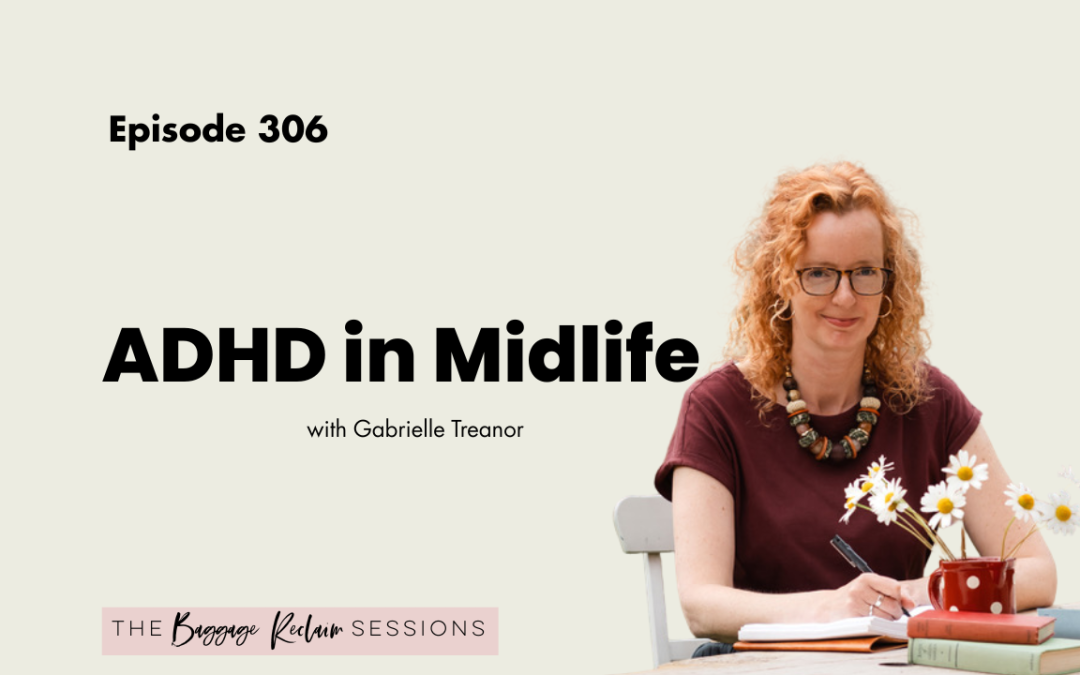
In this week’s episode of The Baggage Reclaim Sessions, I chat with coach and writer Gabrielle Treanor. We dig into ADHD in midlife, particularly for women who don’t see themselves in the stereotypical hyperactive presentation. Gabrielle discovered her ADHD in her late forties after decades of thinking she was “just a bit crap” at certain things. She now supports women through The Quiet ADHD Club, focused on the quieter, more introverted, sensitive women who’ve developed elaborate coping mechanisms to manage undiagnosed neurodivergence.

  • ADHD presents differently in women, especially the quieter, introverted type. The stereotypical image of ADHD as the “fidgety little boy” excludes many women whose hyperactivity is internal. e.g. the constant whirring mind, overthinking, and contained sensitivity. Women often develop elaborate coping mechanisms and systems to manage features they think are personal failings, so they appear “fine” on the surface while struggling privately.
  • Why are there more ADHD and other neurodivergence diagnoses now? It’s not because people are jumping on a bandwagon. Research including women in ADHD studies only began in 2002, meaning entire generations went undiagnosed. And it was only in 1980 that it was recognised that adults could have ADHD.
  • Decades of shame around being “faddish,” disorganised, “a bit crap”, etc. Features like trying multiple hobbies, varied career paths, time blindness, getting distracted mid-task, and struggling with focus become internalised as character flaws rather than understood as neurodivergence. The self-criticism of “you’re just looking for excuses” prevents many from recognising ADHD.
  • Late diagnosis brings both relief and grief. Understanding ADHD in midlife means realising all those coping strategies weren’t character building but compensation for undiagnosed neurodivergence. There’s grief for the misunderstood younger versions of yourself, for missed opportunities, and for how hard life was when everyone else seemed to sail through. But there’s also profound relief in finally understanding, “Oh, that’s just how I’m built” rather than, “I’m not good enough.”
  • You don’t have to disclose your ADHD diagnosis or get one at all. Diagnosis isn’t mandatory for getting support (except for medication). You don’t owe anyone disclosure about your neurodivergence if you’re not ready. This is an area where you get agency. You decide what information would be useful, whether that’s reading more, getting diagnosed, telling loved ones, or simply acknowledging it privately and moving on.
  • ADHD has an interest-based nervous system, not an importance-based one. Neurotypical brains work on importance (these things need doing, so I’ll do them in order). ADHD brains need genuine interest to engage, which explains why some tasks feel impossible while others trigger hyper-focus and diving in wholeheartedly.

Donate to the podcast tip jar

FavoriteLoadingAdd to favorites